LUFKIN — Sensitive information may have been stolen from a Lufkin accounting firm, a cyberthreat intelligence program reported in late June, according to our news partner, KETK. SOCRadar, which is an extended threat intelligence platform, helps warn organizations of cyber threats. It found that the accounting firm Todd, Hamaker & Johnson was attacked by ransomware Akira on June 30.
Approximately 40 gigabytes of client and employee data were breached in the attack, and Akira is threatening to release the information publicly, the Lufkin Daily News reported. Akira uses ransomware to impact a wide range of businesses in North America, Europe and Australia, threatening to breach and release information that is sensitive, according to the FBI.
Since 2023, Akira has been known to attack small to medium-sized businesses specialized in many industries, including financial services.
SOCRadar says Akira uses “double extortion tactics,” which encrypt data and exfiltrate sensitive information to pressure victims. The accounting firm has not commented to confirm the information breach, when contacted by news media.
Cessna 150 in flight. (Bettmann Archive/Getty Images)
(TOLEDO, Argentina) -- A 22-year-old pilot in Argentina was forced to land the plane she was training in after her instructor allegedly jumped midair to his death, investigators said.
The unidentified student was taking lessons at the Flying Parrot Cordoba school and had taken off from Toledo on Saturday with her instructor, Leandro Bertazzo, a school official told ABC News.
During the lesson, Bertazzo allegedly jumped out of the plane after telling the student that she knew what to do, the student had told police, according to the school.
The student, who had a license but not enough flight hours, was able to land the Cessna 150 alone, according to investigators.
The student told the police that she could not believe that it happened and thought it was a joke, according to investigators.
The 42-year-old flight instructor's body was recovered later that day, investigators said. The school said he was with them since 2022.
The Federal Prosecutor's Office No. 2 of Córdoba said it would continue the investigation.
TYLER – The Church of Jesus Christ of Latter-day Saints has delivered one of 250 truckloads of food to the East Texas Food Bank, an initiative marking the nation’s 250th birthday.
This specific donation of 40,000 pounds of food is equivalent to 30,000 meals for East Texans.
The 250 truckloads of food are part of a larger donation effort by the church in observance of the nation’s 250th birthday. The delivery to the East Texas Food Bank included non-perishable items such as pasta, beans and rice, along with household essentials like dish soap, all intended to reach dinner tables across the region. Continue reading ETFB gets 40K food donation
New York City Democratic Socialist Mayor Zohran Mamdani (Anna Connors/The New York Times via AP, Pool)
Government accountants recently reported that Social Security is in real fiscal trouble. The system is paying out about $230 billion per year more than it’s taking in from payroll taxes.
Those shortfalls are being covered for now by redeeming the U.S. Treasury bonds that Social Security was required by law to purchase back when it was running a cash surplus. (Fun fact, for decades those bonds were kept in an ordinary locked filing cabinet in a government office in Parkersburg, WV. Today, the records are all electronic.)
When Social Security needs cash to cover payouts to recipients, it presents one of those bonds to the U.S. Treasury Department for redemption. The funds are deposited in Social Security’s operating account, and everyone gets their monthly benefit.
But here’s the rub. At the rate of $230 billion a year in redemptions, those bonds will all be cashed in by 2033. After that, Social Security won’t have enough cash to cover its monthly payouts. If that were to happen today, it would mean an automatic 22 percent reduction in benefits to every Social Security recipient in the country. Things would get politically ugly really quick.
I bring this up not for purposes of doing a column on Social Security but rather to ask a pointed question of the Democratic Socialist mayors and congressional candidates that have lately been in the news.
Ladies and gentlemen, Social Security has been around for about 90 years. It’s not new. So, if there’s not enough money from taxation to cover a long-established program like Social Security, from where do you imagine the money will come to cover free housing, a guaranteed basic income for every citizen, free childcare, free college, free universal health care and all the rest of your grand socialist ideas?
Oh, wait, now I remember. You’ll get it from the rich. Elon Musk and Mark Zuckerberg and Jeff Bezos and all those guys will finally have to pay their “fair share.” (Given the current leftist definition of “rich,” so, too will the guy who makes $400,000 a year owning car washes and the woman who makes $500,000 a year selling residential real estate.)
But here’s the problem. If you taxed the net worth of the 10 richest people in America at 100 percent, leaving them completely destitute, you’d cover the current federal deficit (which does not include all of new the free stuff you Democratic Socialists are proposing) for about a year and a half.
If you taxed the annual income of the much loathed “one percent” at the rate of 100 percent, you’d cover a bit less than half the present federal budget (again before all the new free stuff).
Then what?
And never mind that if you confiscated 100 percent of the wealth of guys like Musk, Bezos et. al., and if you confiscated 100 percent of the incomes of the most successful people in the economy, they’d immediately stop doing what they do to be so successful and tax revenue would then fall to zero. (Any of you enlightened lefties ever heard of the Laffer Curve?)
So, again I ask. Then what?
We’ll all hold our breath waiting for your answer.
SLOCUM – A firefighter with the Slocum Volunteer Fire Department is currently in the hospital after experiencing a serious medical emergency while on duty earlier this week.
According to our news partner KETK, the department spokesperson said while responding to a fire on Tuesday, Safety Chief Dan Hernandez experienced a medical emergency and was taken to a hospital in Palestine.
After being stabilized, Hernandez was taken by an ambulance to a hospital in Tyler, where he currently remains.
“We request your thoughts and prayers for Dan, his wife Valerie, his son Trey, his grandsons and all of his family,” the department said. “We not only consider Dan an integral part of our department, but also a long-time friend and member of our Slocum community.”
HOPKINS COUNTY (KETK) — An East Texas breeder pleaded guilty last week to four counts of wire fraud after a viral dog shooting video led to the discovery of her unlicensed breeding facility in December 2025.
Kirstine Michelle Hicks, owner of Giant German Shepherds, appeared in federal court after being arrested on Dec. 21, 2025, for a social media video depicting her allegedly shooting at a dog three times and leaving it for dead, spurring an investigation into her breeding facilities.
In March, she was indicted for acting as an unlicensed animal dealer and four counts of wire fraud.
Further investigation found that Hicks had as many as 131 German shepherds on her property in devastating conditions by the end of December 2025, the U.S. Attorney’s Office for the Eastern District of Texas said.
Additionally, the investigation into Giant German Shepherds found that Hicks has been running the business fraudulently. She advertised dogs as healthy, met certified parentage and were American Kennel Club (AKC) registered though the indictment found that they were not.
Information presented in court determined that the representations of the dogs she was selling online were false. Instead of selling purebred and AKC-registered dogs, the U.S. Attorney’s Office said that Hicks sold mixed-breed dogs that were unhealthy, with fabricated documentation for an inflated price.
A March indictment identifies four alleged victims of Hicks’ wire fraud scheme, including a disabled veteran who prosecutors say received an aggressive dog accompanied by falsified paperwork. The dog reportedly had undisclosed medical issues and bit the buyer multiple times, drawing blood.
The indictment also states that Hicks knowingly violated the Animal Welfare Act by not obtaining a license from the Secretary of the Department of Agriculture before selling or transporting dogs from June 2024 to December 2025.
On Wednesday, Hicks pleaded guilty to the four counts of wire fraud before U.S. Magistrate Judge John Love. She could face up to 20 years in federal prison.
“The depraved indifference to animal suffering we witnessed in this case was shocking,” United States Attorney Jay R. Combs said. “My office will continue to advocate for the victims who were defrauded by the defendant, as well as the animals who suffered, and often died, in cruel conditions. The concerned citizens who brought this to light are to be commended, along with the amazing animal rescue organizations who worked so hard to assist in caring for the animals, most especially Big Dog Ranch Rescue.”
Cyclospora cayetanensis is a unicellular parasite that causes an intestinal infection called cyclosporiasis. (CDC)
(NEW YORK) -- Multiple states are reporting an increase in cyclosporiasis cases, an intestinal infection caused by a parasite.
Health officials in Michigan have reported more than 1,200 cases and, in neighboring Ohio, cases have topped 170.
Here's what you need to know about the infection, including how it spreads, how it's diagnosed and how to treat it.
What is Cyclosporiasis?
Cyclosporiasis is an intestinal infection caused by the microscopic parasite Cyclospora cayetanensis, also known as Cyclospora, according to the Centers for Disease Control and Prevention (CDC).
The infection affects the small intestine and can cause watery diarrhea with sometimes "explosive" bowel movements, according to the federal health agency.
Other symptoms can include cramping, bloating, low-grade fever, nausea and vomiting.
The agency further said it takes about one week from the time of infection to become symptomatic, but that time can range from two days to two weeks.
How it spreads
The parasite usually spreads through food or water contaminated with feces, according to the CDC.
Foodborne outbreaks of cyclosporiasis have been linked to various types of imported fresh produce, such as raspberries, basil, snow peas, mesclun lettuce and cilantro, according to the CDC.
How the infection is diagnosed
A healthcare provider will diagnose cyclosporiasis by testing stool samples, according to the CDC.
Patients may have to submit several stool samples on different days to detect the parasite because laboratory tests may have a hard time detecting Cyclospora.
The CDC says a patient's healthcare provider will need to specifically request testing for the parasite.
How cyclosporiasis is treated
Cyclosporiasis is treated with the oral antibiotic trimethoprim-sulfamethoxazole (TMP-SMX), commonly sold as Bactrim, Septra and Cotrim, and taken for 10 days, according to the CDC.
The CDC says most people with healthy immune systems will eventually recover without treatment, but if left untreated, patients may be sick for a few days to a month or longer.
How to prevent infection
It's unclear exactly how Cyclospora contaminates food and water, according to the CDC.
The agency says people can prevent infection by thoroughly washing produce, cutting away bruised or damaged parts of fruits and vegetables, and refrigerating pre-prepared or pre-cut produce.
Additionally, the CDC recommends washing hands thoroughly with soap and water before handling or preparing raw fruits and vegetables.
A European heat wave continues, July 8, 2026, sending temperatures into triple digits across France and increasing fire danger. (ABC News)
(NEW YORK) -- As hundreds of firefighters are battling wildfires that have ignited across France and other parts of western Europe, climate scientists released a report this week showing the region experienced its warmest June on record.
Sweltering temperatures in Western Europe in June, including a heat wave that broke records across several countries, are now extending into July, with a heat wave returning amidst multiple wildfires in France and other parts of Western Europe.
Last month's deadly western European heat wave occurred not only during the hottest June on record for Western Europe, but it was the second warmest globally, according to data from the Copernicus Climate Change Service, a European Union scientific Earth observation program.
"June 2026 underscored how profoundly the climate is changing. Western Europe recorded its warmest June on record, and continued record warmth in the global ocean," Samantha Burgess, strategic lead for climate at the European Centre for Medium-Range Weather Forecasts (ECMWF), said in the report.
She noted that the record-breaking heat reflects "a climate system continuing to accumulate heat."
"The result is increasingly intense heatwaves, a persistently warm ocean, and growing risks for people, ecosystems and infrastructure across Europe and beyond," Burgess said.
The report comes as wildfires have broken out in parts of Western Europe amid a severe drought.
Wildfires have broken out in Spain, Portugal and Greece.
The biggest wildfire in Western Europe is raging in the Pyrénées of France, prompting organizers of the famed Tour de France road cycling race, which started on Saturday in Barcelona, Spain, to ban spectators from lining the route in the mountainous region.
"The exceptionally large wildfire currently raging in the Pyrénées-Orientales is requiring a massive mobilization of wildfire-fighting resources, internal security forces, and all government agencies," race organizers said in a statement. "The top priority remains the protection of people, property, and natural areas, as well as bringing the fire under control."
Race organizers said only cyclists participating in the Tour de France and their supporting teams are authorized to travel the race route, which officials are trying to keep clear for emergency traffic.
The blaze in southwestern France near the Spanish border has burned 4,936 hectares, or a little over 12,000 acres, French officials said in a social media post on Wednesday.
At least 12,000 people had been evacuated from 27 municipalities across the Pyrénées-Orientales, although some have been allowed to return home as flames have subsided in some areas, authorities said.
The Pyrénées town of Vinça, which has a population of about 2,200, remained evacuated on Wednesday along with 11 other villages in the region.
Video from the region showed homes and vehicles burned, and huge swaths of forestland blackened. Firefighting aircraft were also filmed swooping down on burning areas, dropping fire retardant.
Earlier this week, the European Union announced it was sending such aircraft to France from Sweden and Cyprus.
About 450 firefighters are battling the fire in the Pyrénées from the ground and the air, but are struggling to gain control of the wildfire amid triple-digit temperatures in the area and wind gusts of up to 30 mph, officials said. Another 170 gendarmes, or law enforcement officers, have also been dispatched to the region to support the firefighting effort.
Firefighters appeared to make progress in battling the fire, reporting Wednesday that the conflagration did not expand overnight.
Temperatures in parts of southwestern France are forecast to reach 105 degrees on Wednesday, with temperatures climbing to 95 degrees and above across three-quarters of the country.
Most of the country is under an "elevated" fire alert.
High to very high fire danger warnings remained in effect on Wednesday in at least 54 departments -- or local regional areas, including the Pyrénées-Orientales department, officials said.
Before the current wildfire outbreak, the highest number of departments under high or very high fire danger warnings at the same time was 29 in 2025, authorities noted.
Officials and experts have noted the fire season has begun weeks earlier than usual in France amid the unseasonal extreme heat wave that hit Europe in June. The heat wave has returned this week.
Scientists have said the record temperatures are being pushed up by climate change.
A 22-year-old firefighter was killed while battling a blaze in the Savoie region in the French Alps on Tuesday night, French Interior Minister Laurent Nunez said in a social media post on Wednesday.
Fire danger warnings have also been issued in the Rhône Valley in southeast France, and across the central and western regions of the country.
The danger is expected to remain at a high level through this week across most of the country, given the lack of rain, scorching temperature and low humidity, authorities said.
ABC News' Matthew Glasser contributed to this report.
A display indicates the temperature of 41 degrees Celsius during a sweltering summer day on June 27, 2026 in Berlin, Germany. (Maryam Majd/Getty Images)
(LONDON) -- One of the most brutal heat waves to impact Europe in the last 50 years broke temperature records in multiple countries, according to Copernicus, Europe's climate change service.
Western Europe, the region most affected by the heat wave during the second half of June, experienced its warmest June on record, the agency said.
The average land temperature in Europe in June 2026 was the second-highest on record, at 19.14 degrees Celsius, or 66.45 degrees Fahrenheit, according to Copernicus. This marks 1.78 degrees Celsius, or 3.2 degrees Fahrenheit, above the 1991 to 2020 average for the month.
Rising atmospheric and ocean temperatures "reflect a climate system continuing to accumulate heat" -- resulting in increasingly intense heatwaves, a persistently warm ocean and growing risks for people and ecosystems, Samantha Burgess, strategic lead for climate at the European Centre for Medium-Range Weather Forecasts, said in a statement.
"June 2026 underscored how profoundly the climate is changing," Burgess said. "Western Europe recorded its warmest June on record, and continued record warmth in the global ocean."
Many June and some all-time records for daily maximum temperature were broken in several countries, according to Copernicus.
Weather officials in the United Kingdom said temperatures on June 24 rose in some areas to 35.7 degrees Celsius, or about 96.2 degrees Fahrenheit, topping a June 1976 record of 35.6 C.
In France, the country's national heat index -- a daily average -- hit 30 degrees Celsius, or about 86 degrees Fahrenheit, on June 24 -- the highest-ever temperature recorded, according to weather officials at Meteo-France, the national weather service. High temperatures in Paris were in the triple digits in the days after.
The Louvre and the Eiffel Tower closed early several days in a row as a result of the high temperatures.
The high temperatures also impacted cities like Madrid and Rome, which hit the high 90s during the last week of June.
Reuters reported there were more than 5,000 excess deaths in Germany alone -- mostly residents 75 and older -- and another 4,700 deaths in France, Belgium, Spain and the Netherlands between June 20 and 28.
"Heat stress is often called the 'silent killer' – and European homes, workplaces and schools were not built for these temperatures," WHO Director-General Dr. Tedros Adhanom Ghebreyesus said in an X post.
Overall, the planet experienced its second-warmest June globally, according to Copernicus.
In addition, much of Western Europe, including Italy, large parts of central and eastern Europe and the southern U.K., experienced drier-than-average conditions, associated with persistent high-pressure and heatwave conditions, according to Copernicus.
River flow was also below average across Europe, consistent with the widespread dry conditions, according to Copernicus. Large parts of France, much of central and eastern Europe and parts of northeastern Europe were especially impacted.
Globally, June 2026 was the second-warmest on record, with an average surface air temperature of 16.5 degrees Celsius, about 61.8 degrees Fahrenheit -- about .56 degrees Celsius, or about 1 degree Fahrenheit -- above the June average for 1991 to 2020.
Sea surface temperature at extrapolar oceans, or oceans outside the Arctic and Antarctic, was the highest on record for June at 20.86 degrees Celsius, or 69.5 degrees Fahrenheit, according to Copernicus.
Surface sea temperatures also remain "exceptionally high" across a large portion of the tropical Pacific, where El Nino conditions are present and forecast to strengthen in the coming months, the agency said.
(NEW YORK) -- El Nino conditions continue to intensify and are likely to be a strong event in the coming months, significantly influencing our weather, the hurricane season and global temperatures, according to the latest forecast from the National Oceanic and Atmospheric Administration (NOAA).
There is very high confidence that El Nino will continue through early spring 2027.
NOAA's latest forecast calls for a strong El Nino to develop by the fall, with an 81% chance of a very strong El Nino between October and December, which could also end up being one of the strongest events on record. Historical records go back to 1950.
Stronger El Nino events only make certain impacts more likely and do not always guarantee strong impacts, NOAA noted.
El Nino refers to the warmer-than-average phase of the El Nino--Southern Oscillation (ENSO), a natural cycle where sea surface temperatures across the central and eastern equatorial Pacific Ocean rise and fall. The cooler-than-average phase is called La Nina, while near-average conditions are known as ENSO-neutral.
NOAA ranks the strength of El Nino events by measuring the sea surface temperature departure from average (anomaly) across this region, classifying events as weak, moderate, strong or very strong.
"El Nino conditions are already underway and are forecast to strengthen rapidly into a strong event," WMO Secretary-General Celeste Saulo said in a statement. "This will intensify the chances of drought and heavy rainfall and the risk of heatwaves on land and marine heatwaves in many regions of the world."
While adjectives such as "super" and "extreme" are popular ways of describing the strength of an El Nino event on social media, NOAA and the WMO classify by strength. The WMO noted in a recent statement that "the term [[super]] is not part of standardized operational classifications."
Typical El Nino impacts across the United States
Impacts from El Nino, similar to La Nina, tend to be most consistent and pronounced from late autumn through early spring following the event's onset, NOAA says. There is usually a delay between the onset of the event and many of the associated effects.
"The more consistent impacts on precipitation and temperature don't occur until the winter months -- so for 2026-27," Michelle L'Heureux, physical scientist at NOAA's Climate Prediction Center, said.
Experts caution that the impacts on weather patterns are nuanced. Each season is different, and typical El Nino conditions don't always materialize.
"Every El Nino is different in terms of timing, magnitude, and geographic extent, and such differences lead to variability in the impacts -- on temperatures and rainfall, for example -- on a global scale," Andrew Kruczkiewicz, senior staff researcher at Columbia Climate School, said.
Northeast: Warmer-than-average temperatures are favored across the northern half of the U.S. during meteorological winter (December to February), however its influence is less pronounced in the Northeast, compared to the Upper Midwest and Northwest.
El Nino typically increases the odds of above-average snowfall in the mid-Atlantic and coastal areas of the Northeast as storms often move up the coast. Farther inland, drier-than-average conditions and less snow are more likely.
South: During the winter months, near- to below-average temperatures are favored along the southern tier of the U.S., especially from Texas to the Southeast.
For precipitation, wetter-than-average conditions are typically observed across Texas, the Gulf Coast and Southeast. Below-average precipitation is frequently observed across parts of the south-central Mississippi Valley.
Midwest: Warmer-than-average temperatures are favored from the northern Plains into the Great Lakes in the winter. Drier-than-average conditions are frequently observed across parts of the Ohio Valley and Great Lakes regions.
El Nino typically increases the odds of above-average snowfall in the south-central Plains with below-average snowfall favored in northern Plains and Great Lakes regions.
West: During the winter months, warmer-than-average temperatures are likely across much of the Northwest. For precipitation, wetter-than-average conditions are typically observed across southern California and much of the Southwest, with below-average precipitation frequently observed across parts of the northern Rockies.
El Nino typically increases the odds of above-average snowfall in the southern Rockies, with below-average snowfall favored in the northern Rockies.
Meanwhile, above-average tropical activity in the eastern Pacific increases the likelihood of indirect impacts to the southwestern U.S., such as sending more rain to the region and more frequent flash flood concerns.
Alaska: El Nino impacts in Alaska tend to be more pronounced than across much of the contiguous U.S., with the strongest effects typically occurring during the winter and spring months. During winter, warmer- and drier-than-average conditions are more likely, with less snowfall and reduced snowpack.
Above average temperatures often persist into spring, while precipitation trends closer to average. However, warmer conditions typically mean more precipitation falls as rain rather than snow, prolonging snow deficits.
Hawaii: Rainfall is typically above average across Hawaii the year an El Nino event develops before conditions become drier during the winter months and remain dry well into the following year. The shift toward drier weather can increase the likelihood of drought and elevate the risk of wildfires.
Meanwhile, above-average tropical activity in the eastern Pacific increases the risk of impacts from tropical systems across the Hawaiian Islands.
El Nino's influence on hurricane season activity
While El Nino is only one of several key factors that influence tropical activity, forecasts now indicate it will be a strong event during the peak of the hurricane season, making it the primary driver of activity in both the Atlantic and eastern Pacific in the coming months.
El Nino conditions often suppress tropical activity during the Atlantic hurricane season by producing unfavorable atmospheric winds. In the Eastern Pacific, the opposite occurs, with favorable conditions supporting above-average hurricane season activity.
As a result, NOAA's May 21 hurricane outlook is predicting below average tropical activity for the 2026 Atlantic hurricane season with above average activity likely in the eastern Pacific.
"El Nino increases convection (thunderstorms) across the eastern and central Pacific, which causes downstream wind shear over the Atlantic from strong upper-level winds," Andy Hazelton, an associate scientist at the University of Miami's Cooperative Institute for Marine and Atmospheric Studies, said.
Vertical wind shear, which refers to changes in wind speed and direction with height in the atmosphere, is often a primary factor in below-average hurricane season activity. Strong vertical wind shear can tear a developing tropical system apart or even prevent it from forming, NOAA says.
"The rising motion over the Pacific also leads to increased subsidence (sinking air) over the Atlantic, which suppresses thunderstorms and tropical cyclone development," Hazelton added.
Other factors, such as sea surface temperatures, also play an important role in tropical cyclone development and strength. Unseasonably warm ocean waters can partially offset the effects of unfavorable atmospheric winds, according to forecasters.
Illustration of Legionella pneumophila bacteria, the cause of Legionnaires' disease. ( ROGER HARRIS/SCIENCE PHOTO LIBRARY/Getty Images)
(NEW YORK) -- A Legionnaires' disease cluster in New York City is growing, with 36 cases now confirmed, according to health officials.
As of Wednesday, there have been at least 22 hospitalizations and no deaths, according to the New York City Department of Health (NYC Health).
The cluster has affected the Upper East Side neighborhoods of Carnegie Hill and Yorkville, the department said.
In an earlier notice to the two neighborhoods, NYC Health said it believes the likely source of the bacteria is a cooling tower in the area, which sprays a mist that contains the bacteria. All area cooling towers were being tested for the bacteria, NYC Health said then.
There is no issue with any building's plumbing system and residents in the affected areas can continue to drink tap water, bathe, shower, cook and use their air conditioners, NYC Health further said in the notice.
On Tuesday, New York Mayor Zohran Mamdani said his administration was implementing measures to publicly identify the specific buildings suspected as being sources of Legionella bacteria and require owners to clean cooling towers quickly.
Legionnaires' disease is a severe form of pneumonia caused by inhaling the Legionella bacteria in small droplets of water mixed in the air or by contaminated water otherwise entering the lungs.
The bacteria are found naturally in fresh water but in amounts that generally don't lead to disease. The bacteria typically grow best in warm water and in warm to hot temperatures, according to the Centers for Disease Control and Prevention (CDC).
The disease does not generally spread from person to person but infections can occur if the bacteria get into a building's water supply, including in shower heads, sink faucets, hot water tanks, heaters, cooling towers and other plumbing systems.
Legionnaires' disease has increased in prevalence over the last decade, reaching a peak in the U.S. of 2.71 cases per 100,000 in 2018, the CDC said. Cases declined during the first year of the COVID-19 pandemic and then rebounded in 2021.
Although most people recover from Legionnaires' disease with antibiotics, certain patients – including those who are immunocompromised or who suffer from chronic lung diseases – can develop complications that can be fatal.
About one out of every 10 people who develop Legionnaires' disease will die due to complications, according to the CDC. Among those who develop Legionnaires' disease at a healthcare facility, about one of every four people will die, the CDC says.
FLINT — A multi-vehicle crash on Highway 155 has left four dead and one transported with major injuries early Thursday morning, according to Smith County ESD 2 and our news partner KETK. The Texas Department of Public Safety said a Toyota Highlander was driving in the wrong lane, which caused a head-on collision with a Cadillac.
DPS said three people in the Cadillac died and were not wearing a seat-belt at the time of the crash. The toddler was allegedly not in a child’s car seat. The toddler was taken to a children’s hospital in Dallas and remains in critical condition.
The driver of the Toyota Highlander also died in the crash. The victims have not been publicly identified at this time.
NEW YORK (AP) — Wall Street and oil prices are holding steadier following their sharp swings the day before in the wait to see what will come next after President Donald Trump raised doubts about the temporary truce in the war with Iran. The S&P 500 rose 0.1% early Thursday, even though the United States launched new airstrikes against Iran, which responded by targeting U.S. allies in the Middle East. The Dow Jones Industrial Average slipped 33 points, and the Nasdaq composite rose 0.1%. The price of Brent crude slipped 0.3% after rising sharply a day earlier. Indexes rose across much of Europe and Asia.
AUSTIN (The Texas Tribune) – Texans lost more than $1 billion to scams involving cryptocurrency in 2025, according to the FBI, second only to California in the amount siphoned away by fraudsters.
Scams using crypto often involve fraudulent investment opportunities, but criminals are increasingly turning to the digital currency as a fast payoff that is difficult for law enforcement to track.
With cryptocurrency scams on the rise, here’s what to look for and what to do if targeted by scammers.
What are the most common cryptocurrency scams in Texas?
Scams generally fall into two categories, said Michael Levine, chief felony prosecutor for the Cyber and Financial Crimes Division of the Harris County district attorney’s office.
The most common are investment schemes where victims buy fraudulent cryptocurrencies or use crypto to invest in fake businesses.
Even legitimate-looking websites can be a front for a fraudulent operation, Levine said, which is why it’s important to vet sites by seeing if the company has been written about in reputable publications or approved by certain banks.
“The software in these things is wonderful, it looks just like an Ameritrade or E-Trade,” Levine said. “It looks just like a legitimate trading platform to the victim, and because it’s all fake, it looks like they’re making a lot of money.”
The best way to ensure your money is safely invested in cryptocurrency is to use verified, known exchanges. Be sure to do research beforehand or ask your banking institution for guidance.
Another common technique — known as romance scams or “pig butchering,” playing on the image of fattening a hog for slaughter — entices would-be victims through flattery and kindness. Once a relationship is established, the victim is directed to invest through a website or app, or directly asked for money through cryptocurrency.
Scammers are also impersonating law enforcement or state agencies, sometimes providing names of real people who work at the departments they are impersonating. Common tactics include telling victims they missed jury duty and now owe fines, or that someone falsified their signature on a legal document.
To bolster the illusion, scammers can “spoof” phone numbers, allowing them to call victims from numbers of reputable sources like a sheriff’s department or city clerk. The easiest way to determine whether you’re speaking to someone from the agency is to simply hang up and call back, or visit in person.
Texas has also seen a spike in cryptocurrency kiosk scams, ATM-like machines that convert cash to digital currency. Scammers impersonating bank employees or law enforcement direct people to pay bail money or transfer “vulnerable” account funds into these machines, which then send crypto directly to the scammer.
No bank or government agency, including a court, police department or licensing board, will ask for cryptocurrency or request payment through a crypto kiosk. If asked to do so, contact your local authorities.
How can I tell if I’m being scammed?
Whether receiving a phone call from someone claiming to be with law enforcement or a text message about a quick investment opportunity, watch out for:
• Strangers offering business opportunities over social media or text.
• Phone numbers that don’t match the official contact info of an agency or business.
• Conversations directed to a third-party app like WhatsApp or Telegram.
• Being discouraged from sharing your situation or the conversation with others, sometimes under threat of financial or legal consequences.
• Being sent official looking legal documents by text message.
• Being provided a callback number that doesn’t match the original caller’s number.
What if I’m scammed or know someone who was swindled?
After ensuring those involved in a scam are safe, immediately contact your banking institution and local law enforcement to file a police report. Be sure to keep all records, documents and messages involved in the scam.
You should also submit complaints and reports to the FBI’s Internet Crime Complaint Center, also known as IC3, and the Texas attorney general’s office. IC3 gathers data and complaints to help track scammers, and the attorney general can take action against businesses that falsely advertise services.
Because cryptocurrency is able to move so quickly once deposited into a digital wallet, most law enforcement agencies have roughly 36 to 48 hours to secure stolen funds. Most victims do not recover stolen money — but officials stress that reporting the scam is still important.
Scamming victims often feel shame or guilt about being tricked — a side effect that can deter reporting and hurt victims long after the fraud. Yet being victimized by fraud is not uncommon: one in four U.S. adults have been scammed in their lifetime, according to a 2025 Gallup poll, and one in 10 report being scammed more than once.
“There’s a saying in the [scam] world that no one is unscammable, you just haven’t tried the right script yet,” Levine said. “Please don’t feel like you must be a fool if you fall for one of these scams.”
Who is most at risk for cryptocurrency scams?
Those 60 or older are the most frequently targeted for cryptocurrency scams and who lose the most money, according to FBI data, but anyone is susceptible to scams. Those over 60 lost more than $396 million in 2025 in Texas.
For those with family members who are older or less technologically savvy, it can be helpful to walk them through how to identify spam texts or calls and ask them to inform you whenever strangers ask for money.
How is Texas responding to crypto scams?
Texas has a Financial Crimes Intelligence Center based in Smith County that helps law enforcement statewide investigate financial crimes, including cryptocurrency scams. The Texas State Securities Board also investigates fraudulent cryptocurrency activity.
Before the start of the next legislative session in January, state lawmakers are holding committee hearings on a list of issues designated by Lt. Gov. Dan Patrick in the Senate and House Speaker Dustin Burrows. Those topics include reducing elder fraud and regulating cryptocurrency and associated technologies, including crypto kiosks.
LUBBOCK (The Texas Tribune) – Faculty groups sued Texas Tech Chancellor Brandon Creighton and the university system’s regents Wednesday, asking a federal judge in El Paso to block classroom restrictions they say have censored professors who teach about race, gender identity and sexual orientation and intentionally discriminated against Black faculty.
The lawsuit, brought by the Texas American Association of University Professors-American Federation of Teachers and the national American Association of University Professors, challenges two memos Creighton issued after becoming chancellor last year.
The groups argue the restrictions outlined in the memos violate the First Amendment by allowing Texas Tech officials to suppress viewpoints they dislike, violate the Fourteenth Amendment by leaving professors unsure what they can teach without being disciplined and discriminate against Black faculty by singling out instruction about Black history, racial inequality and efforts to remedy it.
Creighton’s first memo, issued Dec. 1, told faculty they could face discipline if they did not comply with new limits on course content involving race, sex, gender identity and sexual orientation. It required faculty to submit course material related to those topics for regents to review and approve.
A second memo, issued April 9, went further, ordering the phase-out of academic programs centered on sexual orientation and gender identity and requiring professors in core and lower-level undergraduate courses to use alternate materials if readings, assignments or lectures included those topics.
The memo said some material could still be taught if needed for patient care, professional credentials or advanced coursework, but the lawsuit argues those exceptions were applied inconsistently.
The policies apply across the five-institution system, which includes Texas Tech University, two health sciences centers, Angelo State University and Midwestern State University.
The complaint includes new accounts of how the restrictions have been applied. It alleges a Texas Tech Health Sciences Center professor in Lubbock was told medical students could not participate in or observe care for transgender patients, even when those patients sought treatment for unrelated conditions such as hypertension, migraines or cancer. It also says a professor was told a Holocaust course would have to leave the core curriculum if it included instruction on gay and bisexual victims of the Nazis, and that regents barred professors from teaching Plato’s Republic and Between the World and Me, Ta-Nehisi Coates’ National Book Award-winning book about racism in America.
The complaint also alleges an instructor at Texas Tech Health Sciences Center El Paso was told to not use the word “disparity” in class, affecting their ability to adequately teach students because El Paso County residents have a higher prevalence of diabetes. In addition, women along the Texas-Mexico border have a higher rate of cervical cancer mortality, children are hospitalized more for asthma in border counties, and the pregnancy-related mortality rate among Black women in Texas is 2.5 times higher than that of white women, according to the complaint.
One of the medical-training allegations underscores the lawsuit’s claim that Texas Tech’s stated exceptions were confusing and inconsistently applied. Creighton’s memos said some material could still be taught when needed for patient care or professional credentials. But the complaint says the Lubbock professor was initially required to remove material about transgender and intersex patients from a medical school course, even though the professor considered it vital to the course and necessary for medical certification exams. The professor was later told medical students could treat transgender patients during third- and fourth-year clinical rotations, according to the complaint, but only after some students’ rotations had already passed.
The groups are asking a judge to declare Creighton’s memos unconstitutional and block the system from enforcing them or any similar policy. The lawsuit, saying faculty members have already had to certify compliance for summer and fall courses, argues the restrictions will continue to harm them as well as deprive students of instruction they would otherwise receive.
A Texas Tech System spokeswoman rejected the lawsuit’s allegations.
“Our commitment to academic integrity and the First Amendment rights of our students will not be distracted by lawsuits as we continue to deliver rigorous academic programs, relevant coursework and groundbreaking research,” spokeswoman Erin Wilson said in a statement.
Wilson also pushed back on several allegations in the complaint. Teaching about civil rights and historical events, including Nazi crimes, is permitted and instructors are not required to redact or remove works when sexual orientation or gender identity appears in adopted, industry-standard text or as an incidental reference, she said.
The board of regents also has not altered or rejected any course at Texas Tech’s health sciences centers, she said.
Creighton has previously defended the restrictions as necessary to comply with state and federal law and ensure students are provided with “degrees of value.”
In a December interview with The Chronicle of Higher Education cited in the complaint, Creighton said Texas Tech works to send a message that its “door is open to every walk of life” and said the restrictions were meant to foster “diversity of viewpoint.” Asked whether restricting teaching on gender identity, sexuality and race helped achieve that, Creighton said yes and described the guidance as a “continuum of common sense.”
Creighton, a former Republican state senator, became chancellor in November. In the Senate, he chaired the Higher Education Committee and authored Senate Bill 37, a 2025 law that gave governor-appointed regents more authority over curriculum. Creighton’s Dec. 1 memo described Texas Tech’s course review as the “first step” in implementing that law.
The lawsuit argues Creighton’s memos go beyond what lawmakers ultimately passed. An earlier version of SB 37 would have required regents to eliminate curriculum that taught “identity politics” or was based on theories that systemic racism, sexism, oppression or privilege are inherent in the U.S. or Texas institutions. That language did not become part of the law, but the faculty groups argue Creighton later imposed those restrictions after becoming chancellor.
The complaint points to his broader record as a lawmaker to support its claim that the memos were motivated, at least in part, by racial discrimination. It says that after the George Floyd protests, Creighton opposed efforts to remove Confederate monuments and symbols, backed unsuccessful restrictions on teaching called critical race theory at public universities and colleges and authored Senate Bill 17, the state’s ban on diversity, equity and inclusion offices and programs in higher education.
“Chancellor Creighton is trying to do through fiat what he couldn’t accomplish in the Texas legislature: erase the history, identities and lived experiences of LGBTQ people and people of color from the classroom,” said Nicholas Hite, senior attorney at Lambda Legal.
The faculty groups are represented by Lambda Legal, the NAACP Legal Defense Fund and Davis Wright Tremaine LLP.
Texas Tech is not the only Texas university system to restrict course content involving race, gender identity or sexual orientation. Texas A&M University System regents approved a similar policy in November, after a viral recording showed a student confronting a Texas A&M professor over gender identity content in a children’s literature class. That controversy led to the professor’s firing, the removal of two college leaders from their administrative roles and the resignation of the university president as well as a systemwide course audit.
The A&M policy, which was approved before Creighton’s memos, says no system academic course may advocate “race or gender ideology, or topics related to sexual orientation or gender identity” unless the course and relevant materials are approved in advance by the university president. It also says faculty may not teach material inconsistent with a course’s approved syllabus.
Asked why the groups sued Texas Tech and not Texas A&M, Texas AAUP-AFT President Teresa Klein said the organizations are focused on Texas Tech for now but “will be exploring everything.”
Antonio Ingram II, senior counsel at the NAACP Legal Defense Fund, said Texas Tech represents “one of the most egregious forms of censorship we’ve seen nationwide,” pointing to restrictions on graduate student research and the closure of entire departments. A favorable ruling could affect other systems, including Texas A&M and the University of Texas System, though additional lawsuits might still be needed, he said.
The Texas Tribune partners with Open Campus on higher education coverage.
Disclosure: Chronicle of Higher Education, Open Campus, Texas Tech University, Texas Tech University Health Sciences Center and Texas Tech University System have been financial supporters of The Texas Tribune, a nonprofit, nonpartisan news organization that is funded in part by donations from members, foundations and corporate sponsors. Financial supporters play no role in The Texas Tribune’s journalism. Find a complete list of them here.
AUSTIN (The Texas Tribune) – State Rep. James Talarico, the Democratic U.S. Senate nominee, raised a staggering $30 million from April through June, his campaign announced Wednesday — more than triple the amount brought in by his Republican opponent, Attorney General Ken Paxton.
The haul is a record total for a U.S. Senate candidate in the second quarter of an election year, Talarico’s campaign said, noting he has now raised more than $70 million from over 1.5 million donations, including 780,000 individual contributors, since launching his bid in September.
“I’m honored to stand alongside more than 780,000 neighbors who are tired of being divided into teams — red versus blue, left versus right, rural versus urban,” Talarico, D-Austin, said in a statement. “We are uniting Texans onto one team to change this broken, corrupt political system and bring down costs for working families.”
Earlier Wednesday, Paxton’s campaign said he had raised over $9 million in the second quarter of the year — a personal best and the largest amount announced by any non-incumbent Senate GOP candidate this cycle, per his campaign. Both campaigns had yet to file their second-quarter reports, due July 15 to the Federal Election Commission, identifying their donors and how much cash they have on hand.
Talarico’s mammoth fundraising has boosted Democratic hopes that he could become the first Democrat to turn a Senate seat blue since 1988, particularly against Paxton, the Republican nominee who has historically posted relatively weak fundraising totals. Some of Talarico’s fundraising edge could be neutralized, however, by a recent Supreme Court ruling that empowers Paxton to tap into the national GOP’s deep coffers.
Recent public polling has found the race essentially tied.
Talarico’s second-quarter haul easily outpaced those of Texas’ recent Democratic Senate nominees, including the $10.4 million raised by former U.S. Rep. Beto O’Rourke in the same period in 2018. Former U.S. Rep. Colin Allred raised $7.9 million from April through June 2024 on his way to besting O’Rourke’s then-record fundraising.
Talarico broke records in the first three months of this year, too, when he took in a whopping $27 million — more than any other federal candidate in the country over that stretch.
“Running a truly competitive campaign in a state with nearly three times the population of any other battleground state will take unprecedented resources,” Talarico campaign manager Seth Krasne said in a statement. “While the Supreme Court creates new loopholes for billionaires and special interests to prop up their puppets, we’re going to continue building a movement to take back power for working people. Because Big Money is nothing compared to People Power.”
Talarico has sworn off corporate PAC donations, and his campaign said 97% of donations to his bid were $100 or less. The most common profession among his contributors, his campaign added, was teachers.
Texas did not land on national Democrats’ initial list of top Senate targets this cycle, with Alaska, Iowa, Maine, North Carolina and Ohio seen as the party’s prime pickup opportunities. But turmoil surrounding Graham Platner, the Democratic nominee in Maine, this week has sharpened the importance of Talarico’s campaign to Democrats’ quest to retake the Senate.
Platner ended his bid Wednesday after a woman who dated him told Politico he raped her nearly five years ago and numerous Democrats called on him to drop out of the race. He has denied the allegation.
CHEROKEE COUNTY — An 18-year-old recent New Summerfield ISD graduate has died following a Saturday crash in Cherokee County, the Texas Department of Public Safety announced. A preliminary investigation revealed that the crash occurred on July 4 at around 11 p.m. on FM 2064 near State Highway 135 involving a Jeep Grand Cherokee. DPS confirmed the identity of the driver as 18-year-old Guadalupe Moreira.
Officials believe Moreira veered off the roadway and struck a tree, causing the car to catch fire. DPS said Moreira was pronounced dead on the scene, and an investigation remains ongoing with no further information available at this time.
Following her death, a GoFundMe has been created to help her family with the expenses of her upcoming funeral.
SMITH COUNTY – A man who was arrested in 2025 was recently indicted by a grand jury after being charged with financial abuse of the elderly. According to an arrest affidavit and our news partner KETK, 36-year-old Robert Lee, who worked as a contractor, convinced a person over the age of 65 to pay $64,000 to have their roof repaired after he and his partner convinced the homeowner that their roof was in danger of collapsing. After Lee and his partner had finished their alleged roof repairs, the homeowner had a new contractor come to the home to reevaluate the roof. The contractor informed the victim that Lee had lied to her and that the roof was in no danger of collapsing, according to authorities.
A detective from the Smith County Sheriff’s Office later arrived at the victim’s house and observed that Lee and his partner’s work appeared to have been damaged and covered with roofing tiles.
East Texas breeder who sold sick, aggressive dogs pleads guilty, faces up to 20 years
The detective later went into the victim’s attic to better observe the work Lee had done to the roof and allegedly discovered only one new piece of plywood placed over the hole that Lee had created in the roof. Continue reading Contractor indicted for elderly abuse
NACOGDOCHES, Texas (KETK)– Stephen F. Austin State University announced earlier this week that it has approved a plan to phase out its Early Childhood Laboratory (ECHL) over the next five years.
According to the university, under the new plan, the ECHL will no longer allow infants to enroll in the program starting at the beginning of the 2027-2028 school year. Additionally, children already enrolled in the program will be able to remain through completion.
A part of the university’s decision to phase out the ECHL, which once provided valuable learning opportunities, was due to fewer SFA students completing observations and clinical experiences there. The university said the decline was due to changes in the academic program landscape.
Financial concerns moving forward also forced the university to phase out the ECHL, after it claimed it had put $750,000 into the program over the past five years without receiving any revenue in return.
“This decision reflects the university’s responsibility to balance rising operating costs with available resources while continuing to invest in its academic mission,” the university said. “It is not a reflection of the quality of the ECHL or the dedication of its faculty and staff.”
HENDERSON COUNTY — A Dallas-area company, attempting to install dozens of high capacity water wells, is suing a groundwater conservation district to stop the company from drilling, according to our news partner, KETK. The lawsuit was filed against the Neches and Trinity Valleys Groundwater Conservation District, alleging a ‘deliberate scheme’ to stop Ranch Holding, LLC, and Pine Bliss from drilling.
It was filed in federal court on Tuesday. This stems from a longtime dispute, as they attempt to obtain permits to drill 43 water wells on their properties in Anderson and Henderson counties. Since then, the plaintiffs have faced several obstacles after the district suspended their permits and allegedly blocked them from filing new applications under a new moratorium that was adopted in May. Continue reading Water district sued over wells
TYLER – A Brownsboro man has been sentenced to over 15 years in federal prison for trafficking methamphetamine in east Texas, announced U.S. Attorney Jay R. Combs.
36-year-old Bradley Korral Gould, pleaded guilty to possession with intent to distribute methamphetamine and was sentenced to 188 months in federal prison on July 6.
According to information presented in court, on October 4, 2024, Henderson County Sheriff’s Office deputies responded to a shooting in Brownsboro, where they found Gould inside his vehicle with a gunshot wound to his upper thigh. While investigating the shooting, deputies located an abandoned backpack on the roadside between Gould’s vehicle and the location of the reported shooting. Continue reading Trafficker gets prison time
SAN ANTONIO (AP) – Two New World screwworm cases in dogs are among more than 30 confirmed instances in Texas and New Mexico, prompting warnings Wednesday from veterinarians and humane societies that pet owners need to remain vigilant to protect their animals.
The parasite reappeared in cattle the U.S. in June, more than 50 years after it had been largely eradicated from the country. The pest is actually the larvae of the New World screwworm fly. It eats live flesh and fluids rather than dead material, as the larvae of most fly species do.
Here is what to know about the parasite, the threat it poses to pets and how to protect them:
Screwworm fly larvae can infest any mammal
The fly’s migration north from Panama starting in 2024, and through Mexico in 2025, has agriculture officials warning that it poses a threat to the $113 billion U.S. cattle industry, but the larvae can hatch and breed in any mammal, including wildlife, dogs, cats and occasionally humans.
The problem develops when a female fly lays its eggs in open wounds and mucous. After the eggs hatch, the larvae feed for about a week before maturing, dropping to the ground and continuing to develop into an adult fly.
The American Veterinary Medical Association says newborn animals and animals with open wounds or who have undergone surgery or other medical procedures recently are especially vulnerable. Even a tick bite can host an infestation, Aaron Grady, executive director of the Houston Humane Society shelter, said during a webinar on the screwworm. Infestation signs include restlessness and bad smell
Animal health experts say pet owners in areas where the screwworm is present — southern and southwestern Texas and southeastern New Mexico so far — should watch their animals closely and examine them for wounds, cuts and bites regularly.
Pet owners should look for any maggots or movement in a wound. Other signs include a foul smell and restlessness or anxiety in an animal, or an animal “hyper-fixating on looking or chewing in a certain area of the body,” said Melissa Stansell, a veterinarian at the shelter Austin Pets Alive!
Any of those signs are reason to contact a veterinarian for possible treatment. The affected animal is likely in a great deal of pain, and that can cause death from shock. The larvae also can cause death if they move into vital organs or by causing infections that turn deadly.
Flea, tick medications can stop an infestation
Humane society officials and veterinarians said shelters across Texas are trying to prevent infestations in animals by giving them prescription flea and tick medications. They recommend that pet owners do the same.
“It will kill the larvae as they ingest the blood and tissue,” Stansell said. “The chemical compositions of those products are what kill the actual larval stages of these flies.”
Veterinarians also can treat infestations and animals can recover if pet owners contact them quickly. Stansell said the treatment could include antibiotics.
“It is only fatal if left untreated,” she said.
An effort to eradicate the fly again is underway
The New World screwworm fly is a tropical species and decades ago would disappear each year when colder weather arrived with the fall or winter.
But state and U.S. Department of Agriculture officials aren’t waiting for the weather to turn. They’ve returned to an eradication method that worked decades ago, breeding sterile male flies and releasing them into the wild. The female New World screwworm fly mates once in her monthslong life, and if her partner is sterile, her eggs won’t hatch — causing the population in an area to drop and then disappear.
For years, the only factory breeding sterile flies in the Western Hemisphere was in Panama, but the USDA invested $21 million to convert a site in southern Mexico from breeding fruit flies to recently start breeding screwworm flies. The agency also plans to spend $750 million on a new fly factory in Texas, set to open next year.
HOUSTON (AP) — A Mexican national fatally shot by an Immigration and Customs Enforcement officer in Houston had no criminal convictions during his decades living in the U.S. and was driving a crew to a homebuilding site when he was killed, his family and a Texas congresswoman said Wednesday.
Lorenzo Salgado Araujo was working toward securing legal status in the U.S. and knew what to do if stopped by ICE, his son said.
Ronaldo Salgado said his father may have been scared that the people in unmarked vehicles were coming to steal the tools he used for 35 years to build homes, from sunrise to sunset, so he could send his three American sons to college.
“He did not deserve to die. He did not deserve to be reduced to a headline of Mexican man shot and killed by ICE. He deserved to live a quiet life as Lorenzo Salgado Araujo, a husband, a father and a job creator for dozens of men who also wanted the American dream,” Salgado said during a news conference.
The shooting happened Tuesday in Magnolia Park, a neighborhood that has been a hub for Houston’s Mexican American community for a century. Federal officials say their vehicle was rammed but don’t provide evidence
Salgado Araujo was shot after he ignored commands and attempted to ram an officer who fired his weapon in self-defense, the Department of Homeland Security said Tuesday in a statement. ICE officers were targeting him because he was living in the country without legal permission, according to the department, which oversees ICE. The man’s car struck an ICE vehicle, the department added.
Democratic U.S. Rep. Sylvia Garcia said Salgado Araujo had no criminal convictions.
Houston firefighters said he was shot in the abdomen. He died at a hospital.
Three other men appeared to be detained as Salgado Araujo lay moaning on the ground, according to his son, who said one of them was his uncle and that no one has heard from any of them since.
Federal officials have not released video or images of the shooting or the alleged damage to the vehicles. Salgado on Tuesday joined civil rights groups and Democratic officials in urging federal authorities to release all the footage and other information it has on the shooting.
In several other shootings involving federal officers, initial descriptions by immigration officials have sometimes been contradicted later by video evidence.
A video shot by bystander Juliet Martinez shows a black vehicle angled towards a white van, their doors wide open. A bleeding and handcuffed man groans loudly on the ground and his leg shakes. Other federal officers stand over at least three other handcuffed men. Civil rights groups say ICE can’t be trusted with the investigation
The federal crackdown has created a country where it is “open season on Latinos” by officers who think they can “shoot and explain later,” League of United Latin American Citizens President Roman Palomares said during the news conference.
The way ICE has handled previous investigations shows they have not earned the trust of taking their statements as facts without evidence like video to back it up, he said.
“Your pattern has been one of inaccuracies of prejudicial leaks before the facts are known, of twisting the narrative to fit your version of events,” Palomares said.
The league offered a $5,000 reward for information and videos from witnesses as it calls for an independent investigation. Other civil rights leaders begged anyone with videos to not turn them over to ICE, which they said could destroy them.
Harris County District Attorney Sean Teare said Salgado Araujo’s family and the community deserve the truth but federal authorities are exclusively handling the investigation at this time. There’s been an uptick in arrests in recent weeks
Representatives of ICE and DHS have not responded to repeated requests for comment Wednesday.
Homeland Security Secretary Markwayne Mullin took over the department in March with the aim of keeping it away from the controversies that had marked the tenure of his predecessor, Kristi Noem.
In the months after two fatal shootings in Minnesota sparked a fierce backlash, the number of immigration arrests across the country fell and ICE appeared to recalibrate its tactics. But in late June, arrests around the country surged to 10,000 over a five-day period, fueled in part by massive Congressional funding.
The shooting was at least the eighth death resulting from an encounter with federal immigration officers since the start of the Trump administration’s immigration crackdown. Son says his father worked hard for decades
Ronaldo Salgado said his mother was told something bad had happened to his dad around 7 a.m. Tuesday. After frantically looking for him at his job site and finding his empty van, he saw a video.
“I recognized him, not from his appearance but from his voice crying for help as he lay on the street,” Salgado said.
Salgado Araujo met his wife as a teenager in Mexico. They came to America and built their own home in Houston with help from friends and family who worked on his crew. His wife made his lunch before he left for the day and had a hearty meal ready when he came home. He would listen to music and pet his dog on his porch, Salgado said.
“After nearly 35 years of working to give us the American dream, he made the choice to begin the process of obtaining his American dream through a work permit,” Salgado said. “We dotted every I, crossed every T, filled every document, attended every appointment. He was close to obtaining his legal status.”
Salgado Araujo had biometric scan and fingerprints done earlier this year, his son said, and had carefully studied what to do if ICE pulled him over. If he was speeding away, it was probably because he feared having his tools stolen, his son said.
“Had my father seen an emblem of ICE or an emblem that says anything about a law enforcement agency, my father would have complied,” his son said. Mexico’s president criticizes the latest killing
Mexico’s President Claudia Sheinbaum said she is considering legal measures or may ask the United Nations to step in to stop the violence against Mexicans in the United States.
“There has been another tragic death of one of our compatriots in the United States due to detention issues, even though their only ‘offense’ is not yet having proper documentation,” Sheinbaum said.
Texas’ largest city has experienced heightened enforcement operations since the crackdown began last year, and not without public backlash. The Houston City Council voted to pass an ordinance limiting ICE cooperation but reversed course after Gov. Greg Abbott, a Republican, threatened to cut more than $100 million in state funding for public safety.
VAN ZANDT COUNTY – The maintenance director at Martin’s Mill ISD was taken into custody on Tuesday for an outstanding warrant from Dallas County charging him with indecency with a child.
According to our news partner KETK and the Van Zandt County Sheriff’s Office, Larry Plant was taken and booked into the Van Zandt County Jail on Tuesday. The arrest was made after he was found by members of the Texas Attorney General’s Office Fugitive Apprehension Unit and deputies from the sheriff’s office.
The department said Martin’s Mill ISD was made aware of Plant’s arrest and fully cooperated throughout the process.
“This arrest is another example of the working relationships between law enforcement agencies and our local institutions,” Sheriff Kevin Bridger said. “By working together, we remain committed to protecting our community and ensuring those accused of serious crimes are taken into custody safely and professionally.”
SMITH COUNTY – Law enforcement agencies across East Texas are mourning the loss of a Smith County Sheriff’s Office Deputy after he unexpectedly died on duty during a medical emergency on Tuesday.
According to our news partner KETK, and the Smith County Sheriff’s Office, 53-year old Gerald Rhey Atchison Jr. was working on duty as a property and evidence technician when he collapsed due to a medical event.
Other law enforcement personnel immediately begin life saving measures, including CPR. Paramedics arrived to assist and continue life saving measures as Atchison was unresponsive. He was then transported to the emergency room, where he was pronounced dead by medical personnel, the sheriff’s office said. Continue reading Deputy dies in medical emergency
TYLER – Tyler Water Utilities (TWU) continues to rebuild and improve the wastewater infrastructure Tyler depends on every day. Upcoming projects will repair aging lines and add capacity, continuing the City’s efforts to reduce sanitary sewer overflows and improve the sewer system.
On Wednesday, July 8, the City Council approved four wastewater projects under the City’s federal Consent Decree with the Environmental Protection Agency (EPA). Together, these projects represent more than $18.5 million in investments to Tyler’s wastewater collection system. Continue reading Water utilities repair projects
Are you worried about data brokers getting your personal information? Get check out David Rancken’s App Of The Day. It’s called PrivacyHawk. You can get PrivacyHawk in the Apple Store and Google Play below.
U.S. President Donald at the NATO Summit on July 08, 2026 in Ankara, Turkey. (Photo by Win McNamee/Getty Images)
(ANKARA and LONDON) -- President Donald Trump said on Wednesday morning that he believes that the interim agreement reached with Iran last month is "over," following an intense exchange of fire between the two sides on Tuesday into Wednesday morning.
Trump huddled with top advisers on Tuesday while attending the NATO summit in Ankara, Turkey, to discuss the U.S. response to several fresh attacks on commercial ships in the Strait of Hormuz early this week, multiple people familiar with the discussions told ABC News.
The U.S., Qatar and Saudi Arabia attributed the attacks to Iranian forces, allegations denied by Tehran.
Speaking with reporters in Ankara on Wednesday during a press conference alongside NATO Secretary General Mark Rutte, Trump said that negotiations between the U.S. and Iran will continue, but said of the agreement, "For me, I think it's over."
"I don't want to deal with them anymore. They're scum. You know what scum is? They're scum. They're sick people. They're led by sick people," Trump said of Iran's leadership in response to a question from ABC News.
"And they're vicious, violent people. And if they had a nuclear weapon, they'd use it. As far as I'm concerned, it's over," the president continued. "There's something wrong with them, they're cuckoo," Trump added.
The president did, however, suggest that U.S.-Iranian negotiations over a final peace deal could continue.
The 14-point MOU committed the signatories to the reopening Strait of Hormuz for commercial traffic, with the U.S. lifting its naval blockade of Iranian ports. Iran also committed not to pursue nuclear weapons -- a commitment Tehran has previously made -- while the U.S. agreed to allow Iranian oil sales and to begin work on a $300 million reconstruction fund for the country.
Under the MOU, fighting -- including between Israel and the Tehran-backed Hezbollah militia in Lebanon -- would stop for 60 days while the U.S. and Iran negotiate the terms of a final deal, which would cover issues including Iran's nuclear material.
"I'll speak to our negotiators. They want to negotiate. They're good people. Steve Witkoff, Jared Kushner, but they have to come back to me. As far as I'm concerned, it's just a waste of time dealing with them," Trump said on Wednesday.
"I'll let our wonderful negotiators keep talking if they want, but I don't see it," Trump said later in the press conference, adding that he did not care whether talks continued after funeral proceedings for slain Supreme Leader Ayatollah Ali Khamenei concluded.
When the MOU was signed last month, Trump said the deal "achieves everything we set out to accomplish, everything and much more." But key issues, including the status of Iran's nuclear program, remained unaddressed.
The White House has demanded an end to all Iranian enrichment of uranium, a proposal repeatedly rebuffed by Tehran, which says it needs to enrich uranium to power its civil nuclear power network.
On Wednesday, the president again said his administration would accomplish the "denuclearization of Iran."
"We're going to de-nuke it. We're not going to let them, because they're crazy, and they can't have a nuclear weapon," Trump said.
Intermittent exchanges of fire have continued between the U.S. and Iran despite the signing of the MOU in June.
Since Monday, U.S. Central Command said Iran had attacked three commercial vessels transiting the Strait of Hormuz.
CENTCOM said it then launched retaliatory strikes on more than 80 Iranian targets, including air defense systems, command and control networks, coastal radar sites, anti-ship missile capabilities and small boats.
The U.S. also revoked a license that authorized the sale of Iran oil under the MOU in response to the tanker attacks, with one U.S. official telling ABC News that the incidents were "wholly unacceptable."
Iran's military said on Wednesday that it responded to the renewed American strikes by attacking 85 U.S. military sites in Kuwait and Bahrain.
Trump on Wednesday lauded what he called the "powerful" U.S. strikes, adding, "We hit them very hard."
"I told them every time you hit, we hit, and of course they're dirty players, so they go after everyone, probably including me," the president continued, referring to alleged Iranian assassination plots in which Trump said he remains a target.
"They want to take out the U.S. leader -- me. I'm on every list. I saw things this morning, I'm on every single one of their lists, and so far I guess I've been a little bit lucky, but that maybe doesn't last very long, because that's the way it goes," Trump said.
Mohammad Bagher Ghalibaf, the speaker of the Iranian parliament who has been serving as Tehran's chief peace negotiator, said in a post to X early on Wednesday that the U.S. had violated the MOU with its latest strikes.
"The era of bullying and extortion is over. It leads nowhere. We don't fold," Ghalibaf wrote.
Oil prices spiked on Wednesday after Trump's comments, with U.S. oil trading at $74.62, up around 6%, and global oil at $78.70, up more than 6%. The price of global oil is still significantly down on a high of nearly $120 last month before the MOU was announced.
Traffic has been moving through the Strait of Hormuz in recent weeks, including through Tuesday despite the latest attacks on ships. Data from Kpler, a global energy analytics firm, showed more than 100 transits of ships through the Strait between July 5 and July 7, including 41 crossings on July 7.
ABC News' Rachel Scott, Karen Travers, Justine Fishel, Isabelle Murray, Sarah Kolinovsky and Zunaira Zaki contributed to this report.
Pedro Sanchez, Spain's prime minister attends the NATO summit on July 08, 2026 in Ankara, Turkey. (Burak Kara/Getty Images)
(ANKARA, Turkey) -- President Donald Trump on Wednesday appeared to grow increasingly frustrated with NATO allies for not supporting his war effort in Iran, targeting Spain in particular and calling for "all trade" to be cut off with that country.
"Spain is a wasted cause," Trump said at the NATO Summit in Ankara, Turkey, during an official greeting with Secretary General Mark Rutte. "We don't want to do any trade business with Spain anymore. By the way, I'd like you to cut it up. Scan, Spain is a terrible partner in NATO. They don't participate, they don't pay. I don't want anything to do with Spain. Cut off all trade with Spain, please, including visits."
The comments were the latest complaint from Trump against Spain, the only member of the North Atlantic Treaty Organization that has not committed to defense spending equal to 5% of its GDP by 2030.
The U.S., because of its outsized military spending, indirectly contributes more to the NATO than any other country, Trump said last week. The U.S. is responsible for about 15% of NATO's direct funding, according to the bloc.
At last year's NATO summit at The Hague, allies agreed at Trump's prompting to target defense spending equal to 5% of each NATO member countries' GDP, up from the previous 2%. Spain was alone among the 32 member states in saying it wouldn't commit to the target.
Trump has previously threatened to end trade with Spain, including in March, when the Spanish foreign minister said at the time that they wouldn't allow the U.S. to use jointly operated bases in southern Spain for any strikes not covered by the U.N.'s charter.
"I don't want to do any more trade with them. All right, take it immediately," Trump said on Wednesday. "Don't even talk to them, they're hopeless, bad people, because you know they have everybody else going and paying and working in Spain, in particular Spain, there are a couple of others, but in particular Spain, they're open about it, they're hostile about it, and let's see how hostile they remain when they call up, and they 'please, please, we want to trade with you, sir, we want to trade with you, sir.' They make so much money with us, and we're going to see that they make a lot less. I want no business with them."
After Trump's comments, sources at Moncloa Palace, the Spanish prime minister's office, told Madrid's El Dario newspaper that Spain "maintains an excellent social, cultural, and economic relationship with the U.S., and it is not our intention for that to change."
Trump on Wednesday said "nobody," aside from the "small countries" wanted to help the U.S. in its war with Iran.
"There was calls made a few weeks ago," Trump said, claiming he spoke with the United Kingdom, Germany and France, among others. "Nobody wanted to help. Some of the very small countries wanted to help, because they're the most vulnerable. I mean, that's the only reason they wanted to help."
The leaders of the U.K., France and Germany did not immediately respond to Trump's statement on Wednesday. Each has repeatedly declined to involve their countries directly in the war, although each also has said Iran should not be allowed to develop nuclear weapons.
Trump spoke about his displeasure with NATO allies at large, saying that the U.S. has paid for allies to be protected against Russia but that safety has "nothing to do" with the U.S.
"They weren't there for us, and we've been there for them, " he said. "We spent over a trillion dollars over the last short period, trillion in order to protect these countries from Russia, and has nothing to do with us. We have a notion, but it's been a long-term thing, and they haven't treated us right."
Trump on Wednesday shook hands with Danish Prime Minister Mette Frederiksen, a day after the president renewed his calls for the U.S. to take control of Greenland, which is an autonomous territory under Denmark.
Frederiksen pledged earlier in the summit to defend Greenland, saying, "Our position is clear as it has been all through. Greenland is, of course, not for sale."
Rutte later celebrated Trump's ability to get allies to pay a greater share for defense. Rutte appeared to remind the U.S. president that Spain was a part of the coalition that upped their spending.
"And you mentioned Spain, even you got Spain to pay 2% they spent, they made a huge step in last year, so there are still issues we have to solve, but hey, also, even Spain, I would say they got to the 2%," Rutte said.



 TYLER – The Church of Jesus Christ of Latter-day Saints has delivered one of 250 truckloads of food to the East Texas Food Bank, an initiative marking the nation’s 250th birthday.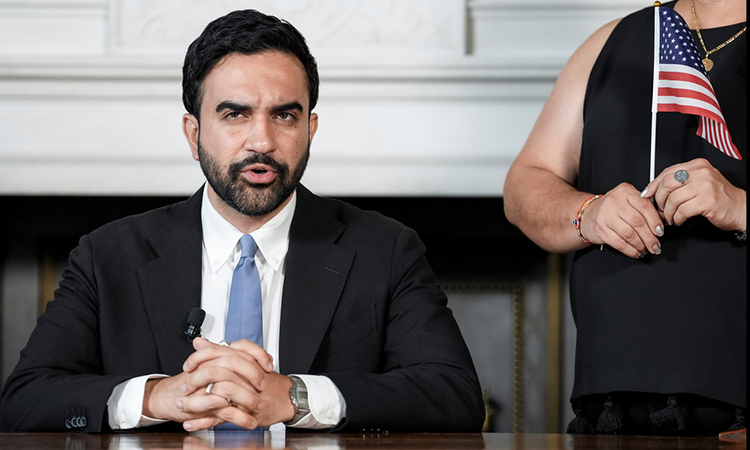

 SLOCUM – A firefighter with the Slocum Volunteer Fire Department is currently in the hospital after experiencing a serious medical emergency while on duty earlier this week.

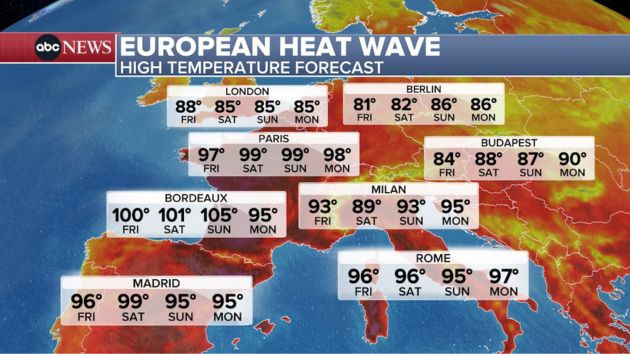



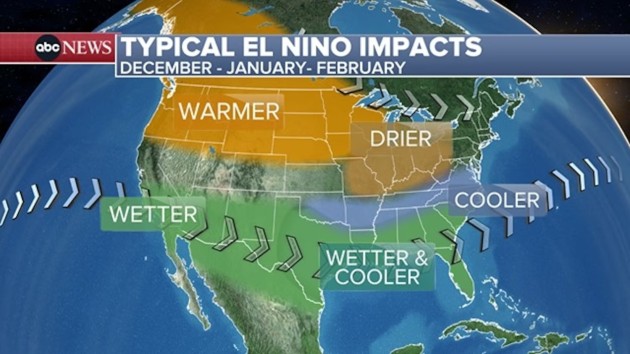




 FLINT — A multi-vehicle crash on Highway 155 has left four dead and one transported with major injuries early Thursday morning, according to Smith County ESD 2 and our news partner KETK. The Texas Department of Public Safety said a Toyota Highlander was driving in the wrong lane, which caused a head-on collision with a Cadillac.

 CHEROKEE COUNTY — An 18-year-old recent New Summerfield ISD graduate has died following a Saturday crash in Cherokee County, the Texas Department of Public Safety announced. A preliminary investigation revealed that the crash occurred on July 4 at around 11 p.m. on FM 2064 near State Highway 135 involving a Jeep Grand Cherokee. DPS confirmed the identity of the driver as 18-year-old Guadalupe Moreira.


 TYLER – A Brownsboro man has been sentenced to over 15 years in federal prison for trafficking methamphetamine in east Texas, announced U.S. Attorney Jay R. Combs.


 TYLER – Tyler Water Utilities (TWU) continues to rebuild and improve the wastewater infrastructure Tyler depends on every day. Upcoming projects will repair aging lines and add capacity, continuing the City’s efforts to reduce sanitary sewer overflows and improve the sewer system.