BULLARD – Bullard and Winnsboro ISD were both awarded state grants this week to help support students with autism. Both districts were selected by the Texas Education Agency to receive the grant, which will provide $530,000 in the first year and $750,000 in the second year to help expand support for students with autism.
According to our news partner KETK, the grant will allow both districts to install the following initiatives that will provide support to autistic students while also providing tools to educators to create a better learning environment: Increasing opportunities for students to learn in inclusive classrooms, using proven, research-based teaching strategies, offering more resources and training opportunities for parents and providing additional training for teachers and staff.
“We are so excited about what these grant funds will allow us to do to better serve our students with autism,” Bullard ISD Director of Special Education and 504 Director Shelley Tiner said. “By working together, our districts are building a strong model that best supports our students and families.”
JEFFERSON — An East Texas judge is disputing accusations that he assaulted both a minor and an adult at a 2025 Halloween party, casting scrutiny on the timing of the adult’s complaint, which surfaced months after the incident. According to our news partner KETK, Marion County Judge Leward LeFleur, who ran uncontested in the March 3 Republican Primary, was first accused of a Class C assault misdemeanor against the minor at a fall 2025 party. After the county recused itself, the case was handed to the Morris County District Attorney’s Office.
The City of Jefferson was then handed the case for review, where acting Jefferson City Attorney George Hyde requested additional information on the allegation from the Jefferson Police Department. There, they discovered a second assault that an adult alleged happened at the same Halloween party.
“After receiving this information, it revealed additional information regarding the alleged assault and included information and a new complaint against Judge Lafleur arising from the same event and which occurred close in time to the alleged assault,” a statement from Hyde’s office said. Continue reading Judge pushes back against assault allegation
LUFKINS – The City’s Click2Gov online payment system will be unavailable this weekend due to a scheduled software upgrade by its vendor. The system is expected to be down for most or all of the day Saturday at least. Joshua Gentry, IT digital content manager for the City of Lufkin, stated the city appreciates citizens’ patience while this upgrade is completed.
UPSHUR COUNTY – The Texas Department of Public Safety has released details of a two vehicle accident that killed a Longview nurse practitioner and a Longview ISD teacher last weekend. According to the DPS, the collision occurred early Sunday morning in the Diana area involving Longview ISD teacher Kimberly Law and Hospitality Health ER nurse practitioner Joel Mack.
Law was allegedly driving south on the northbound lane of U.S. 259 when she struck Mack’s vehicle, who was driving north in the same lane an initial investigation revealed. Law was pronounced dead at the scene and Mack was transported to a local hospital for his injuries.
DPS said Mack has since died from his injuries sustained in the accident.
NEW YORK (AP) — U.S. stocks pulled back from their record heights on a shaky Wall Street Thursday following mixed profit reports from Tesla and other big companies. Oil prices, meanwhile, jumped on worries about what will happen next in the war with Iran.
The S&P 500 fell 0.4% and halted a weekslong rally that had erased all its losses because of the war and then carried it to all-time highs. The Dow Jones Industrial Average dipped 179 points, or 0.4%, while the Nasdaq composite dropped 0.9% from its own record.
Tesla helped drag the market lower after sinking 3.6% even though it reported better results for the latest quarter than analysts expected. Investors focused instead on a big jump in Tesla’s forecast for spending this year, as it builds factories to make robots and other products.
“You should expect to see a very significant increase in capital expenditures,” Elon Musk told investors late Wednesday, “but I think well justified for a substantially increased future revenue stream.”
ServiceNow dropped even more, 17.7%, even though its results for the latest quarter matched analysts’ expectations. The company has been under pressure, along with much of the broad software industry, because of worries that rivals powered by artificial-intelligence technology could undercut its business.
In the oil market, prices leaped as uncertainty built about what will happen with the Strait of Hormuz. A ceasefire is still in place between the United States and Iran, but oil tankers in the Persian Gulf aren’t able to get through the narrow waterway off Iran’s coast and deliver crude to customers.
The U.S. military on Thursday seized another tanker associated with the smuggling of Iranian oil, a day after Iran’s paramilitary Revolutionary Guards took control of two vessels in the strait. President Donald Trump also said Thursday he ordered the U.S. military to “shoot and kill” Iranian boats that deploy mines to gum up traffic in the strait.
The price for a barrel of Brent crude to be delivered in June rose 3.1% to settle at $105.07 and at one point topped $107. That peak coincided with a sudden drawdown for stocks, and the S&P 500 fell as much as 1.3% before it almost as instantly erased half the loss.
The price for a barrel of Brent to be delivered in July, which is the more popular contract for traders, settled at $99.35 after getting as high as $101.
More expensive oil has hurt airlines in particular because of the industry’s big fuel bills, and stocks diverged in the industry following the latest profit reports.
American Airlines Group rose 2.4% after reporting better profit and revenue for the latest quarter than analysts expected. American said demand was strong for flights, and it saw the nine best weeks for revenue intake in its 100-year history.
Southwest Airlines lost 4.1% after reporting weaker quarterly results than analysts expected. It said it would not give an updated forecast for profit this year because of “the ongoing macroeconomic uncertainty.”
Also on the losing end of Wall Street was IBM, which sank 8.3% despite reporting better profit and revenue for the latest quarter than expected. Investors focused on potentially discouraging numbers underneath the surface, including decelerating growth in trends for its software business.
Paramount Skydance fell 4.5% after Warner Bros. Discovery shareholders approved selling the business to Paramount. Warner Bros. Discovery sank 1.6%.
Texas Instruments helped limit Wall Street’s losses after breezing past analysts’ expectations for profit in the latest quarter. CEO Haviv Ilan said the semiconductor company is benefiting from growth led by industrial and data center customers, and its 19.4% leap was the strongest force pushing upward on the S&P 500.
All told, the S&P 500 fell 29.50 points to 7,108.40. The Dow Jones Industrial Average dipped 179.71 to 49,310.32, and the Nasdaq composite sank 219.06 to 24,438.50.
In stock markets abroad, indexes fell across much of Europe and Asia. Hong Kong’s Hang Seng fell 0.9%, and Japan’s Nikkei 225 sank 0.7% for two of the bigger losses.
South Korea’s Kospi climbed 0.9% after the government reported better-than-expected economic growth for the start of the year, boosted by strong exports, particularly of computer chips used in the AI boom. Semiconductor supplier SK Hynix said its revenue for the latest quarter jumped more than analysts expected largely because of AI-related demand.
In the bond market, the yield on the 10-year Treasury erased an early dip and rose to 4.32% from 4.30% late Wednesday as oil prices accelerated.
A report in the morning said slightly more U.S. workers applied for unemployment benefits last week, but the number is still at a historically healthy level. A separate, preliminary report on U.S. business output from S&P Global also suggested growth is improving a bit from its near-stagnation seen in March.
Can your old smartphones make a security system? Yes! You need to check out David Rancken’s App Of The Day. It’s called AlfredCamera Home Security. You can get AlfredCamera Home Security in the Apple Store and Google Play below.
RUSK COUNTY – A cyber tip from the North Texas Internet Crimes Against Children lead to the arrest of an East Texas man possessing child pornography on Tuesday. According to our news partner KETK and the Rusk County Sheriff’s Office, investigators obtained an arrest warrant for 35-year-old Christopher Smith II of Mount Enterprise following the cyber tip. A search warrant was also obtained to locate any additional child pornography he may have in his possession.
The sheriff’s office and a Texas Department of Public Safety officer who specializes in digital forensics executed the search warrant at Smith’s home. Smith was taken into custody and several items were seized as evidence, the sheriff’s office said. Smith is currently in the Rusk County Jail under a $65,000 bond for his possession of child pornography charge. According to the sheriff’s office, the case is still under investigation and may result in additional charges.
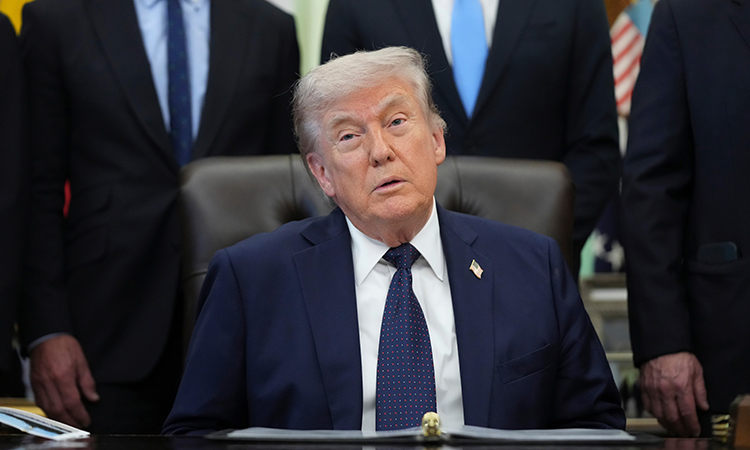
President Donald Trump speaks during an event on health care affordability in the Oval Office at the White House, Thursday, April 23, 2026, in Washington. (AP Photo/Mark Schiefelbein)
Donald Trump is a polarizing figure. (In other news, it gets hot in Texas in the summer.)
More than any recent president, Donald Trump evokes a visceral reaction among a large proportion of voters. Millions of people – disproportionately concentrated in coastal states – despise the man.
A big reason is his outsized, brash personality that is unlike that of any politician in our time. Since the 2015 escalator ride that kicked off his first campaign, we have observed his penchant for incendiary statements, insulting personal attacks and often outlandish exaggeration. To a significant degree, Donald Trump himself has contributed to much of the animus against him. (To be fair, many of these characteristics have been greatly muted in his second term.)
But for my money, one of the biggest and most consistent contributors to Trump hatred is the corrupt and fundamentally dishonest legacy media. Shrinking in size, scope and influence as the legacy media are, a meaningful percentage of Americans still rely solely on the likes of ABC, CBS, NBC, et. al. for their news. In the same way that the diet of a college kid is carb heavy, the news diet of a legacy media consumer is agenda heavy. Members of the legacy media almost to a person see it as their civic and sacred duty not to merely report on what Donald Trump does and allow readers and viewers to form their own conclusions. They see themselves instead as specially charged with saving the republic from him. Example: If Trump vigorously prosecutes attacks on Iran, the media says he’s a “war criminal.” If he extends a ceasefire, they say he’s a “TACO” (i.e.Trump Always Chickens Out.)
The once-trusted legacy media are using the last shards of the credibility they once enjoyed to intentionally and shamelessly lie about Trump, his policies and his accomplishments.
And there’s a key word: accomplishments. They are many.
Since taking office for his second term, Trump has essentially stopped illegal immigration. Not slowed it down. Stopped it. It’s a campaign promise kept.
Another campaign promise: energy independence. The president has unleashed the American oil & gas industry in way that is completely reshaping the world geopolitical landscape for the long term in America’s favor. (It’s worth noting that in times not so long past, a war in Iran and the closing of the Strait of Hormuz wouldn’t have simply caused gas prices to go up, as has happened. There would have been gasoline lines.)
Some agenda-laden reporting to the contrary notwithstanding, very soon Trump will have completed the neutralization of a terroristic, nuclear weapons-seeking Iran – a regime that vexed seven prior administrations while holding the entire world hostage.
All of this while lowering the tax burden on every single American taxpayer.
There’s more, but space doesn’t permit.
The real knock on Trump boils down to this. The man has had the temerity to actually take on and solve problems that establishment politicians – of both parties – merely fundraise on.
In the realm of high-level Washington politics, that’s simply unforgivable.
LONDON (AP) — Opponents of smoking got a breath of fresh air as Parliament passed a bill that will put cigarettes out of reach for future generations.
“The end of smoking, and the devastating harm it causes, is no longer uncertain — it’s inevitable,” Hazel Cheeseman, chief executive of Action on Smoking and Health, said after a decades-long campaign in favor of legislation approved Tuesday.
Children born after Dec. 31, 2008, will be banned from ever buying cigarettes under the Tobacco and Vapes Bill.
The legislation that needs approval by King Charles III — a formality — before taking effect will also allow the government to regulate tobacco, vaping and nicotine products, including flavors and packaging.
It is currently illegal to sell cigarettes, tobacco products or vapes to people younger than 18. But most youths today will continue to face a ban their entire life as the minimum age to buy cigarettes rises each year.
The passage gives the U.K. one of the toughest antismoking measures in the world. The law is similar to one New Zealand lawmakers passed in 2022, but that was repealed by a subsequent government.
The number of people who smoke in Britain has declined by two-thirds since the 1970s, but some 6.4 million people — or about 13% of the population — still smoke, according to official figures.
Authorities say smoking causes some 80,000 deaths a year in the U.K, and remains the number one preventable cause of death, disability and poor health.
“Children in the U.K. will be part of the first smoke-free generation, protected from a lifetime of addiction and harm,” Health Secretary Wes Streeting said.
TATUM – A safety concern along a stretch of highway in East Texas is getting attention after the Tatum police chief made a public plea for action. The concern is along State Highway 149, from the city limits traveling south to Tatum Middle School, where on Tuesday, an 18-wheeler hydroplaned into oncoming traffic before slamming onto school property. Continue reading Chief makes plea for road safety
SMITH COUNTY – Traffic along Interstate 20 entering Lindale is back open after an 18-wheeler crash backed up traffic for miles. Our news partner KETK reports that the crash happened around 5:30 p.m. on I?20 between U.S. 69 and FM 14. DPS officials reported that a pickup truck carrying a camper lost control on the interstate and an 18?wheeler struck the camper from behind. No injuries or fatalities have been reported.
Close up of senior woman using cannabis at home (Getty/Emilija Manevska)
(WASHINGTON) -- Acting Attorney General Todd Blanche signed an order on Thursday reclassifying state-licensed medical marijuana as a less dangerous drug.
The order moves marijuana from Schedule I to Schedule III, putting state-licensed medical marijuana in the same category as some pain medications, ketamine and testosterone.
Schedule I drugs are defined as "drugs with no currently accepted medical use and a high potential for abuse" while Schedule III drugs are defined as "drugs with a moderate to low potential for physical and psychological dependence," according to the Drug Enforcement Agency (DEA).
While this change aligns federal guidelines with many state laws, marijuana is still illegal at the federal level. It does not remove cannabis from the federal controlled substance list, legalize recreational use nationwide or allow unregulated sales similar to tobacco and alcohol.
However, the move could allow for expanded research and ease many of the tax and regulatory rules placed on the cannabis industry.
"These actions will enable more targeted, rigorous research into marijuana's safety and efficacy, expanding patients' access to treatments and empowering doctors to make better-informed healthcare decisions," Blanche wrote in a statement on X.
President Donald Trump announced late last year that his administration would seek to reclassify marijuana, but not legalize it for medical or recreational use under federal statutes. Over the weekend, the president appeared to express frustration that the administration was slow-walking the effort.
Blanche said the Justice Department and DEA will begin the process of potentially reclassifying all marijuana to Schedule III. The DEA is planning to hold a hearing in late June.
"The new hearing ... will provide a timely and legally compliant pathway to evaluate broader changes to marijuana's status under federal law," according to a press release from the Justice Department.
The process of reclassifying marijuana began under the administration of former President Joe Biden.
In October 2022, Biden asked then-Secretary of Health and Human Services (HHS) Xavier Becerra and then-Attorney General Merrick Garland "to initiate the administrative process to review expeditiously how marijuana is scheduled under federal law."
The HHS in August 2023 made a recommendation to the DEA to move medical marijuana from Schedule I to Schedule III.
In May 2024, the Justice Department announced Garland had submitted a notice of proposed rule-making to move medical marijuana to Schedule III, with DEA announcing in August 2024 that a hearing would be held on the proposal.
That hearing was scheduled to begin on Jan. 21, 2025, but was postponed about a week before by a judge.
Marijuana is the most widely used federally illegal drug in the country. Nearly one in five Americans -- 52.5 million people -- reported using it at least once in 2021, according to the Centers for Disease Control and Prevention (CDC).
So far, 24 states and the District of Columbia have fully legalized recreational marijuana for adults, allowing adults aged 21 and older to possess, use and, in most cases, cultivate small amounts of cannabis, according to the National Conference of State Legislatures.
Although cannabis may have potential medical uses, it has also been associated with mental health problems, impaired driving, and lung and heart conditions. About three in 10 cannabis users will develop cannabis use disorder, meaning they are unable to stop using cannabis even though it's causing health and social problems, according to the CDC.
Cannabis use directly affects the parts of the brain responsible for memory, learning, attention and decision-making, the CDC says.
The CDC also cautions that it can cause harm to brain development in young people and use during pregnancy may be linked to lower birth weight and possible developmental effects.
JACKSONVILLE — An infant was safely reunited with their mother after being briefly kidnapped, with law enforcement locating the toddler in a wooded area in Jacksonville. According to our news partner KETK, Jacksonville Police responded to a welfare check on Wednesday at around 1 p.m. on Myrtle Drive. A man had reportedly entered a residence and took a 1-year-old child. The man was later identified as Brian Damon Black, 42, of Jacksonville.
The initial caller was concerned that Black was seen walking into a nearby wooded area with a child. The child was located unharmed and reunited to the mother.
Black was located a short time later in a wooded area near Skyline. He was arrested following a brief pursuit.
Black was booked into the Cherokee County Jail on charges including burglary of a habitation, kidnapping and evading arrest or detention.
An Israeli artillery unit fires toward Lebanon on April 9, 2026 in northern Israel. (Amir Levy/Getty Images)
(LONDON) -- Israeli and Lebanese ambassadors are expected to convene again at the State Department on Thursday for a second round of meetings amid the latest conflagration in the Middle East.
The first direct negotiations between the two states since 1993 are intended as preparatory meetings to shape future talks on a deal to normalize ties between the countries.
Thursday's meeting is expected to focus on extending a shaky ceasefire that has halted fighting between Israel and the Iran-backed Hezbollah militia, long considered by experts as a "state within a state" wielding enormous influence over Lebanon's political, economic and security spheres.
The technocratic government in Beirut, which came to power in 2025, is juggling dual pressure campaigns -- sustained Israeli attacks and seizure of Lebanese territory on one hand and the internal threat of Hezbollah and its Iranian backers on the other.
Lebanese President Joseph Aoun said on Tuesday that the goal of the negotiations was to "stop hostilities, end the Israeli occupation of southern regions and deploy the [Lebanese] army all the way to the internationally recognized southern borders."
"We negotiate for ourselves," Aoun said. "We are no longer a pawn in anyone's game, nor an arena for anyone's wars. And we never will be again."
Paul Salem, a senior fellow at the Middle East Institute think tank, told ABC News from Beirut that Thursday's talks are "historically significant in what they might eventually lead to," but framed the meetings as the first steps on a long and difficult road.
The government in Beirut is facing "a prolonged conundrum," Salem said. "Iran is insisting on maintaining its presence and backing Hezbollah in Lebanon. Hezbollah seems to be happy to continue to play their role with Iran."
And in southern Lebanon, Israel seems intent on a devastating campaign and seizure of land which its Defense Minister Israel Katz has repeatedly said will be modeled on the destruction of Gaza.
"The Lebanese state needs to be able to bolster its credibility by not allowing a long-term Israeli occupation," Salem said.
On Wednesday, a spokesperson for Israeli Prime Minister Benjamin Netanyahu's office told ABC News of the talks that there is "one obstacle: Hezbollah the Iranian proxy holding Lebanon hostage and threatening Israel. Peace through strength: remove Hezbollah and peace becomes possible."
President Donald Trump's administration pushed for a ceasefire in Lebanon earlier this month, as the White House sought a pause in the joint U.S.-Israeli campaign against Iran. Trump announced a 10-day ceasefire between Hezbollah and Israel following the first round of talks on April 14 -- a ceasefire Netanyahu seemingly had no choice but to support.
But Trump and his top officials have also made clear that Hezbollah cannot be allowed to retain its pre-war clout within the country, nor continue to pose a military threat to Israel.
"We will make Lebanon great again. It's about time we did so," Trump said over the weekend.
Ahead of Thursday's talks, a State Department official told ABC News, "The United States welcomes the productive engagement that began on April 14."
"We will continue to facilitate direct, good-faith discussions between the two governments," the spokesperson added.
A tentative ceasefire
Thursday's talks in Washington will resume amid a tentative U.S.-backed ceasefire, under which Israeli strikes against alleged Hezbollah targets continue in eastern and southern Lebanon.
Under the U.S.-backed deal, Israel retains the right to fire on what it deems an "imminent threat" to its troops. The IDF has fired several times on Hezbollah targets since the ceasefire began on April 17. On Tuesday, Hezbollah said it fired rockets and drones at Israeli forces for the first time since a 10-day truce took effect.
Israeli ground forces are still operating in southern Lebanon, with the goal, according to Israeli officials, of establishing a demilitarized "buffer zone" between the Israeli border and the Litani River, around 18 miles to the north.
The IDF says it is holding approximately 15 positions about six miles deep into southern Lebanon, which it says includes about 50 Lebanese villages. Israeli officials have blamed the Lebanese government for being unable or unwilling to keep Hezbollah away from Israel’s northern border -- a responsibility set out in the U.S.-brokered November ceasefire.
The campaign includes the razing of dozens of Lebanese towns and villages, plus the forced -- and, at least for some, permanent -- displacement of hundreds of thousands of people.
Human Rights Watch said this month that more than a million people across the country have been forced to flee their homes -- nearly one-fifth of the entire population of the country. The Israeli evacuation orders have included all of southern Beirut, the suburbs of which are traditionally considered a Hezbollah stronghold.
Israeli action has killed at least 2,294 people and wounded another 7,544 people since March 2, Lebanon's Health Ministry said last week. The strikes included a barrage of more than 100 strikes within 10 minutes on April 8, killing at least 357 people across the country, Lebanese authorities said.
Israeli health officials say Hezbollah gunfire, rockets and drones have killed 20 Israelis since March 2 and injured hundreds of others.
On March 2, Hezbollah joined Iran in its response to the U.S.-Israeli military campaign launched against Iran on Feb. 28. With those strikes, Hezbollah broke a U.S.-backed cross-border ceasefire that had been in place since November 2024. Hezbollah said the attacks were retaliation for alleged Israeli violations of the same ceasefire.
Hezbollah defied assessments it had been substantially weakened by its two-year involvement in the war in Gaza, firing more than 6,500 munitions toward Israel in the first five weeks of renewed fighting, according to the IDF.
Hezbollah fighters have also inflicted significant casualties on invading Israeli forces. Sixteen Israel Defense Forces troops had been killed in the current round of fighting in Lebanon as of Wednesday. The IDF says it has killed more than 1,800 Hezbollah operatives since March 2.
"Hezbollah is back in business," Salem said. Israel's operation "enables Hezbollah to resume its resistance narrative. And it certainly suits Iran to keep the Lebanon front open and active, to keep Israel distracted and to drain some of its resources and attention."
Dual threats
Within Lebanon, Aoun and Prime Minister Nawaf Salam have faced veiled threats from Hezbollah and Tehran.
After the first round of talks in Washington, Hezbollah leader Naim Qassem said Aoun's government was "subjecting Lebanon to these humiliations by negotiating directly with the Israeli enemy and listening to its dictates."
Hezbollah is not a party to the U.S.-brokered ceasefire between Israel and Lebanon, which seeks to sideline the Iranian-backed militant group.
Hassan Fadlallah, a Hezbollah member of parliament, has called on Aoun to pull out of the talks. "We will reject and confront any attempt to impose political costs on Lebanon through concessions made to this Israeli enemy," Fadlallah told AFP this week, though said the group wants "the ceasefire to continue" along with an Israeli withdrawal.
A potential clash between Beirut and Hezbollah has been brewing since the Aoun-Salam government took power last year.
In an unprecedented step, The Lebanese cabinet has repeatedly asserted its ambition for Hezbollah to disarm and has declared all military activity by the group to be illegal. Earlier this month, the cabinet ordered security forces to restrict weapons in Beirut exclusively to state institutions
The state's all-volunteer Lebanese Armed Forces (LAF) is widely considered to be outgunned by Hezbollah, though it has around 80,000 personnel. Polls suggest the LAF is broadly popular among Lebanese people, but its multi-sectarian character has raised questions as to whether it would prove dependable in the event of renewed communal fighting.
But despite Hezbollah's mauling in the last round of fighting with Israel and the loss of a key neighboring partner with the fall of Syrian President Bashar Assad in 2024, observers say the group -- which is part of the Lebanese government and holds more than a dozen seats in parliament -- retains extensive military and political power, particularly in parts of the capital Beirut and in its southern and eastern heartlands.
Before the outbreak of its latest war with Israel in 2023, estimates of Hezbollah's military strength ranged from 30,000 to more than 50,000 operatives.
Israeli leaders have committed to an open-ended seizure of parts of southern Lebanon and demanded Beirut's assistance in the total disarmament of Hezbollah, raising fears that Lebanon's confessional power-sharing system could fracture and the country slide back into the kind of civil war that killed more than 100,000 people between 1975 and 1990.
Israeli leaders have been clear that they will not tolerate Hezbollah’s presence in southern Lebanon, vowing to keep troops there until the militant group is disarmed.
Risking such a calamity on behalf of Israel -- a country which has invaded Lebanon six times since 1978, which is now again occupying parts of the south and which Lebanese authorities say has killed thousands of Lebanese civilians in three and a half years of war with Hezbollah -- may be deeply unpopular.
LAF chief Gen. Rodolphe Haykal said on Tuesday that Lebanon "will reclaim every inch of its land under Israeli occupation," according to a readout posted to the LAF's X page.
Meanwhile, Hezbollah's patrons in Iran -- specifically the Islamic Revolutionary Guard Corps -- appear unwilling to give up their Lebanese ally, which for decades has been perhaps the most potent proxy within of Tehran's "forward defense" strategy by which Iran has sought to deter and punish U.S.-Israeli action against it.
Prominent Iranian leaders who survived the initial U.S.-Israeli onslaught demanded that Lebanon be included in the two-week ceasefire announced on April 8. "For years, Hezbollah has been fighting with the Zionist regime, but in the recent war, Hezbollah fought for the Islamic Republic," parliament speaker and lead Iranian negotiator Mohammad Bagher Ghalibaf said.
Others have hinted at costs for Beirut if the government tries to defang Hezbollah. Ali Akbar Velayati -- an adviser to Iran's new Supreme Leader Mojtaba Khamanei -- for example, said in a post to X this month that Salam "should know that ignoring the unique role of the resistance and the heroic Hezbollah will expose Lebanon to irreparable security risks."
"Lebanon's stability rests exclusively on cohesion between the government and the resistance," Velayati said.
For many Lebanese -- Shiites among them -- the return to war between Israel, Hezbollah and Iran means more turmoil piled atop years of cascading economic and political crises.
Last month, Salam expressed his own frustration. "This war was imposed upon us," the Lebanese prime minister said, adding that Beirut "could have avoided it" if Hezbollah had not resumed attacks on Israel.
ABC News' Chris Boccia and Jordana Miller contributed to this report
 BULLARD – Bullard and Winnsboro ISD were both awarded state grants this week to help support students with autism. Both districts were selected by the Texas Education Agency to receive the grant, which will provide $530,000 in the first year and $750,000 in the second year to help expand support for students with autism.


 NEW YORK (AP) — U.S. stocks pulled back from their record heights on a shaky Wall Street Thursday following mixed profit reports from Tesla and other big companies. Oil prices, meanwhile, jumped on worries about what will happen next in the war with Iran.



 LONDON (AP) — Opponents of smoking got a breath of fresh air as Parliament passed a bill that will put cigarettes out of reach for future generations.

 SMITH COUNTY – Traffic along Interstate 20 entering Lindale is back open after an 18-wheeler crash backed up traffic for miles. Our news partner KETK reports that the crash happened around 5:30 p.m. on I?20 between U.S. 69 and FM 14. DPS officials reported that a pickup truck carrying a camper lost control on the interstate and an 18?wheeler struck the camper from behind. No injuries or fatalities have been reported.


