How Mamdani-aligned House candidates say they plan to fight wealth inequality

New York City Mayor Zohran Mamdani and NYC Congressional candidate Claire Valdez embrace during a primary-night watch party, June 23, 2026, in Brooklyn. (Michael M. Santiago/Getty Images)

(NEW YORK) -- A trio of progressive Democrats sharply criticized billionaires on their way to victory in House primaries in New York City.

The clean sweep for candidates endorsed by far-left New York City Mayor Zohran Mamdani on Tuesday drew attention to economic populism as affordability remains a top issue for voters ahead of the midterm elections.

In Manhattan and Brooklyn's 10th District, incumbent Rep. Dan Goldman lost in a landslide to former comptroller Brad Lander, who vowed to "put working people first – not billionaires."

Darializa Avila Chevalier, a community organizer, defeated incumbent Rep. Adriano Espaillat in New York's 13th District, which covers upper Manhattan and the Bronx. Claire Valdez, a one-term state assemblymember, beat Brooklyn Borough President Antonio Reynoso in the primary race for New York's 7th District.

Valdez and Chevalier, both of whom are democratic socialists, called for a four-day work week and a pause in the construction of AI data centers, among other measures.

To be sure, center-leaning candidates won Democratic primaries on Tuesday in upstate New York and Utah. New Jersey Gov. Mikie Sherrill and Virginia Gov. Abigail Spanberger, who are both Democrats, won general elections last year with moderate campaigns touting their own plans to ease price woes.

Here's what to know about economic proposals put forward by Lander, Chevalier and Valdez:

Tax on billionaires

All three of the victorious progressive House candidates support a tax on wealthy individuals.

Lander "strongly supports" the Ultra-Millionaire Tax Act, a bill proposed by Democratic Sen. Elizabeth Warren that would tax the net wealth of households with over $50 million, according to Lander's website.

Lander also backs an ultra-wealth tax on individuals worth over $1 billion, as well as the Equal Tax Act, which matches tax rates for capital gains and ordinary income over $1 million.

Chevalier supports the Ultra-Millionaire Tax Act and the Equal Tax Act. Similarly, Valdez has voiced support for taxing billionaires as means of funding social programs.

The top opponents in each of the three primary races held similar positions. Both Espaillat and Goldman had signed on to the Ultra-Millionaire Tax Act and the Equal Tax Act. Reynoso said he would "fight to tax the rich – a lot."

Proponents say wealth taxes could raise tax revenue from affluent Americans in a position to spare funds. Critics, on the other hand, warn wealthy individuals may move assets abroad or prove less likely to start businesses or other ventures.

For his part, Mamdani sought a two-percentage-point tax increase for residents making more than $1 million, which would have raised the tax rate for high earners in New York City from roughly 3.9% to 5.9%.

Instead, New York enacted a tax on second homes in New York City valued at $1 million or more.

Pause on construction of AI data centers

All three progressive House candidates back a moratorium on the construction of AI data centers.

Many of the nation's largest companies have poured funds into the chips and data centers necessary to operate AI.

The data center projects have drawn ire from critics who say they drive up residential water and electricity bills in some areas, while offering limited job gains. Proponents of the sector point to its role in fueling economic growth and ensuring the competitiveness of U.S. tech firms.

Sen. Bernie Sanders, I-Vt., and Rep. Alexandria Ocasio-Cortez, D-N.Y, have proposed the AI Data Center Moratorium Act, which would pause the development of data centers until the federal government imposes industry regulations.

Goldman, Lander's opponent, signed onto the AI Data Center Moratorium Act. By contrast, Espaillat – Chevalier's opponent – has not supported the bill. Reynoso's position on a data center moratorium could not be immediately found.

On her campaign website, Valdez said she would "fight to hold major technology corporations accountable, protect our workforce from the harms of AI, and ensure that new technologies benefit communities, not just corporate executives."

Four-day work week

Chevalier and Valdez support shifting from a standard workweek of 40 hours spread across five days to one lasting 32 hours across four days.

Such an approach, Valdez says, would reclaim the "economic gains of automation for workers."

Spain, Iceland and South Africa are among the nations that have implemented a trial of the four-day workweek for select companies and workers.

In California and the U.S. House, lawmakers have introduced bills that would set the standard workweek at 32 hours.

The Thirty-Two Hour Workweek Act, introduced in the U.S. House in March 2023, garnered support from eight members. Neither Goldman nor Espaillat was among the backers.

Reynoso's position on a four-day workweek could not be immediately found, though last month he spoke in support of unionized Kickstart employees seeking a four-day workweek as part of their labor contract.

Some experts previously told ABC News that a combination of escalating market pressure and legislative activity could ultimately bring a nationwide four-day workweek standard; others said such an outcome would prove nearly impossible, at least anytime soon.

Labor law reform

The share of unionized workers has fallen nationwide in recent decades. All three of the New York City progressives say they want to reverse that.

Lander, Valdez and Chevalier each support the PRO Act, a labor law reform measure with strong backing among U.S. labor unions.

The legislation would ease the path toward forming unions and winning labor contracts. The latest version of the bill, known as the Richard L. Trumka Protecting the Right to Organize Act, boasts the support of 215 House members, including at least one Republican.

Both Goldman and Espaillat signed onto the PRO Act. Reynoso, meanwhile, vowed to "champion the PRO Act."

On her campaign website, Chevalier calls for passage of the PRO Act, so that "everyone who wants a union can form one."

Copyright © 2026, ABC Audio. All rights reserved.

Nursing gains ‘professional’ label for student loans after judge’s ruling

WASHINGTON (AP) — Students pursuing graduate degrees in nursing, physical therapy and several other fields will be eligible to take out higher federal student loan amounts — at least for now — after a federal judge blocked part of a Trump administration rule that held them to lower limits.

The U.S. Education Department issued a revised rule on Monday designed to follow the judge’s order from last week, officials told The Associated Press. Agency officials called it a temporary change while they fight in court to keep the original rule, which defined medicine, law and other fields as “professional programs” but excluded fields such as nursing.

The department disagrees with the judge’s order but will comply, even as officials plan to prevail in the case over which degrees are defined as “professional,” Undersecretary Nicholas Kent said in a statement. “We will continue to make the case that the definition is both lawful and appropriate,” he said.

The change represents a short-term win for groups that sued to stop the rule. Eight groups challenged the department’s definition in court, representing nurse practitioners, therapists, speech language pathologists and more.

But in strictly applying the judge’s order, the department is now striking some degrees from the list of professional programs, meaning those students will face lower loan limits. Theology studies programs are among the biggest to shift from professional to non-professional degrees in the shuffle, subjecting theology students to a lower student loan limit. The master of divinity degree — a common degree for pastors and ministers — remains on the professional list, with a more generous student loan limit.

The new rule, which takes effect Wednesday, comes from a student loan overhaul passed in President Donald Trump’s tax bill last year. Programs designated as professional degrees face federal loan caps of $200,000, while other graduate programs are capped at $100,000.

Previously, graduate students had been able to take out federal loans up to the full cost of their degree. Trump officials pushed for new loan caps to rein in student debt and lower tuition prices that they said had grown out of control.

The groups that brought the lawsuit said the rule would require students to forgo their studies or take out riskier private loans. Although many graduate nursing degrees fall within the lower loan limits, some can cost more than $100,000, including in high-demand fields like nurse anesthesia.

In a notification to universities on Monday, the Education Department said it’s confident the Trump administration’s initial rule will ultimately be upheld in court. The amended rule is expected to remain in effect during the judge’s preliminary stay, but the department warned that it “may change as litigation in the case proceeds.”

The original rule included about a dozen programs that were deemed professional, which Trump officials had said was not a judgment on their importance but part of a technical definition dating to the 1960s. Along with law and medicine, that list also included theology, pharmacy, veterinary medicine, clinical psychology and more.

The temporary rule expands that list to 29 specific degree programs, including master of science in nursing, doctor of nursing practice, and doctor of nurse anesthesia practice. Others newly added to the professional list include degrees for physical therapy, athletic training, speech-language pathology, physician associates and anesthesiologist assistants.

The department’s communication listed about 25 programs that are now considered non-professional degrees. Along with theology, that list now includes applied psychology, pharmaceutical sciences and others. (The doctor of pharmacy degree remains professional.)

Last week’s court ruling blocked parts of the Education Department’s definition that were added in a federal rulemaking process. U.S. District Judge Beryl Howell in Washington called it a “misguided” interpretation that strayed from a longstanding definition created by Congress.

The department’s definition laid out several criteria used to weigh if degrees count as professional programs. It said those degrees generally take six years to complete and require licenses to begin practicing, among other requirements.

It also said professional degrees cannot lead to employment that must be “be supervised by another professional” with “more education, training, and qualifications.”

A separate lawsuit filed by a coalition of Democratic-led states challenging the loan caps is still pending.

In brief: ‘The Devil’s Mouth’ trailer and more

Alicia Vikander has joined the cast of the upcoming Netflix series Enigma Variations. The show is based on the bestselling novel by André Aciman. Vikander is set to play Claire in the series. Aaron Taylor-Johnson was previously announced to star as Paul in the show, which tells the story of "a man remade by the lovers who ignite and undo him over the course of six transformative years," according to its official logline ...

The summer I turned into all the boys I've loved before. Prime Video has shared the official trailer for the thrilling new movie The Devil's Mouth. The summer shark film features two stars of the Jenny Han-verse as part of the ensemble — Lana Condor and Gavin Casalegno. Also starring are Kathryn Newton, Nico Hiraga, Tommi Rose and Tayme Thapthimthong ...

Are you 100% ready to learn the new stars of the upcoming Netflix comedy series A Hundred Percent? Good. The show, which has started production in LA, has added Diane Lane, Tiffany Boone and Lisa Gilroy to its cast. The previously announced ensemble includes Nick Kroll, Sam Richardson, Jason Mantzoukas and Vanessa Bayer. The show follows a group of friends who are stars in the world of wellness and self-optimization ...

Copyright © 2026, ABC Audio. All rights reserved.

Supreme Court is set to rule on Trump’s challenge to birthright citizenship

WASHINGTON (AP) – The Supreme Court on Tuesday will rule on the constitutionality of President Donald Trump’s order on birthright citizenship declaring that children born to parents who are in the United States illegally or temporarily are not American citizens.

The decision comes on the final day of a Supreme Court term that has centered on Trump’s expansive claims of presidential power — and largely ruled in his favor.

The court on Monday handed Trump a major win by upholding his firings of independent federal agency heads at will, with the exception of Federal Reserve governor Lisa Cook, who will retain her job while she fights the president’s effort to fire her over allegations of mortgage fraud.

Here’s the latest:

How do most countries decide a child’s citizenship?

Outside of the Americas, most countries follow the legal principle of jus sanguinis, or “right of blood,” with a child’s citizenship inherited from its parents, no matter the place of birth.

In the European Union, for example, no member states grant automatic, unconditional citizenship to children born to foreigners.

But American legal practice is descended in many ways from English common law, which had long provided for citizenship based on a child’s place of birth, the legal concept of jus soli, or “right of soil.”

The UK, though, abandoned jus soli with the British Nationality Act of 1981.

Under the new rules, people born in the UK get citizenship only if at least one parent is a British citizen or has “settled status” under the law.

The justices will read summaries of their opinions

The court will dive right into the remaining decisions when the justices take the bench at 10 a.m. ET.

The opinions are typically read in ascending order of seniority so that the most junior justice with an opinion goes first. Chief Justice John Roberts, who may well have the decision in the birthright citizenship case, would go last.

Monday’s ruling on federal agencies dramatically expanded presidential power

Other than at the Federal Reserve, with its role of setting interest rates, the court held that presidents have free rein to fire agency heads at will, despite federal laws that require a cause for such dismissals and a 91-year-old decision that had limited executive authority.

The justices allowed Fed governor Lisa Cook to stay in her job while she fights Trump’s effort to fire her over allegations of mortgage fraud, which she has denied.

With the six conservative justices in the majority, the nine-member court jettisoned its unanimous decision in Humphrey’s Executor that had limited when presidents can fire agencies’ board members — in part to try to ensure decision-making free of political influence.

“We hold that such protection from removal is contrary to the separation of powers enshrined in the Constitution,” Chief Justice John Roberts wrote for the court.

The court will also rule on trans athletes and campaign finances

In separate cases, the court will also decide:

Whether states can prohibit transgender athletes from playing on girls’ and women’s public school and college teams.

Whether to uphold a federal law more than 50 years old limiting how much political parties can spend in coordination with candidates for Congress and the president.

The court seemed poised to reject Trump’s birthright citizenship limits during arguments in April

Oral arguments for the case lasted more than two hours in a crowded courtroom that included Trump, the first sitting president to attend arguments at the nation’s highest court, and, in seats reserved for the justices’ guests, actor Robert De Niro.

Trump heard his administration’s top Supreme Court lawyer, Solicitor General D. John Sauer, face one skeptical question after another. Justices asked about the legal basis for the order and voiced more practical concerns.

“Is this happening in the delivery room?” Justice Ketanji Brown Jackson asked, drilling down into the logistics of how the government would actually figure out who is entitled to citizenship and who is not.

Chief Justice John Roberts suggested that Sauer was relying on quirky exceptions to citizenship to make a broad argument about people who are in the country illegally. “I’m not quite sure how you can get to that big group from such tiny and sort of idiosyncratic examples,” Roberts said.

Justice Clarence Thomas sounded the most likely among the nine justices to side with Trump.


FDA panel on peptides will include experts who promote the unproven chemicals favored by RFK Jr.

WASHINGTON (AP) — When U.S. health officials meet next month to reconsider a list of controversial peptide drugs, they will hear from a new set of voices: doctors and pharmacists with deep financial ties to the burgeoning industry of unproven chemicals.

The Food and Drug Administration on Monday released its list of participants for an upcoming meeting to reconsider the safety and effectiveness of several popular peptide injections, including some that have been praised by Health Secretary Robert F. Kennedy Jr.

Previous FDA panels on the topic have been composed of academics and researchers. The agency’s new group mainly includes health professionals who prescribe, produce or promote peptides, which have become a wellness trend among athletes, influencers and celebrities.

The two-day meeting is the latest example of how Kennedy and his deputies are trying to reshape U.S. health policy in the mold of the Make America Healthy Again movement. Some of the biggest supporters of the movement sell peptide formulas, though many pharmaceutical industry experts consider them illegal, unapproved drugs.

The substances are sold online and promoted by wellness clinics as a means to build muscle, heal injuries and look younger, though there’s little evidence behind those claims. Peptide sellers often skirt U.S. regulations by labeling their products as “for research use only,” since the FDA doesn’t regulate research chemicals.

FDA has raised safety concerns about peptides

Many of the injectable peptides sold in the U.S. are produced by compounding pharmacies, which mix custom medications that aren’t available from traditional drug manufacturers.

For several years, the FDA has warned Americans about the risks of injecting chemicals with names like BPC-157 and TB-500, which have not been extensively studied in humans. Both drugs are considered doping substances by international sports authorities. They are among seven peptides set for review in July.

Previous versions of the FDA’s panel on drug compounding — the group that will meet next month — have voted against a string of peptide ingredients brought forward by compounding pharmacies, declaring all of them too risky to be offered to patients. Those panels were mostly composed of experts from universities including Duke, Harvard and Johns Hopkins.

New FDA panel includes peptide proponents

The FDA’s new group includes more than a half-dozen panelists who run clinics, online businesses or pharmacies specializing in peptides, which are often given alongside other unapproved therapies, including vitamin infusions.

For example, panel member Dr. Haleem Mohammed runs clinics in Florida that sell injections of peptides, vitamins, testosterone and weight loss medications. The business is part of a national chain of clinics dubbed Gameday Men’s Health. The company’s website states, “compounded medications offered through our services are not FDA-approved, and the FDA does not verify their safety.”

Another panelist, Dr. Gabriel Alizaidy, charges $500 for “peptide and hormone” consultations, including advice on “where to safely get each peptide or compound.” Alizaidy promotes BPC-157, GHK-Cu and other peptides to thousands of followers through his accounts on Instagram and TikTok.

His website contains the disclaimer that each consultation “is educational in nature and does not constitute medical care, diagnosis, or treatment.”

Another member is Bobby Harshbarger, a Tennessee state senator who has multiple connections to the industry. Harshbarger is a pharmacist at his family’s business, Premiere Pharmacy, which sells compounded medications for weight loss, longevity, pain and other conditions.

His mother, Rep. Diana Harshbarger, is also a pharmacist and a Republican member of U.S. Congress from Tennessee. Last year she sent a letter to Kennedy calling on him to relax FDA restrictions on a half-dozen peptides.

President Donald Trump has repeatedly praised Harshbarger’s support of his “Make America Great Again” agenda. Last year, the president pardoned her husband, Robert Harshbarger Jr., who pleaded guilty more than a decade ago to substituting an unapproved drug from China for one used by patients on kidney dialysis. He was stripped of his pharmacy license and sentenced to four years in prison, which he served.

Mohammed and Alizaidy did not immediately respond to messages from The Associated Press Monday afternoon. A spokesperson for Harshbarger could not immediately provide comment when reached by phone.

Kennedy and his allies previously criticized government panels

The FDA has more than 30 panels of experts who advise the agency on various drugs, vaccines, food ingredients and other products.

Advisory meetings are subject to strict government transparency rules in terms of panel composition and financial disclosures. Experts who have a financial stake in a company or industry are permitted to serve on the panels, but the relationship must be disclosed and regulators are supposed to explain why the person’s expertise outweighs their potential conflict of interest.

Kennedy and his allies have been highly critical of federal expert panels, often alleging that they are riven with conflicts of interest, despite federal data showing otherwise.

Last year, Kennedy fired the Centers for Disease Control and Prevention’s entire 17-member vaccine panel and replaced it with a group that includes several anti-vaccine voices. A federal judge later said that action likely violated federal rules.

Kennedy told podcast host Joe Rogan earlier this year that he is “a big fan of peptides,” and described using them to recover from injuries.

Former FDA Commissioner Marty Makarywho resigned in May — was also highly critical of FDA advisory panels, complaining that they were expensive, time-consuming and subject to too many financial conflicts.

The number of such meetings plummeted during Makary’s tenure. Instead, the FDA held a number of ad hoc meetings with handpicked experts on topics favored by Kennedy, including the risks of talc powder and antidepressants.

Amanda Batula to exit ‘Summer House’ after nine seasons

Amanda Batula attends the 'Summer House' season 10 reunion. (Clifton Prescod/Bravo)

Amanda Batula is saying goodbye to Summer House.

The reality TV star is exiting the Bravo series and will not appear in its upcoming season 11 after nine seasons as a full-time cast member, according to Deadline.

ABC Audio has reached out to Bravo for confirmation.

The 10th season of Summer House captured the zeitgeist due to a scandal that has been given the colloquial name "Scamanda."

After months of rumors, Batula and West Wilson confirmed they are in a relationship in posts made to Instagram on March 31. Batula is married to Summer House cast member Kyle Cooke, although they are divorcing. Wilson is fellow Summer House star Ciara Miller's ex-boyfriend, and Batula was considered one of Miller's close friends.

Wilson will also not return to Summer House for season 11, according to the outlet.

Although Batula is exiting Summer House, that doesn't mean she's fully out of the Bravo-verse quite yet. She currently stars in the Summer House spinoff series In the City. That show has yet to be picked up for a season 2.

Copyright © 2026, ABC Audio. All rights reserved.

Infant in medically induced coma

Infant in medically induced comaSMITH COUNTY — Records reveal new details leading up to the arrest of three Smith County women for child endangerment, after a two-month-old was placed in a medically induced coma.

According to our news partner KETK, medical staff at a local Tyler hospital alerted Child Protective Services after Sidney Whitt, 21, came in with her two-month-old, stating “she hadn’t had a wet diaper in three days and she was fatigued,” a Smith County affidavit revealed. While at the hospital, the baby reportedly began having seizures, lasting about an hour, and had visible bruises on her face, cheek and jawline. Hospital staff believed that seizures may have been caused by having been violently shaken.

The infant was then transported to a hospital in Dallas for further medical care.

In a later interview, a report revealed that Whitt had left her children locked in a bedroom when leaving to meet with Jacqulyn Morales, her roommate, and her boyfriend at a hotel where they consumed alcohol and drugs. Whitt’s and Morales’ children were left under the care of Shelby Munoz, Morales’ 18-year-old sister. Continue reading Infant in medically induced coma

Screwworm preventing dog rescue

Screwworm preventing dog rescueKILGORE – There are now 27 confirmed New World Screwworm cases in the United States, 26 of them in Texas. A ripple effect of the worm’s spread is already being felt Rusk County, where ‘That Crazy Dog Lady’ has been forced to stop intake of dogs until 20 are transported to New York, which is one of the states now restricting dogs coming from Texas.

“Our major partner is in the state of New York which has banned entry from any Texas dogs,” owner of ‘That Crazy Dog Lady’ Vanessa Cogswell said. “So, we were supposed to have 20 puppies leaving on Monday to our partner in New York, and unfortunately, they will not be able to travel.”

Her non-profit provides rescue and foster services in rural communities without animal control services. Continue reading Screwworm preventing dog rescue

Second arrest in Whataburger shooting

Second arrest in Whataburger shooting MARSHALL – Police and other investigators made a second arrest in connection with the early Saturday morning shooting in Marshall that left two people dead and two others injured. The shooting happened outside a Whataburger restaurant.

Jamarrio Dominique Epps, 21, of Longview, has been arrested and charged with murder. Epps was taken into custody by Longview Police Department’s SWAT team, after Marshall police issued an arrest warrant. Previously, Marshall Police arrested Davion McDale Brown, 19, who was charged with capital murder in connection with the same incident. Continue reading Second arrest in Whataburger shooting

About 3 million fewer people are enrolled under ACA compared to last year: Report

The healthcare.gov website on a laptop arranged in Norfolk, Virginia, Nov. 1, 2025. (Stefani Reynolds/Bloomberg via Getty Images)

(WASHINGTON) -- Millions of Americans have dropped health insurance coverage under the Affordable Care Act (ACA), according to new data from the Department of Health and Human Services (HHS).

The report, which was published on Friday, showed that about 19.2 million people were enrolled under the ACA in the first two months of 2026, down by about 3 million people compared to the same time last year.

HHS attributed the lower number of enrollees to its efforts to crack down on fraud.

The report claimed the administration stopped "1.5 million enrollees from receiving subsidies they did not qualify for and ended or blocked another 1.4 million through February 2026, for a total of 2.9 million people who had previously been improperly receiving subsidies they did not qualify for."

However, the decrease in enrollees comes amid rising costs and a pause of the enhanced premium tax credits.

The enhanced premium tax credits, also known as ACA subsidies, help lower or eliminate the out-of-pocket cost of monthly premiums for those who purchase insurance through the health insurance marketplace.

The subsidies were part of the original ACA passed during the Obama administration. The amount of financial assistance was increased along with eligibility during the COVID-19 pandemic. The subsidies expired at the end of 2025.

In October and November, the subsidies became a sticking point during the longest government shutdown in U.S. history.

Republicans said the expansions from the pandemic era went too far and tried to persuade Democrats to fund a temporary spending bill that didn't address the expiring ACA subsidies, with promises of discussing ways to continue the subsidies later.

Meanwhile, Democrats insisted on extending the premium tax credits as part of a bill to end the shutdown, warning that their expiration could be detrimental for millions of American families.

In January, the House passed a three-year extension of the enhanced premium tax credits, but the measure is now stalled in the Senate.

Estimates from the Congressional Budget Office have suggested that gross benchmark premiums -- the price of a standard plan before government subsidies are applied -- could increase by 4.3% in 2026 and by 7.7% in 2027 without an extension.

An April report from the actuarial firm Wakely Consulting Group found more than one in 10 ACA enrollees did not pay their health insurance premiums at the beginning of the year. Data also showed "extensive buy downs," with enrollees moving to lower-tier or cheaper plans.

The nonprofit KFF found that premium payments from enrollees increased by an average of 58% from $113 to $178 per month, including among those who did not receive the enhanced premium tax credits.

Emma Wager, senior policy analyst for the program on the ACA at KFF, said there is fraud in the ACA marketplace, but the scale described by the federal government may be exaggerated.

"I think when you look at what the federal government has said about this drop, they refer to it as being the result of a crackdown on fraud and fraudulent enrollment," Wager told ABC News. "Given the data that we have, it's really not possible to determine how much of the drop in enrollment is related to fraud versus people voluntarily dropping coverage."

She noted that we know premiums rose "significantly" from last year to this one.

"So many people really couldn't find coverage that was affordable for their families and they were faced with that difficult choice," she continued. "People faced double-digit, triple-digit increases in their premiums between 2025 and 2026."

Insurance companies previously told ABC News that plan rates are rising, even without the tax credits, due to "higher utilization and more complex care among ACA members -- particularly in emergency room visits, behavioral health and specialty pharmacy. For instance, ACA members use the ER at nearly twice the rate of those with employer-sponsored coverage."

Wager said those who choose to drop coverage, or those who are uninsured, are at risk of massive financial problems if they become sick, injured or need health care.

"That's obviously something none of us can control," she said. "So if you suddenly have a hospitalization or an illness that costs you thousands and thousands of dollars and you don't have any form of coverage whatsoever, you can face bankruptcy, you can face the loss of your savings. It's a very large financial risk."

Copyright © 2026, ABC Audio. All rights reserved.

Van student dies in ATV accident

Van student dies in ATV accidentVAN – The Van ISD community is in mourning this week after a 16-year-old student was found unresponsive in a four-wheeler accident, the Smith County Sheriff’s Office said.

According to our news partner KETK, the school release a statement, “It is with profound sadness that Van ISD shares the passing of one of our own, Kayden Palmer, following a tragic accident,” Van ISD said on Saturday. “Kayden was a beloved member of the Vandal family whose infectious smile, kind heart, and servant spirit left a lasting impact on everyone who had the privilege of knowing him. Having recently completed his freshman year at Van High School, Kayden was known for his energy, intelligence, and willingness to lend a helping hand whenever it was needed.” Continue reading Van student dies in ATV accident

City holiday schedule

City holiday scheduleAll non-essential City offices will observe the following schedule on Friday, July 3, in observance of the upcoming Fourth of July.  
  
City Hall  
City Hall offices will be closed Friday, July 3.   
   
Tyler Water Utilities  
The Water Business Office will be closed Friday, July 3. The kiosk at the drive-through offers 24/7 access for water utility customers with its ability to accept checks, money orders, credit/debit cards and cash payments. Those choosing to pay with cash should be aware that no change will be given. Continue reading City holiday schedule

Detroit Lions cornerback Terrion Arnold’s bond set at $1 million in kidnapping conspiracy case

Terrion Arnold is seen in a booking photo released by the Hillsborough County State Attorney's Office on June 24, 2026. (Hillsborough County State Attorney's Office)

(TAMPA, Fla.) -- A judge in Florida set Detroit Lions NFL cornerback Terrion Arnold's bond at $1 million on Monday, denying the prosecutors' request that he remain held without bond on charges alleging he orchestrated a kidnapping in which three men were robbed and beaten at gunpoint.

The 23-year-old NFL player is one of seven people arrested in connection with the "targeted armed robbery" last February in Tampa, police said.

Arnold is accused of "coordinating and directing" the codefendants in an alleged conspiracy to "lure" the three men to an apartment, where prosecutors say they were beaten in retaliation for the alleged theft of more than $200,000 worth of Arnold's personal property from an Airbnb in which he had stayed with friends days earlier in Largo, Florida, according to the Hillsborough County State Attorney's Office.

Arnold surrendered to authorities on Wednesday and was initially denied bond following his arrest on multiple armed robbery and kidnapping charges. He faces a potential sentence of up to life in prison if convicted on the charges, prosecutors said.

A county prosecutor alleged during a detention hearing in Tampa on Monday that Arnold was "the reason why this gets set in motion."

"There's three individuals that had guns pointed in their faces because of this defendant," Kevin Riley, an attorney with the Hillsborough County State Attorney's Office, said.

Defense attorney Harvey Steinberg asked the judge not to find probable cause. He argued that the evidence presented so far only shows that Arnold was "suspicious" that his phone was taken and wanted to confront someone, but that there is "zero evidence" that he was aware that there was going to be a beating or guns involved.

"Did my client direct them? Nope," Steinberg said.

Judge Christopher Sabella found there was probable cause, calling the case "serious," but denied the state's motion to detain Arnold ahead of trial. He set bond at $1 million, saying the amount was "consistent with the serious nature of the charges."

Among the bond conditions, Arnold must surrender his passport and is only allowed to leave his residence for work or legal purposes.

The state had asked that Arnold be required to wear an ankle monitor, which the judge denied after Arnold's defense argued that the monitor would make him unable to work due to strict NFL requirements regarding attire.

"I don't want to interfere with his ability to make a living," Sabella said, adding that he suspects Arnold will have a "paparazzi monitor" that will make his whereabouts known.

"If he shows up on a beach in Tahiti, he'll be on social media," Sabella said. "If he violates the conditions of his bond, he will be found."

Arnold, who was in handcuffs during the court appearance, could be seen smiling with his attorneys following the hearing.

The incident occurred on Feb. 4, three days after multiple items belonging to Arnold and others were stolen from an Airbnb he had rented, according to police. On Feb. 3, Arnold and others reported a loss totaling more than $250,000 to the Largo Police Department, police said.

The men, all in their late teens, were allegedly beaten and pistol-whipped by two of the co-defendants, while a third streamed the assault to Arnold and other suspects who were traveling to the apartment, police said. Investigators uncovered a group chat in which Arnold and another suspect allegedly gave directions during the assault, police said.

After arriving at the apartment, Arnold allegedly directed the other suspects to go inside, at which point the victims were robbed during the ongoing assault, police said. Their wallets, phones, jackets, cash and jewelry totaling more than $6,200 were stolen, according to the criminal report.

Nearly two hours after arriving at the apartment, the victims were escorted out by armed suspects and left in their vehicle, police said. Arnold never entered the apartment or interacted with the victims, based on the police statement.

The victims reported the incident to Tampa police and "positively identified the suspects," police said. The three victims had "visible injuries from being battered," police said.

Arnold allegedly suspected that two of the three victims were responsible for the theft, though investigators ultimately determined that none of them were involved, Tampa police said.

Cell phone evidence and "corroborating testimony" from the co-defendants also "helped establish Arnold's role in planning and directing the crimes," the Hillsborough County State Attorney's Office said.

Among the six codefendants arrested in connection with the case, four men are being held without bond, while two women pleaded guilty on Wednesday to robbery and kidnapping charges, according to the state attorney's office. As part of their plea agreements, they are required to testify truthfully in proceedings related to the case, the office said.

Arnold's sports management team said he "categorically denies any involvement in the matters underlying the allegations made against him and maintains his innocence."

"There is no credible evidence linking Mr. Arnold to these allegations," Denise White, CEO of EAG Sports and Entertainment Agency, said in a statement to ABC News. "Instead, the government appears to be relying on testimony from multiple convicted felons who have admitted their own involvement and may have substantial incentives to shift blame in an effort to lessen their sentences."

Following Monday's hearing, White said the the judge's ruling "confirms that there is very little evidence to even suggest any criminal involvement by Mr. Arnold."

The Lions said in a statement to ABC Detroit affiliate WXYZ that they are "aware of the legal situation" involving Arnold and "will not comment at this time out of respect for the ongoing legal process."

Arnold, a native of Tallahassee, Florida, played at the University of Alabama and was a first-round pick in the 2024 draft.

Copyright © 2026, ABC Audio. All rights reserved.

Former NBA players Malik Beasley, Edward Davis indicted for alleged sports gambling scheme

Malik Beasley #5 of the Detroit Pistons in action in Game Five of the Eastern Conference First Round NBA Playoffs against the New York Knicks at Madison Square Garden on April 29, 2025 in New York City. (Sarah Stier/Getty Images)

(NEW YORK) -- Former NBA players Malik Beasley and Edward Davis, current sports agent Paolo Zamorano and three others were indicted Monday for their alleged roles in a sports gambling scheme in which authorities said Beasley was bribed to manipulate his performance in NBA games.

With their inside knowledge, federal prosecutors in Brooklyn said Beasley’s co-defendants placed sports bets worth hundreds of thousands of dollars.

In a Jan. 26, 2024 game between the Bucks and Cavaliers, Beasley allegedly told his then-Milwaukee teammate Davis he intended to underperform his usual rebounding prowess.  

In exchange, Beasley expected a bribe payment and Davis disseminated the information to co-defendants so they could place fraudulent wagers, the indictment said.

Many of the fraudulent wagers were successful, authorities said.

The following month, when the Bucks were playing the Hornets, Beasley allegedly told Davis he would underperform his usual scoring and overperform his rebounding.  

Davis allegedly passed the information to co-defendants and they placed successful fraudulent wagers, the indictment said.

In a third example from the indictment, Beasley allegedly told Davis he would overperform his rebounding in a March 2024 game against the Clippers.

"An indictment is nothing but a probable cause one sided charging document," Beasley's attorney, Steve Haney said in a statement. "It is not evidence and Malik maintains his presumption of innocence throughout this two year investigation.  We ask that people reserve judgment until all the facts are known."

In total, the defendants and their co-conspirators placed fraudulent wagers totaling hundreds of thousands of dollars conditioned on Beasley’s fixed performance in the influenced games at issue via multiple betting operators, the indictment said.

“As alleged, the defendants turned professional basketball into a criminal betting operation, bribing then-NBA player Malik Beasley to fix his performance in multiple games in order to place fraudulent wagers, enrich themselves and cheat legitimate sportsbooks,” said United States Attorney Joseph Nocella.

“Bribery and insider betting schemes like this one involving former NBA players and a current NBA player agent who exploited inside NBA information for profit erode the integrity of American sports and victimize the sports-watching public.”

Copyright © 2026, ABC Audio. All rights reserved.

ICE releases a Texas nun intercepted walking to church dressed in her habit

McALLEN (AP) — A nun was released from immigration custody after she was arrested walking to Mass in her habit in South Texas.

Sister Leticia Ugboaja was walking to Our Lady of Sorrows Church in McAllen, Texas, just a few miles from the U.S.-Mexico border on Sunday when she was detained by U.S. Immigration and Customs Enforcement officers.

The Department of Homeland Security and ICE have not responded to a request for comment since Sunday.

Parish officials posted a message on social media shortly after the arrest that gained traction in the news and led to Congress members including U.S. Rep. Monica de la Cruz intervening on Ugboaja’s behalf.

The nun is part of the Daughters of Mary Mother of Mercy and volunteered as an Extraordinary Minister of Holy Communion at Our Lady of Sorrows Church, according to Brenda Riojas, a spokesperson for the Diocese of Brownsville.

Ugboaja is also a registered nurse at South Texas Health System and worked previously for 10 years as a certified nursing assistant at DHR Health in Edinburg, Riojas confirmed.

Members of congress representing south Texas intervened with federal officials. As of Monday, Ugboaja was back in her home.

“We are grateful for the quick response of local representatives who reached out to the Department of Homeland Security to get her released from custody,” Riojas added in her statement.

President Donald Trump’s immigration crackdown — including at sensitive sites such as houses of worship — has prompted faith leaders to adjust their response to church members who have become too afraid to attend. Some have encouraged online attendance, while others have offered help doing errands such as grocery shopping for people too fearful to leave their homes.

Supreme Court limits use of ‘geofence warrants’ amid cellphone data privacy concerns

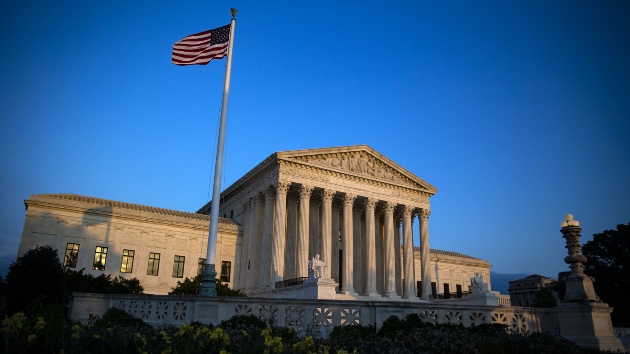
The U.S Supreme Court is seen on June 25, 2026 in Washington, DC. (Kevin Dietsch/Getty Images)

(WASHINGTON) -- The Supreme Court on Monday limited law enforcement's use of sprawling "geofence warrants" that track a suspect using cellphone location data from a broad swath of users, including people with no connection to a crime.

In a 6-3 decision, Justice Elena Kagan wrote that collection of location data through a geofence warrant implicates the Fourth Amendment's protections against unreasonable searches and seizures -- a setback for the federal government, which argued the warrants were a critical law enforcement tool that did not amount to a search at all.

"An individual has a reasonable expectation of privacy in records about his cell phone's location, and police intrude on that constitutionally protected interest when they demand the information -- even though for only a limited time, and from a third-party tech company," Kagan wrote for the majority.

Kagan concluded that location data -- which she described as "a personal journal of a user's movements" -- resembles other kinds of private materials such as emails, photographs or documents and should be "shielded from the 'inquisitive eyes' of the government."

"Today's decision follows from the same judicial obligation, to guard against the same risk of undue encroachment. The Fourth Amendment applies, too, when officials tap into Google's 'database of physical location information.' That database is new, but the principle covering it is not: That principle is instead the one our history has given. The Fourth Amendment must, as ever, protect against unjustified governmental intrusion on the privacy of the individual," Kagan wrote.

Justices Samuel Alito, Clarence Thomas and Amy Coney Barrett dissented. In his dissenting opinion, Justice Alito argued the ruling was an "irresponsible escapade" and "destabilizes longstanding Fourth Amendment jurisprudence."

In effect, the ruling requires authorities to obtain a narrowly tailored warrant before examining cellphone data of a broad swath of users in an area. Brett Max Kaufman, senior counsel with ACLU’s Center for Democracy, called the new restrictions on geofence warrants "critical protection against invasive and overbroad government searches of our personal information."

"Law enforcement and courts are on notice that new technology does not open up surveillance loopholes, and strict adherence to the Fourth Amendment’s protections is required," Kaufman said.  

While the Supreme Court ruled that location data is protected by the Fourth Amendment, the justices did not weigh in on the legality of the search that prompted the legal challenge -- instead leaving that issue for the lower courts to reexamine.

The landmark decision stemmed from a case involving a 2019 bank robbery in Virginia. Law enforcement was able to track down the robber using a geofence warrant that included the location data for every cellphone within a 150-meter radius of the robbery.

While Okello Chatrie, the suspect and Supreme Court plaintiff, eventually pleaded guilty to the armed robbery and was sentenced to serve 12 years in prison, his lawyers have argued that the warrant violated his Fourth Amendment rights because it allowed law enforcement to "to search first and develop suspicions later."

Google has since changed its policies on geofence warrants, storing the information on a user's phone rather than a separate database; however, the companies such as Apple, Lyft, Snapchat and Uber still retain location information and could be impacted by the ruling, according to Michael Levy -- a former federal prosecutor and adjunct professor at University of Pennsylvania Carey Law School.

Greg Nojeim, a senior counsel at the Center for Democracy & Technology, applauded the Supreme Court's ruling and said it "slammed that door shut" on law enforcement misusing location data.

"This decision sets the right direction for user privacy: carrying a phone and using apps -- doing the ordinary things cellphone users do -- does not compromise your rights," Nojeim said.

Copyright © 2026, ABC Audio. All rights reserved.

SCOTUS rebuffs GOP bid to block counting of late-arriving mail ballots

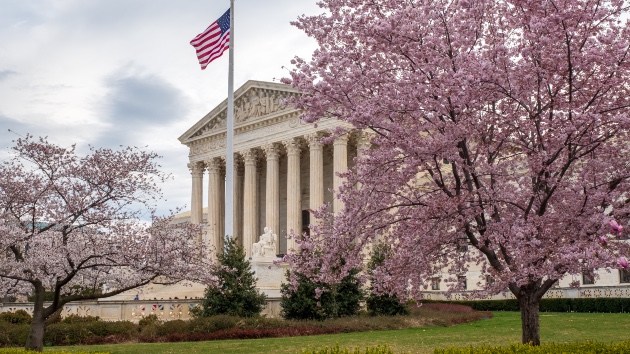
Cherry blossoms at the Supreme Court on a windy morning in Washington, D.C. (John Baggaley/Getty Images)

(WASHINGTON) -- In a ruling with direct bearing on the midterm elections, the Supreme Court on Monday narrowly upheld a Mississippi law allowing tabulation of late-arriving mail-in ballots so long as they were postmarked by Election Day.

Justice Amy Coney Barrett, writing for the 5-4 majority, wrote that federal election statutes -- which say nothing about ballot receipt -- do not override states' ability to set their own policies for handling tardy votes by mail. 

"The Framers recognized the difficulty of crafting election laws applicable to every probable change in the situation of the country. So instead of constitutionalizing election law, they decided that a discretionary power over elections needed to be lodged somewhere. Suffice it to say, that power was not lodged in this Court," Barrett wrote.

The decision is a loss for the Republican Party, which brought the case, and the Trump administration, which has pushed to override state election rules nationwide by imposing strict federal limits on voting by mail.

The president on Monday called the Supreme Court’s decision a "tremendous loss" and again called on Congress to pass the SAVE America Act, his signature election and voting reforms legislation.

Senate Majority Leader John Thune has repeatedly said there aren't enough Republican votes for it to pass.

The 29 states that currently accept some timely cast but late-arriving mail-in ballots -- sometimes up to several days after polls have closed -- will be able to continue providing a grace period.

In dissent, Justice Samuel Alito, joined by Justices Clarence Thomas, Neil Gorsuch and Brett Kavanaugh, wrote that the decision flouts the meaning of "election day" as set forth in federal law.

"Not only is today's decision inconsistent with statutory text, legal context, historical practice, and precedent; it also threatens to produce lamentable consequences," Alito wrote. "The majority's holding spawns a slurry of troubling election-law questions and risks further undermining Americans' confidence in election integrity."

The outcome is a win for Mississippi, which had defended its policy of accepting ballots up to five days after voting had ended, and voting rights advocates who had argued that decades of legal precedent supported the primary authority of states to run their own elections. 

Voters heavily reliant on the U.S. Postal Service, such as rural, overseas and disabled voters, had feared a higher risk of having ballots rejected if delivery is delayed, election watchdog groups said.

Lateness is the primary reason mail ballots are rejected nationwide, according to the U.S. Election Assistance Commission (EAC).

During the 2024 election, 28 million mail ballots were cast in the 14 states with postmark deadlines and grace periods, according to EAC. Roughly 725,000 were not counted because they were late. 

The Supreme Court ruling comes as Trump has pushed aggressively to increase federal oversight of mail-in voting. 

A Trump executive order signed in March 2026 would require states to submit approved voter lists to the U.S. Postal Service, which in turn would be tasked with ensuring ballots are only delivered to eligible residents. 

Last week, Federal District Court Judge Indira Talwani of Massachusetts put the order on hold, writing in her decision, "The Constitution reserves the power to determine voter eligibility to the States alone. Neither the Executive Branch nor Congress may interfere with this power."

The Postal Service has not yet implemented a proposed policy change to comply with Trump's order, but a top USPS official confirmed to Congress that his agency would refuse to deliver ballots unless states turn over lists of voters. 

"No law enacted by Congress delegates authority to control mail-in voting to USPS. The voting-related guidance currently issued by USPS is not binding on the States, merely recommended," Talwani’s ruling said. 

Copyright © 2026, ABC Audio. All rights reserved.

Luigi Mangione’s federal trial opening statements set for Jan. 25

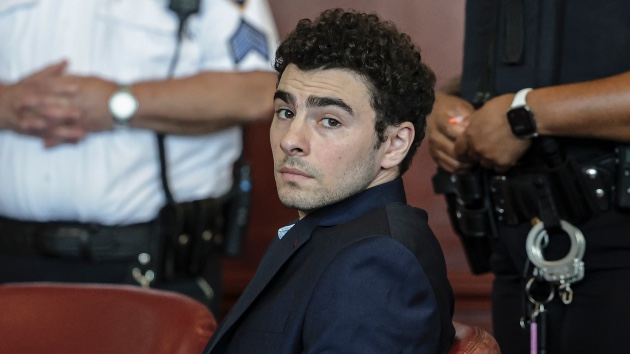
Luigi Mangione appears at an evidence suppression hearing at Manhattan Supreme Court on May 18, 2026 in New York City. (Photo by Jeenah Moon-Pool/Getty Images)

(NEW YORK) -- Accused killer Luigi Mangione will stand trial in Manhattan federal court beginning Jan. 5 with jury selection, followed by opening statements on Jan. 25, Judge Margaret Garnett said Monday.

Garnett said she hoped to hold the trial this fall but Mangione's state trial, scheduled to begin Sept. 8, makes that "impossible."

“In my view it's simply impossible for us to be moving through the jury selection process in this case while the defendant and his counsel are fully engaged in the state trial,” Garnett said.

Mangione, wearing beige jail clothing, did not speak during Monday's hearing. His appearance was delayed about 20 minutes after he got stuck in an elevator with U.S. marshals.

Defense attorney Karen Friedman Agnifilo said New York State Supreme Court Justice Gregory Carro will hold firm to the Sept. 8 start.

Mangione has pleaded not guilty to federal charges that he stalked UnitedHealthcare CEO Brian Thompson before shooting and killing him in December 2024 in Midtown Manhattan. Mangione has also pleaded not guilty to state charges.

For the federal trial, hundreds of prospective jurors from Manhattan, the Bronx and New York City's northern suburbs will fill out questionnaires in December. Garnett said she would not post the questionnaire on the public docket until all prospective jurors finish filling it out, saying that the need for a fair and impartial jury overrides the customary expectation of public access to the document.

The defense said it might ask the judge to include additional questions depending on the outcome of Mangione's state trial.

The jury will be comprised of 12 jurors and six alternates.

Copyright © 2026, ABC Audio. All rights reserved.

Supreme Court blocks Trump, for now, from firing Fed Board member Lisa Cook

Lisa Cook, governor of the US Federal Reserve, during the Stanford Institute for Economic Policy Research (SIEPR) Policy Forum at Stanford University in Stanford, California, US, on Wednesday, May 27, 2026. : David Paul Morris/Bloomberg via Getty Images

(WASHINGTON) -- The Supreme Court has blocked for now President Donald Trump's unprecedented attempt to fire a member of the Federal Reserve Board of Governors, Lisa Cook, over the allegation of gross negligence and without any formal opportunity for her to answer the claims. 

In a 5-4 ruling, Chief Justice John Roberts, writing for the court's majority, upheld limits Congress imposed on a president's attempt to remove members of the Fed as a legitimate protection of the institution's historical independence. 

While the president has the ability to fire Cook "for cause," he wrote, "the President failed to afford Cook the procedural protections to which she was entitled by statute. Without such protections, she could not properly dispute the charges the President laid against her."

Roberts said the majority's "narrow" decision took no position on the underlying allegations against Cook or whether the president met the standard for removing her. The outcome leaves the door open to the possibility that Trump could continue to try to press his case. 

"The ultimate question of whether the President can remove Cook for cause will depend in part on the underlying facts. In this opinion, we have not addressed the facts, as they have yet to be found or analyzed under the relevant legal standards," Roberts wrote. "Rather, we have simply addressed the parties' arguments about the appropriate legal standards under which the facts must be evaluated." 

Cook, a Democratic appointee who has 10 years left on her 14-year term, will retain her position for now. She is the first Black woman to serve on the central bank's advisory committee. 

Justices Clarence Thomas, Samuel Alito, Neil Gorsuch and Amy Coney Barrett dissented in the case. 

Barrett wrote that the court's decision amounts to "significant interference with the President's removal authority" constituting "irreparable harm" while the litigation continues. 

While the court has recognized expansive power of a president over executive branch agencies, it has appeared to draw a line at the Fed, which has a long history of independence from direct White House interference. 

Federal law allows presidents to remove a Fed governor, but only for cause. The heart of Trump's appeal before the high court involved what constitutes "cause" -- who gets to decide that and what due process may be owed.

The president had asserted unchecked power, insisting allegations of mortgage fraud against Cook -- raised by a member of Trump's administration, Federal Housing Finance Agency Director Bill Pulte -- were sufficient basis alone for her removal.

Pulte, who Trump has since appointed to serve as acting director of national intelligence, said in a post on X, "As I have repeatedly said, I believe Lisa Cook will be indicted for mortgage fraud." 

Trump has claimed Cook illegally filed a mortgage application for a second home as a "primary" residence in an effort to secure more favorable loan terms, at the very least creating an impression of impropriety. The Justice Department has opened a criminal investigation. 

Cook, who refused to resign and has not been charged with a crime, insists through her attorneys that relying on "one stray reference" in a 2021 mortgage document amounts to pretext for a politically motivated effort to manipulate the Fed's policy board.

"This was never about mortgage documents signed years before I became a Federal Reserve governor. It was an attempt to remove me on a manufactured pretext because I refused to bow to political pressure and continued to set interest rates based only on what would best serve the American people," Cook said in a statement after the high court's decision. "That is the most fundamental obligation of a Federal Reserve governor. Today's ruling affirms a principle that has underpinned sound economic stewardship for generations."

The case was being examined by the court in a very preliminary posture, focusing primarily on Trump's request to stay a lower court order that Cook be allowed to remain on the job as litigation continues. No lower court has thoroughly considered the legal or constitutional issues connected to the dispute.

The court's decision is widely seen as a victory for the independence of the Federal Reserve -- at least in the near term -- in the face of Trump's extraordinary effort to influence the central bank.  

Copyright © 2026, ABC Audio. All rights reserved.

In major blow to independent agencies, Supreme Court upholds Trump firing of FTC commissioner

The U.S. Supreme Court building stands in Washington, D.C., U.S. Photographer: Al Drago/Bloomberg

(WASHINGTON) -- In a landmark decision that could transform the federal government, the Supreme Court has voted to allow President Donald Trump to remove a Democratic member of the Federal Trade Commission, Rebecca Slaughter, for policy reasons, rolling back 90 years of legal precedent that had prevented at-will removal of independent agency officials and significantly expanding presidential power.

The 6-3 decision came from Chief Justice John Roberts.

Writing for the majority, Roberts declared "for cause" removal protections imposed by Congress at more than two dozen independent, bipartisan government agencies a violation of the separation of powers. 

"What text, history, and structure settle, our precedent confirms -- the President may remove his subordinates at will," Roberts wrote. 

The decision gives Trump and future presidents more control over the government and effectively ends the bipartisan, independent nature of regulatory agencies that oversee many aspects of American life. 

President Trump, in a post to his social media platform, called the Supreme Court's decision  a "BIG WIN" and "one of the most important ever given with respect to Presidential Powers."

In her dissent, Justice Sonia Sotomayor, joined by Justices Elena Kagan and Ketanji Brown Jackson, accused her colleagues of endorsing a theory of "total executive control" unimagined by the nation's founders. 

"The result is a President who emerges with far greater power than ever before," Sotomayor wrote. "It is a power, however, that neither the People, nor Congress, nor the Constitution bestowed upon him. In granting the President this unbridled authority, the Court upends its precedent, misconstrues our history, and sheds any pretense of judicial modesty. I respectfully dissent."

Since the New Deal era, independent agencies -- historically led by subject-matter experts from both parties -- have policed stock trades, transportation systems, election campaigns, consumer product safety and broadcast licenses. 

Giving the president more direct control over who serves on those bodies has long been a goal of conservatives, who have objected to unelected bureaucrats wielding too much power with little accountability.  

The ruling is a loss for liberals who have long championed a role for agencies like the FTC, Federal Election Commission, Securities and Exchange Commission, Federal Communications Commission and dozens of others insulated from politics in the interest of the regulatory consistency. 

The court's decision does not eliminate the agencies themselves but will allow them to be packed with only Republicans or only Democrats, if a president wishes, giving the White House more direct control over their functions. 

The conservative majority effectively overruled a unanimous 1935 Supreme Court decision involving the FTC -- Humphrey's Executor v. U.S. -- which had previously affirmed limits on a president's ability to fire members of the commission only for cause. 

"Humphrey’s Executor is just a dried husk of whatever people used to think it was," Chief Justice John Roberts said bluntly during oral arguments in December. 

Copyright © 2026, ABC Audio. All rights reserved.

Woman charged in fatal crash

Woman charged in fatal crashLONGVIEW – On Sunday, a woman was arrested on suspicion of driving while intoxicated and causing a fatal collision. According to Gregg County jail records, Casey Johnson, 45, of Longview, is accused of intoxication assault with a vehicle causing serious bodily injury and intoxication manslaughter with a vehicle. Johnson was booked into the Gregg County Jail with a $500,000 bond. Continue reading Woman charged in fatal crash

Supreme Court rejects Trump’s appeal of 2022 E. Jean Carroll defamation case

E. Jean Carroll leaves the courthosue on September 6, 2024 in New York City. Both parties appear in court today as Trump's lawyers fight to overturn the jury's finding that he sexually abused E. Jean Carroll. (Photo by Alex Kent/Getty Images)

(WASHINGTON) -- The Supreme Court has denied President Donald Trump's appeal of the $5 million jury finding in the 2022 defamation case brought against him by the writer E. Jean Carroll. 

The decision means the judgment against Trump stands and that he will have to pay it.

A New York jury in 2023 awarded Carroll $5 million in damages after it found Trump liable for sexually abusing her in the dressing room of a Bergdorf Goodman department store in Manhattan in the mid-1990s, and for defaming her in 2022 when he denied the allegations by calling them "a Hoax and a lie" and saying, "This woman is not my type!"

Responding to Monday's decision, Carroll's attorney, Roberta Kaplan, said in a statement, "Today's Supreme Court decision affirms once and for all the jury's unanimous verdict that President Donald J. Trump sexually assaulted and defamed E. Jean Carroll. His multiple efforts to appeal that verdict have all failed and today's ruling ends his quest to avoid accountability for his actions."

Trump had argued that the judge in the case should not have allowed the jury to view an excerpt from the infamous "Access Hollywood" tape, in which Trump is heard describing lewd behavior that he downplayed as "locker room talk." 

Trump also faulted the trial judge for allowing testimony from two women -- Jessica Leeds and Natasha Stoynoff -- who claimed that Trump had sexually assaulted them, which Trump denies.

A federal appeals court said the evidence was properly admitted and, even if it wasn't, there was no major harm to Trump. 

"The petition does not challenge -- indeed, does not mention -- the Second Circuit's holding that were there any error here, it did not prejudice petitioner," Kaplan argued.

Trump is also appealing a separate but related defamation judgment involving Carroll that ordered him to pay $83 million.

Copyright © 2026, ABC Audio. All rights reserved.

Man, 28, dragged out to sea and killed by crocodile at popular resort: Police

A crocodile sits on the bottom in the eel grass with school of fish above. teeth and tail are showing. (Gregory Sweeney/Getty Images)

(PUERTO VALLARTA, Mexico) -- A 28-year-old man was killed in a crocodile attack on a popular beach in Puerto Vallarta, Mexico, on Friday evening, according to state authorities.

The victim, who was from Mexico, was on the beach in front of the Marriott Puerto Vallarta Resort and Spa when he was allegedly attacked by the reptile and dragged out to sea, Jalisco State Police said in a statement on Sunday.

The incident happened around 6 p.m. local time, police noted.

The victim’s body was recovered Saturday morning about 300 meters offshore after an overnight search and rescue operation at sea and on land.

Local authorities are reminding the public to obey warning signs and avoid entering the water where wildlife is known to be present, particularly in estuary and mangrove areas.

"The safety and security of our guests and associates are our top priority," the resort said in a statement to ABC News. "At the Marriott Puerto Vallarta we have appropriate signage, as well as night patrolling and red flags to indicate caution in the area and all were and are properly in place."

The resort said it reviews its "plans and procedures often" and works "closely with the appropriate authorities on an ongoing basis and our staff is trained in how to respond to safety matters appropriately."

"We extend our thoughts to the individual and their loved ones during this difficult time and are providing appropriate support in line with our policies," the resort said.

ABC News' Ahmad Hemingway and Madeline Wheeler contributed to this report.

Copyright © 2026, ABC Audio. All rights reserved.

Alex Murdaugh back in court after South Carolina Supreme Court overturned double murder conviction

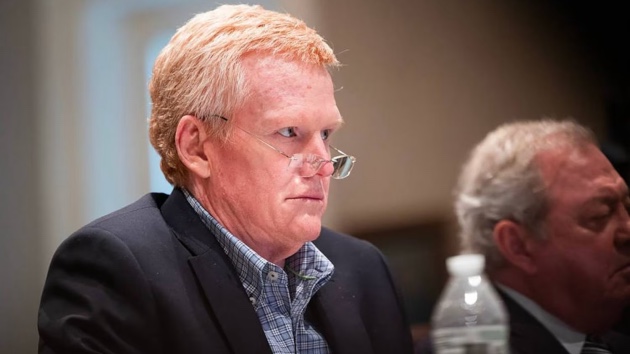
Alex Murdaugh listens to testimony during his double-murder trial at the Colleton County Courthouse on Feb. 10, 2023, in Walterboro, South Carolina. (Joshua Boucher/The State/Tribune News Service via Getty Images)

(NEW YORK) -- Alex Murdaugh is back in court on Monday for the first time since the South Carolina Supreme Court overturned his double murder conviction over “shocking jury interference.”

Newly assigned Judge Debra McCaslin is set to hold a status conference to determine a schedule for a new trial as well as resolve some evidentiary issues.  

The status conference comes more than three years after a South Carolina jury found Murdaugh guilty of murdering his son and wife in a gruesome crime that captured global headlines.

The South Carolina Supreme Court threw out that conviction last month after concluding that a court clerk tainted the jury’s verdict by making comments to the jurors that “egregiously attacked Murdaugh's credibility and his defense.”

“Both the State and Murdaugh's defense skillfully presented their cases to the jury as the trial court deftly presided over this complicated and high-profile matter. However, their efforts were in vain because Colleton County Clerk of Court Rebecca Hill placed her fingers on the scales of justice, thereby denying Murdaugh his right to a fair trial by an impartial jury,” the ruling said.

Murdaugh has remained in prison since the ruling, as he is also serving out concurrent sentences for state and federal financial crimes, to which he pleaded guilty. While Murdaugh has acknowledged he lied and stole from his former clients, he has consistently maintained his innocence related to the 2021 double murder.

“Alex has said from day one that he did not kill his wife and son. We look forward to a new trial conducted consistent with the Constitution and the guidance this Court has provided,” Murdaugh’s lawyers said after the May ruling. His lawyers recently filed a civil lawsuit against Hill for allegedly violating his right to a fair trial.

South Carolina Attorney General Alan Wilson -- who recently won the Republican primary for governor -- has vowed to “aggressively” retry the murder case “as soon as possible.” Monday’s conference is likely to provide the first indications of how quickly the case might be retried.

Ahead of the conference, Murdaugh’s lawyers filed a series of motions to change the venue of the trial and access evidence in the case. They have argued that Murdaugh cannot have a fair trial in the countries where his family name has been “synonymous with the local legal system for nearly a century.”

“The basis for this motion is that this is among the most heavily publicized criminal prosecutions in the history of this State. For years Defendant, his family, and the law firm with which his family was associated for generations have been the subject of saturating, sensational, and continuous media coverage,” the motion said.

Murdaugh’s lawyers also filed motions to request access to DNA evidence in the case for independent lab testing, as well as enable Murdaugh to access a computer to review evidence from prison.

Prosecutors have not yet filed their response to those motions. 

Copyright © 2026, ABC Audio. All rights reserved.

Manhunt underway after 2-year-old, 2 women killed in ‘horrifying’ Mississippi shooting, police say

Police in Jackson, Mississippi, investigate a triple homicide on Saturday, June 28, 2026. (Jackson Police Department)

(JACKSON, Miss) -- Police in Mississippi are searching for a suspect after two woman and a toddler were shot and killed on Saturday.

The women, aged 26 and 20, were found dead alongside a 2-year-old, Jackson Police Department Chief RaShall Brackney told reporters early on Sunday.

Police had responded to a call for an aggravated assault on the 300 block of Queen Alexandria Lane at about 10:10 p.m. on Saturday, Brackney said, adding, "And what they found was something horrifying."

All three victims had "multiple" gunshot wounds, she said.

Police early on Sunday said they were searching for a Red Mitsubishi Mirage that "was taken." Brackney did not say whether police had identified a suspect, but said that the person who had taken the vehicle was thought to be "armed and dangerous and is related to this triple homicide that we have here."

In an update later on Sunday, police said they had found the vehicle in North Jackson, but it was "unoccupied at the time it was located."

Jackson Mayor John Horhn said in a statement that the city would begin deploying additional resources to combat gun violence.

"Our city is hurting. In recent days, we have seen a troubling rise in gun-related violence, shootings, and senseless loss of life," he said. "No family should have to face the pain of losing a loved one to violence. Violence against the innocent is intolerable, and as your Mayor, I will not accept this as the norm for our community."

Copyright © 2026, ABC Audio. All rights reserved.

Flash flooding kills 4 in Kentucky, 1 in Tennessee, prompts numerous water rescues

Relentless rain and flash flooding have inundated parts of Kentucky over the weekend and left at least four dead, Gov. Andy Beshear said. (Richmond Police Department)

(NEW YORK) -- A woman was killed on Sunday in Tennessee as she attempted to rescue her son, who had been swept away in high waters, a local sheriff's office said, as a flash flood threat was in effect for parts of Tennessee and Kentucky, where four other deaths were recorded.

The Grainger County Sheriff's Department in Tennessee said Mary Evelyn Nicole Manning-Kellione, 39, was killed on Sunday after she went to rescue her son after rising water carried him into a culvert.

"The son was able to surface at the other end and came to safety when he realized his mother was in the water," the office said in a statement. "Rescue personnel located the individual lodged inside the culvert."

The National Weather Service (NWS) Prediction Center had upgraded the flood threat on Sunday for parts of Kentucky and Tennessee to a level 3 out of 4 "moderate risk."

Kentucky residents had been bracing for another round of relentless rain, a day after flash flooding killed at least four people and the governor declared a state of emergency.

The heaviest rain had been expected in southeast Kentucky and parts of Tennessee, including Owensboro and Somerset, Kentucky, and Knoxville, Tennessee.

Rainfall rates of 2 to 3 inches per hour are possible, according to the NWS, and daily totals could reach up to five inches in some parts.

Several flash-flood warnings were issued on Sunday morning as ongoing heavy rain and flooding were reported in southern Indiana and northeast Tennessee.  A flash flood emergency has been issued for Metcalf, Cumberland and Clinton counties for ongoing life-threatening flooding, according to the NWS. Between 2.6 and 8 inches of rain have reportedly fallen over these areas.

There have been reports of multiple water rescues with some evacuations and homes flooded in Clinton County. Clinton County and the City of Albany, Kentucky, have issued states of emergency due to ongoing flooding.

Northwest North Carolina, which was hit by flash floods over the weekend, is also at an "elevated risk" of flash flooding on Sunday, according to the NWS.

Kentucky Gov. Andy Beshear provided an update early Sunday afternoon in a video posted to X, saying in part that nine counties in all had declared states of emergency, some of which "got hit with record or almost record amounts of rain in very short periods of time," he said. Search and rescue efforts remain underway, he said.

Beshear advised residents to stay off of the roads if they can. "Bridges have been wiped out, entire roads have been wiped away and there is still standing and moving water,” he said. He added that he'd activated the state's price-gouging laws to prevent merchants from increasing prices on essential goods, and had also signed an emergency order “so pharmacies in areas that are hit can go ahead and fill people’s prescriptions that have been washed away or are no longer safe to take.”

The severe weather comes after a weekend of deadly flash flooding that occurred in Kentucky.

More than 10 inches of rain fell on Saturday in parts of the state, prompting flash flooding and deaths.

Beshear announced late Saturday that four people were killed in floods that hit central Kentucky and spread into northeast Tennessee and northwest North Carolina.

"Kentucky, I have some tough news to share," the governor wrote in a social media post on Saturday, announcing the deaths.

Three fatalities occurred in Madison County, Kentucky, and one flood-related death happened in Jackson County, Beshear said.

According to the Madison County Coroner, of the three fatalities in the county, two of the deaths, one adult male and one adult female, occurred at a residence in Richmond.

The third death was an adult male who was swept away in his vehicle on Tates Creek Road in Madison County, the coroner said.

Beshear declared a statewide state of emergency on Saturday.

“This is a serious flooding event, where teams have already had to conduct multiple water rescues from vehicles and homes across the commonwealth," Beshear said.

As crews from Kentucky to North Carolina clean up from the storms, a prolonged spell of extreme heat is forecast to settle in across the Midwest and Northeast this week.

Heat alerts have been issued across the Plains to the Ohio Valley and south to the Tennessee and Mississippi Valleys.

An excessive heat warning has been posted for Kansas City, Missouri, through Thursday night.

Temperatures in Kansas City are expected to climb into the 90s on Sunday.

On Monday, widespread highs in the 90s are forecast across the country's midsection, but high humidity will make it feel hotter.

Excessive heat watches are expected to go into effect for Minneapolis and Chicago on Monday, with the temperature feeling like the triple digits during the afternoon hours.

In Minneapolis, the temperature could feel like 110 on Monday afternoon.

-ABC News' Ahmad Hemingway contributed to this report.

Copyright © 2026, ABC Audio. All rights reserved.