Doug Band, former aide to Bill Clinton, repeatedly tells panel he cannot recall interactions with Epstein: Sources

Doug Band, a former adviser to Bill Clinton, is seen with Ghislaine Maxwell in this undated photo. (U.S. Justice Department)

(WASHINGTON) -- Doug Band, a former close adviser to President Bill Clinton, repeatedly told lawmakers that he could not recall his involvement on several topics related to convicted sex offender Jeffrey Epstein, multiple sources said following Band's appearance Tuesday before the House Oversight Committee.

Band, who began his tenure with Clinton as an intern in the mid-1990s, was questioned for four hours by the panel as part of its ongoing probe of the government's handling of the investigations into Epstein. 

Multiple sources familiar with his testimony said Band had no evidence or information that President Clinton ever went to Epstein's island, Little St. James, in the U.S. Virgin Islands, despite telling Vanity Fair on the record in 2020 that Clinton had visited the island. Band told the committee that he didn't remember why he had made that claim to Vanity Fair.

Often described as one of the architects of Clinton's post-presidential endeavors, including the Clinton Foundation and the Clinton Global Initiative, Band was pressed about his own communications with Epstein's convicted co-conspirator, Ghislaine Maxwell, which were made public earlier this year by the Justice Department as part of the release of files mandated by the Epstein Files Transparency Act.

Emails between Band and Maxwell included talk of meetings with Epstein and numerous exchanges containing suggestive innuendo and cheeky nicknames for each other like "babycakes" and "booboo," according to files released by the DOJ.

The bulk of the messages were exchanged between 2001-2004, before Epstein first faced criminal charges in Florida in 2006. 

Band, according to sources, told committee members that he didn't recall sending individual emails to Maxwell, but he confirmed that an email address associated with Clinton that was found in the Epstein files was Band's and that no one else had access to it.

Band stated that he took steps to insulate Clinton from Maxwell as Band became aware of allegations, according to the sources.

Band stated that he never had sexual contact of any kind with Maxwell and didn't recall ever being introduced to any woman or girl associated with Maxwell, sources said.

Band also said he did not recall ever engaging with Epstein on any of the flights he took with Clinton on Epstein's private jet, and did not recall having conversations with Epstein, said sources.

"We know that Mr. Band set up several meetings between Clinton and Epstein," House Oversight Committee Chairman James Comer, R-Ky., told reporters prior to Band's appearance. "We know Mr. Band accompanied Mr. Clinton on several flights on Epstein's jet. We know that Mr. Band also had a lot of communication with Ms. Maxwell, so that'll be a topic of several questions."

Band, 54, has not been accused of any wrongdoing. His appearance before the Oversight Committee was voluntary and was not recorded. The committee has typically released transcripts of interviews after they are reviewed for accuracy and redacted to remove any potential references to alleged victims.

Earlier this year, Band told The New York Times that his messages with Maxwell occurred when he was in his 20s and unmarried -- and he denied any romantic involvement with Maxwell, who is currently serving a 20-year sentence for sex-trafficking and other offenses.


"There was absolutely no physical relationship that occurred between us. Ever," Band said in a statement to the Times, in which he referred to Maxwell as "a monster."

Records created by Epstein's pilots made public through civil litigation show Clinton -- and an entourage that typically included Band -- aboard Epstein's plane on more than two dozen flight legs in 2002-03, but none of those flights went to the island, according to the pilot's logs. Clinton, Epstein and Maxwell have all denied that the former president had ever been to Little St. James.

"He never, absolutely never went. And I can be sure of that because there's no way he would have gone," Maxwell told then then-Deputy Attorney General Todd Blanche in a recorded interview last summer.

"I've never been to that island," Clinton said in his own interview with the Oversight Committee in February.

The former president has not been accused of any wrongdoing in connection to his association with Epstein. He has said he stopped interacting with Epstein before any criminal allegations surfaced and has denied knowledge of any of Epstein's crimes.

Clinton told the committee that he and Band were once "close," and that Band had been one of the people he tasked to "operationalize" plans to develop the Clinton Global Initiative in his early post-presidency years.

"He worked for me for years," Clinton said. "[H]e arranged airplane flights and things like that and was doing work on the first Clinton Global Initiative in 2005. And I know that he knew both Epstein and Maxwell. I do not know to what extent he was in contact with them."

In her interview with Blanche, Maxwell said she began spending time with Clinton after he left the White House in 2001, as he was forging his post-presidential path through the establishment of the Clinton Foundation and, later, the Clinton Global Initiative.

"I was part of the beginning process of the Clinton Global Initiative. And that was something that I helped with and that was me, and Epstein may have helped me help them," she said, according to a transcript of the July 2025 interview.

"I started spending time with the former president and with Doug and his team," Maxwell said. "I had no purpose, really, other than I had -- obviously offered something. I don't know, ideas." 

In recent weeks the committee has heard from Microsoft co-founder Bill Gates and two of Epstein's former assistants, Sarah Kellen and Lesley Groff.

Later this summer, interviews are scheduled with former Obama White House counsel Kathryn Ruemmler, former Epstein attorney Alan Dershowitz, and Epstein's former private banker at JPMorgan Chase, Jes Staley.

Comer has indicated that a report on the investigation's findings will be issued by the end of the year.

Copyright © 2026, ABC Audio. All rights reserved.

Supreme Court to review AR-15 firearm bans

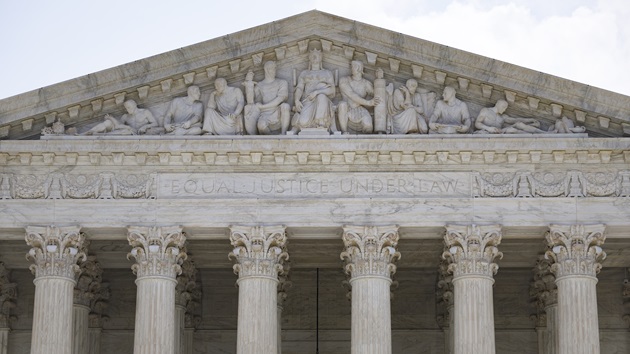
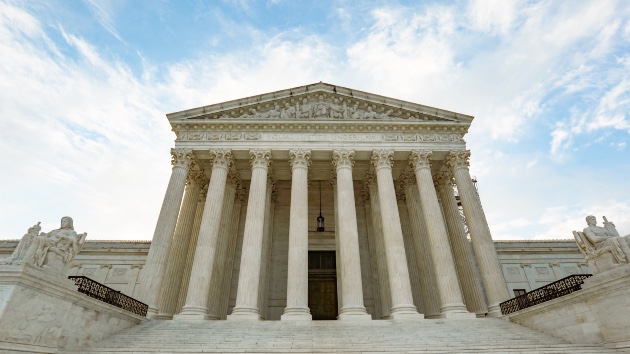
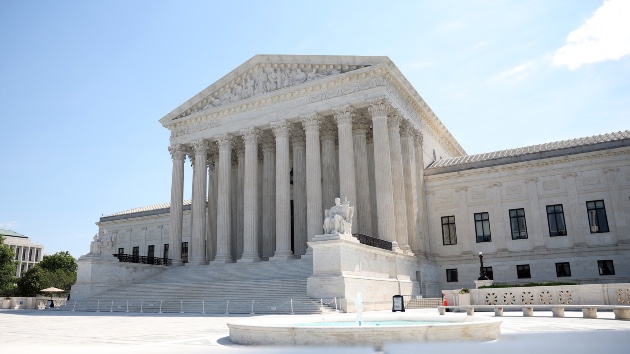
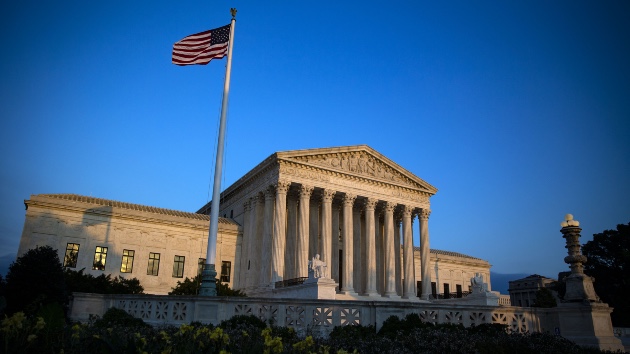
The West Front of U.S. Supreme Court on June 29, 2026 in Washington, DC. (Tom Brenner/Getty Images)

(WASHINGTON) -- The Supreme Court on Tuesday said it will decide later this year whether state bans on the possession of AR-15 firearms and similar semi-automatic "assault style" guns violate the Second Amendment. 

Ten states plus D.C. ban the weapons, which have been used in many of the deadliest mass shootings in U.S. history, including Sandy Hook Elementary in Newtown, Connecticut, in 2012 and Uvalde, Texas, in 2022.

The court will be reviewing challenges to bans from Cook County, Illinois, and Connecticut. Both bans were previously upheld by federal appeals courts. 

Gun rights groups say the bans are a violation of their Second Amendment rights.

Separately, the justices rejected a series of appeals from the National Rifle Association and other Second Amendment advocates seeking to strike down federal and state bans on the purchase and possession of handguns and handgun ammunition for 18-20-year-olds. 

The decision means the minimum age of 21 to purchase a handgun will remain in effect, at least for now.

The justices did not explain their decisions which came down in a standard end-of-term orders list. The court will hear arguments again in the fall.

The Supreme Court weighed in on guns this term as well.

Earlier this month, the court struck down a Hawaii law that prohibits the carry of a firearm onto private property that is open to the public unless the property owner gives express consent. The ruling was a setback for gun control advocates that had argued the measures were necessary for public safety in places like shopping malls, bars, restaurants, theaters, farms, arenas and private beaches.

Copyright © 2026, ABC Audio. All rights reserved.

SWEPCO takes first step to improve power grid reliability for 192,000 Texans

Marshall — As a part of its grid enhancement project, Southwestern Electric Power Company (SWEPCO) is launching the first phase in Marshall to improve its power grid infrastructure, the company announced on Tuesday.

Earlier this month, the Public Utility Commission of Texas (PUCT) awarded SWEPCO a $200 million grant aiming to upgrade approximately 700 miles of power line infrastructure in Northeast Texas, ultimately enhancing reliability for more than 192,000 Texas customers, according to our news partner, KETK.

The first project will begin in Marshall, marking the first step in the effort to modernize electric infrastructure and reliability, SWEPCO said.

“When we analyzed our system, upgrading copper wire to more modern equipment stood out as an area that would have the biggest impact,” Adam Keeth, SWEPCO Director of Distribution Engineering & Reliability, said. “By replacing it with modern aluminum?alloy conductors and installing stronger poles, we’re building a system that can better withstand ice, wind, and long?duration storms and deliver more reliable service to our customers.”

The project includes the following upgrades:

Replacing copper wire with stronger conductors
Installing new utility poles designed to withstand severe weather
Strengthen the power distribution network
Support long-term reliability for homes, schools, hospitals and businesses

As work continues throughout the region, the full project is expected to be completed by 2031.

“Together, these efforts will modernize some of the oldest portions of the distribution system, rebuilding them to a more resilient, storm-hardened design within fully cleared rights-of-way,” SWEPCO said.

Dylan O’Brien to star in Hulu comedy pilot ‘Lex’: Report

Dylan O’Brien attends the 'Twinless' premiere during the 2025 Tribeca Festival at Village East Cinema on June 7, 2025, in New York City. (Dominik Bindl/Getty Images for Tribeca Festival)

Dylan O'Brien may just make his return to the small screen.

The actor is set to lead the Hulu comedy pilot Lex, Deadline reports. This would mark his first series role since he starred as Stiles on MTV’s Teen Wolf.

ABC Audio has reached out to Hulu for confirmation.

Lex follows the titular disgraced former reality star (O'Brien), who accidentally films a murder while making a $20 Cameo video. This finds Lex at the center of a global conspiracy and forces him to go on the run.

"Using the skills he acquired navigating reality TV’s toxic social dynamics, Lex must fight to not get killed, to expose the truth, and most importantly… to get back on TV," according to a description from the outlet.

In addition to starring in Lex, O'Brien will executive produce the pilot. He will do so alongside its writer, Sean Clements, as well as Paul Simms.

Disney is the parent company of ABC News and Hulu.

Copyright © 2026, ABC Audio. All rights reserved.

Tyler priest ordained Bishop of Laredo

Tyler priest ordained Bishop of LaredoLAREDO – John Gomez, a Tyler-based priest, was ordained and installed as the Second Bishop of Laredo on Tuesday after being appointed by the Vatican in May. Gomez was ordained a deacon on May 24, 2008, and a priest for the Diocese of Tyler on May 23, 2009, by Bishop Álvaro Corrada del Río.

“His experience in diocesan administration as Judicial Vicar and Vicar General, his experience in parish ministry, and his commitment to Hispanic Ministry will serve him well in his new ministry as the second Bishop of Laredo,” Diocese of Tyler Bishop Gregory Kelly said in May. “I am also grateful to Bishop-elect Gomez for his help to me over this last year as a new bishop in Tyler and will miss his presence and ministry.”

Secretary Rollins announces program to support small and mid-sized beef processors

Washington, D.C. – Today, U.S. Secretary of Agriculture Brooke L. Rollins announced the Strengthening Processing for U.S. Ranchers (SPUR) Program that will provide temporary support for eligible beef processing establishments. Under SPUR, the U.S. Department of Agriculture will provide up to $500 million in payments to eligible entities to support stronger and more stable market opportunities for American ranchers.

“America’s ranchers deserve a strong, competitive marketplace that rewards their hard work and preserves opportunity for generations to come,” said Secretary Brooke L. Rollins. “Today, historically tight cattle supplies, the Biden administration’s anti-cattle focus, consolidation in and foreign ownership of meat packing and the reemergence of New World Screwworm have created extraordinary market conditions that are placing significant pressure on our independent and regional beef processors. Through the Strengthening Processing for U.S. Ranchers (SPUR) Program, USDA is taking targeted action to preserve the independent processing capacity that ranchers rely on, strengthen competition across the American beef supply chain, and support rural communities across the country. This is another important step in our Plan to Fortify the American Beef Industry by strengthening domestically owned processing capacity and ensuring America’s cattle producers continue to have strong market opportunities and meet America’s historically high beef demand. As we Make America Healthy Again, we are working to ensure American families have continued access to nutritious, high-quality American beef while promoting greater competition, a more resilient food supply chain, and long-term affordability at the grocery store.”

“Small and mid-size beef processors are essential to maintain the diversity of America’s food system,” said Under Secretary for Food Safety Mindy Brashears. “Supporting this processing capacity helps preserve market options for our United States ranchers, strengthens regional supply chains and ensures American families continue to have access to safe, high-quality beef produced here at home.”

“Competitive supply chains help ensure American ranchers have reliable markets for their cattle,” said Under Secretary for Farm Production and Conservation Richard Fordyce. “Through the SPUR Program, USDA is bolstering market opportunities for ranchers and supporting a resilient beef industry.”

These payments are authorized under the Commodity Credit Corporation Charter Act and are administered by the Farm Service Agency (FSA). Payments are intended to provide financial support to eligible beef processors who have faced increased costs of acquiring cattle for processing due to the abnormally low number of cattle being raised in the U.S at this time and other conditions currently impacting the cattle market. Additional information, including applications, will be provided to eligible entities using contact information that is currently on file with the USDA Food Safety and Inspection Service.

Entities eligible to receive funding under SPUR must be beef processing establishments under Federal inspection, as well as beef processing establishments inspected under the Talmadge-Aiken Cooperative Inspection Program and the Cooperative Interstate Shipment Program (CIS). Further, eligible entities must be U.S. owned and cannot be nationally dominant in beef processing (or owned by an entity that is). For purposes of SPUR, nationally dominant will be defined as an entity holding a market share greater than or equal to the entity holding the fourth-largest share of the beef processing market.

For decades, the beef processing industry in the U.S. has been heavily concentrated and today just four companies control nearly 85% of the beef processing market, including two foreign owned companies. Ensuring domestic processors can continue operating during this period where the U.S. cattle herd is at a 75-year low is critical to national security and will ensure a strong supply chain once the herd is rebuilt.

This new program also directly supports the USDA Plan to Fortify the American Beef Industry and the USDA Small Processors Action Plan (PDF, 2.3 MB) by ensuring American ranchers have access to regional processing capacity they rely on to support branded and value-added beef programs, such as the Product of USA label that USDA started promoting earlier this year.

Denton County man sentenced to federal prison for three armed bank robberies

SHERMAN – A Denton man who committed three armed robberies of banks in the Denton County area, has been sentenced to 78 months in federal prison, announced Eastern District of Texas, U.S. Attorney Jay R. Combs. Jonathan Mark Fleming, 41, pleaded guilty to bank robbery and was sentenced to 78 months in federal prison by U.S. District Judge Richard Schell on June 29, 2026.

According to court records, from November 2022 to February 2023, the defendant committed three armed robberies of banks in the Denton County area. For each robbery, the defendant dressed in all black, wore black gloves, black ski goggles and a black mask. He also brandished a firearm. During the first two robberies, the defendant arrived at the banks in a red Dodge Challenger. For the final robbery, he arrived in a Dodge Ram truck. Investigators were able to track the truck to the original dealership and learned the defendant had purchased the truck with a large cash payment and a trade-in of a red Dodge Challenger.

Having identified the defendant as a possible suspect, a search warrant was subsequently obtained for Fleming’s apartment on February 23, 2023. During the search of the apartment, Fleming was located as the sole occupant and was arrested. Officers also located items that they had observed on video surveillance from the robberies, including a black/gray duffel bag, black clothing, a black face covering, a gun belt with holster, and black ski goggles.

A large sum of United States currency, which was still wrapped in bank currency bands, was also located inside the apartment, as well as multiple firearms; specifically, a black M&P Smith and Wesson handgun in a holster (believed to be used in the robbery committed on November 10, 2022); a black newly purchased Glock handgun with a receipt; and two AR-style rifles. In addition, two police radio scanners and multiple receipts, detailing large deposits ranging from $19,000 to $40,000 into various bank accounts, were located. In all the defendant stole approximately $450,000.00 in cash from the three bank robberies.

This case was investigated by the Denton Police Department; Lewisville Police Department; Flower Mound Police Department; and the Federal Bureau of Investigation (FBI) and prosecuted by Assistant U.S. Attorney Matthew T. Johnson.

Supreme Court rejects Trump’s attempt to end birthright citizenship

Supreme Court building (Thanasis/Getty Images)

(WASHINGTON) -- The Supreme Court on Tuesday rejected President Donald Trump's attempt to end birthright citizenship in the U.S. by executive order, reaffirming more than a century of legal precedent and national tradition that babies born on American soil are automatically American citizens.

The 6-3 decision is a blow to Trump, who had lobbied the court to uphold his Day 1 order and attended oral arguments in the case, becoming the first sitting president to do so.

Chief Justice John Roberts wrote: "Citizenship, then and now, was the right to have rights -- to freely participate in our political community. The Framers of the Fourteenth Amendment extended that promise to every free-born person in this land. We keep that promise today."

Justices Clarence Thomas, Neil Gorsuch and Samuel Alito dissented from the decision. Thomas and Gorsuch wrote that neither the Constitution nor federal law "guaranteed citizenship to persons who were not domiciled in the United States."

Thomas argued that domicile, or the place of legal permanent home, of a child's parents is the appropriate indicator of a child's citizenship, given the nation's history and tradition.

Trump had argued that children born to unlawful immigrants and temporary visitors, like tourists and foreign students, do not qualify for citizenship under terms of the 14th Amendment, which was enacted after the Civil War to address the status of former slaves and their descendants.

Immigrant advocates and civil liberties groups challenging the policy change warned that it would harm hundreds of thousands of children born every year to non-citizen parents and create a bureaucratic nightmare for older Americans, who would no longer be able to prove citizenship simply with a birth certificate.

"The court's decision reaffirms a fundamental American promise -- if you are born here, you are a citizen. A president cannot change the Constitution by executive fiat," said ACLU legal director Cecilia Wang, who argued the case before the court. "Our brave clients and our legal team stand with millions of people around our country who spoke up for one of our most cherished rights. The Constitution's guarantee of birthright citizenship stands strong."

An estimated 255,000 children born every year to non-citizen parents would have lost legal status under the order, according to the Migration Policy Institute. Some may have faced difficulty establishing citizenship in any country, effectively being born as "stateless."  

Every lower court to have considered Trump's unprecedented order deemed it unlawful, issuing orders to put it on hold. The high court's decision preserves the status quo.

The 14th Amendment, which was ratified in 1868, says all "persons born or naturalized in the U.S. and subject to the jurisdiction thereof" are citizens. Congress later codified the same language in federal citizenship law in 1940.

The administration insisted children born to parents who are not American citizens or legal permanent residents are not "subject to the jurisdiction" of the U.S. because they still owe political "allegiance" to a foreign nation.

The Supreme Court rejected that argument in 1898.

"The [14th] Amendment, in clear words and in manifest intent, includes the children born, within the territory of the United States, of all other persons, of whatever race or color, domiciled within the United States," wrote Justice Horace Gray in the landmark Wong Kim Ark v. U.S. decision, addressing the status of children born to noncitizens.

This is a developing story. Please check back for updates.

Copyright © 2026, ABC Audio. All rights reserved.

San Marcos becomes the first Texas city to ban data centers, testing its local control

SAN MARCOS (THE TEXAS TRIBUNE) – San Marcos has become the first Texas city to ban data centers within city limits, banking on its local authority to stop the data center boom and setting a precedent for other municipalities to follow.

San Marcos City Council voted 4-3 on June 16 to define data centers and make them ineligible for any part of the city in its zoning laws, citing concerns that these developments would funnel water and energy resources from the local community.

The city has no data center projects proposed within its limits, although the threat has reached its borders where at least two data centers have been proposed in surrounding unincorporated parts of Hays County, according to Data Center Map, an industry research tool. Powerless to leverage any of their laws to outright ban data centers, Hays County commissioners recently passed a mostly symbolic resolution to pause data center development over severe water scarcity but the resolution isn’t legally binding.

San Marcos is testing a novel approach to outright ban data centers by exerting its home rule powers, which gives certain bigger cities — 352 of them across the state — the right to create their own zoning codes and control development, land law experts say. Compared to counties and cities without home rule powers or zoning authority, municipalities like San Marcos have a better chance at surviving legal challenges to their data center bans because of their expanded powers, experts say.

Some counties have tried testing their authority to restrict data centers but have failed. Early June, Hill County rescinded its data center moratorium after a developer sued the county for $100 million. Hood County commissioners also tried to pass a moratorium, but pulled it after state Sen. Paul Bettencourt, a Houston Republican who leads the Senate Committee on Local Government, asked for an attorney general opinion on whether counties have the right to enact such restrictions.

Similar to what he did with Hood County, Bettencourt told The Texas Tribune he plans to challenge San Marcos’ ban, arguing that it violates 2025’s House Bill 2559, which restricts the ability of municipalities to issue indefinite moratoriums on certain types of property developments and the state’s 2023 Death Star Law, which restricts municipalities from enacting local law that contradicts state law.

“They should not use zoning to ban anything everywhere in the city, because that’s not lawful under the state of Texas guidelines,” Bettencourt said. “[A ban] doesn’t work here, and this will get challenged.”

Texas is on track to become the top data center market in the U.S but a majority of Texans oppose the construction of data centers in their community, citing concerns over water usage, energy demand, and noise pollution. The issue has become bipartisan, drawing calls for regulation from Gov. Greg Abbott who recently wrote a letter to state regulators outlining proposals for data centers such as eliminating state sales tax exemptions for data centers.

While San Marcos is the first in Texas to ban data centers, local officials elsewhere are using whatever authority they have to restrict the rapidly growing industry without drawing the ire of the state government. Other home-rule cities are amending their land development code to restrict data centers. Cities and counties are also including restrictions in incentive agreements they enter into with developers.

“You’re seeing a lot of cities in the age of preemption being creative about things,” said Amanda Rodriguez, a San Marcos city council member.

Multiple cities interested in passing their own bans have reached out to San Marcos to see how the city will survive legal challenges from state lawmakers and private citizens who can also sue the city over its ban.

“All cities are watching what happens to San Marcos,” said Taylor Burge, a council member for Lockhart.
Threats to local control

In February, residents packed San Marcos’ City Hall and aired concerns about how a proposed 200-acre development by Highlander SM One LLC, a Fort Worth-based developer, could consume more than 25 million gallons of water annually from local aquifers. The council ultimately rejected the developer’s request to annex into the city.

Rodriguez first proposed the ban at the end of March, but fellow council members rejected it because of how restrictive it was. It received a new life when council member Lorenzo Gonzalez — who originally rejected the change — moved to reconsider it, seconded by council member Alyssa Garza.

“I think we debated this to death,” Gonzalez said in the council hearing. “The promised benefits remained speculative while many of the concerns raised by residents remained unresolved.”

The city’s ban works by defining data centers in the city’s land development code and setting restrictions on this type of future development, effectively making data centers impossible to build in the city.

“I don’t see how any business minded developer would want to reapproach, hoping they’ll read the room,” Garza said.

In response to San Marcos’ ban, Dan Diorio, vice president of state policy for the industry association, the Data Center Coalition, said the ban signals that San Marcos is “closed for business.”

“A local moratorium on data centers discourages further investment, both from the data center industry and other advanced industries,” Diorio said.

Land use experts and city council members believe San Marcos has a better shot at passing a ban because cities have more power in regulating land use than counties. Nearly half of the 248 data centers that are planned for development in Texas will be built in unincorporated areas.

Although land use bans are uncommon, “theoretically, I think the courts could uphold it,” said Robert Paterson, a University of Texas at Austin professor who specializes in land use and environmental planning. As long as the ban aligns with a city’s comprehensive plan — a long-range policy document which governs the protection of public health, safety, and general welfare — it falls within the city’s power.

But, the 2023 Death Star law complicates city authority. The Death Star law “theoretically pulled back home rule authority,” said Paterson, adding that it bars cities from exercising powers more stringent than those the state itself uses. Republicans and business groups argued that the Death Star was needed to undo a “patchwork” of progressive local policies that made it difficult to do business in cities and it remains unclear what local regulations are out-of-bounds under the law.

Paterson said the law has “a chilling effect on our ability to do our police power, protect the public health and safety,” which is one reason cities are being cautious now.

Bettencourt said a ban on any development has never been upheld in court and he is confident that the state will make San Marcos reverse its ban if a developer doesn’t file a private lawsuit first.

“If you overuse existing legal principles, eventually they get challenged, and/or … laws are changed to make it clear that this can’t happen,” Bettencourt said.

He also says San Marcos is violating HB 2559 that states that property development moratoriums can last no longer than 180 days, and according to Bettencourt, this would apply to San Marcos’ “de facto ban.” However, land experts said that this law would not apply to San Marcos because the city changed its zoning laws to ban data centers, and did not issue a moratorium.

While Bettencourt is among the Republican camp that support data centers, San Marcos’ state senator Judith Zaffirini, a Democrat, says the city’s decision reflects concerns that many communities across Texas share and that the City Council acted “decisively and appropriately” to ensure the safety of the community.

“Anytime you’re operating in the state of Texas and you’re wanting to do something that goes against the grain, there’s always that thought in the back of your head,” Rodriguez said about legal pushback to the ban.

In response to Bettencourt’s plans, Rodriguez said San Marcos’ ban is different from Hood County’s proposed moratorium, which Bettencourt contested using HB 2559. Council members said the Death Star law has yet to be tested in court and they’re willing to try.

“If they want to make this the precedent case for the bill, they’re gonna have to explain why this is the priority and not addressing the problem [data centers] at hand,” Rodriguez said.
What other municipalities are doing

Bans aren’t the only way to stop data centers. Smaller cities like Lockhart and Kerrville have adopted strict zoning rules that make it difficult for data centers to build, hoping the effect will feel like a ban without immediately triggering legal challenges. Cities that don’t have authority to approve development and counties are exploring other tools to signal or impose restrictions, including through resolutions and tax abatement agreements.

“I think the smartest cities in Texas are already doing this, but they’re doing it in such a way that is not going to raise the hackles of the state Legislature,” Paterson said.

Local lawmakers like Burge are communicating with other city and county officials to figure out what they are permitted to do to stop development in their communities. “This is a big game of telephone,” Burge said.

To pre-empt legal action, Lockhart and Kerrville have instituted regulations in hopes of banning data centers without having to technically ban them. They worry that outright bans would leave them open to lawsuits they do not have the resources to fight, said Burge.

In May, Lockhart City Council moved to define data centers in its zoning codes. The council limited data centers to one land-use category — heavy industry — confining such development to two areas in the city.

In addition to zoning restrictions, Burge also said they want to implement restrictions through special use permits, which add another layer of requirements for developers to meet before they are allowed to build. She hopes the “intense filtration” provided by a permit will have the same effect as a ban.

Like Lockhart, Kerrville City Council updated its zoning code to restrict — but not outright ban — where developers can build data centers. The council also added water capacity approvals, requiring developers to disclose cooling systems and water usage amounts. “My experience is that an outright ban usually ends up more contested,” said Drew Paxton, Kerrville’s director of planning and development.

For municipalities without zoning, like Alvin, they have passed resolutions declaring they don’t want data centers within their city limits. While these resolutions cannot produce anything actionable and are more symbolic, local officials hope state legislators will empower localities like them with more protections, said Dixie Roberts, Alvin’s assistant city manager.

“Resolutions do not have a lot of meat to it,” said Roberts, but the hope is “to get the word out that the council is not interested in this kind of development.”

Still, cities that are using other ways to restrict data centers instead of ban are not completely ruling out that a developer or the state will thwart their decisions.

“We know the state’s going to keep working on this [data center policies]. We don’t know which direction the state’s going to go, but let’s go ahead and get something in place in case we get a request,” said Kerrville’s Paxton.

Another way for cities and even counties to exert some control over data centers are in their incentive programs, such as Chapter 380, Chapter 381 and Chapter 312 agreements. For example, a city could offer a reduction in their property tax bill and in return, require additional development standards.

“This is a tool that counties could maybe use in this period of time when they don’t necessarily have a good amount of development authority,” said Kayla Landeros, a land law professor at Baylor University and a former Temple city attorney.

State lawmakers will likely decide whether to give counties more authority or strip cities of the power to make these kinds of bans, in the next legislative session, depending on what the general reaction is from constituents, said Landeros. San Marcos’ ban will be the first test of which direction state legislators will take.

“Local officials are in the best position to understand the unique needs, infrastructure constraints and priorities of their communities,” Zaffirini said.

Man accused of injuring child

Man accused of injuring childWHITEHOUSE – According to a police affidavit, a Tyler man was taken into custody on Monday after an 11-month-old was discovered with numerous bruises on the child’s face, scalp, back, and sides. Joshua Moses Kelm, 30, of Tyler, was charged with child injury after police looked into several incidents where the child had unexplained bruises after spending time with Kelm.

The affidavit states that on May 26, just after midnight, police were initially called to Nunn Street due to a fight between Kelm and the mother of the child. The mother told officers she did not want to leave the child with Kelm as the child always received bruises when left in Kelm’s care.

Neither in-person nor during the review of bodycam footage did the officers notice any bruises that evening. Continue reading Man accused of injuring child

LeBron James speaks out on decision to leave Lakers, continue playing

LeBron James #23 of the Los Angeles Lakers looks on against the Oklahoma City Thunder during the first quarter in Game Four of the Second Round of the NBA Western Conference Playoffs at Crypto.com Arena on May 11, 2026 in Los Angeles, California. (Luke Hales/Getty Images)

(LOS ANGELES) -- LeBron James will leave the Los Angeles Lakers and continue his career elsewhere, according to a report from ESPN's Shams Charania, citing James' agent Rich Paul.

James recently completed his 23rd season in the NBA, and his eighth with the Lakers.

In a statement on Tuesday, the Lakers owner Jeanie Buss said, "LeBron James is one of the greatest athletes in history. We will always be thankful for his eight years with the Lakers - including the title he led us to in 2020 under the toughest imaginable circumstances and the countless records he broke in purple and gold."

The statement continued, "We wish him all the best in the future, both on the court and off. He will always be a cherished part of the Lakers family."

The announcement comes moments before the NBA's free agency period is set to kick off, where traditionally high-profile player movement is frequent.

With the announcement, James also leaves his son Bronny James in a Laker uniform. The younger James, who was drafted by the team in 2024, is still on the roster, but could be waived should the Lakers choose to part ways with him.

James' 23rd season marked the most seasons played in NBA history, and he will now build upon that legacy with his 24th campaign.

The icon of modern basketball, holds a plethora of records including all-time NBA leading scorer.

James finished his 23rd and final season with the Lakers averaging 20.9 points per game, 7.2 assists per game and 6.1 rebounds per game.

Copyright © 2026, ABC Audio. All rights reserved.

Republican Rep. Tom Kean announces depression diagnosis after monthslong absence from Congress

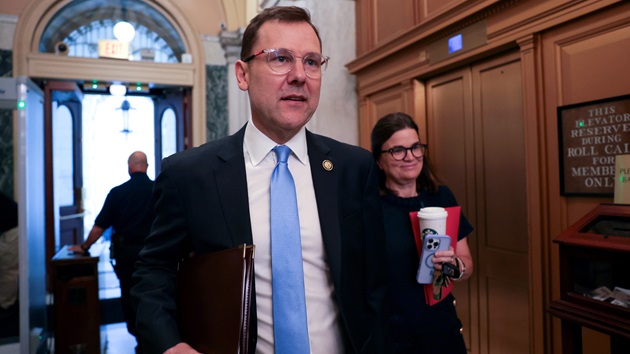
Rep. Thomas Kean Jr. (R-NJ) arrives at the U.S. Capitol on June 30, 2026 in Washington, DC. (Anna Moneymaker/Getty Images)

(WASHINGTON) -- Republican Rep. Tom Kean Jr. of New Jersey arrived back on Capitol Hill on Tuesday after a nearly four-month absence, and announced on the House floor that he received a depression diagnosis that led to an extended hospital stay.

"Now, when people hear the word 'depression,' many people think, simply feel, it means feeling sad, but depression is so much more than that," Kean said. "It is physical, it is emotional, and until you experience it yourself, it is difficult to fully understand how powerful this illness can be."

Kean said he wanted to get back to Congress as quickly as possible, understanding the importance of representing his constituents, but ultimately decided to follow his doctor's recommendations to stay under their care. 

"The doctors recommended that I remain in the hospital to address my illness. They explained to me that this would be the fastest way to recovery, and to be honest, I was hesitant. I didn't think that I had time for it. I had responsibilities to my family, I had responsibilities to my constituents, I had responsibilities to this institution, and like many people, I believed that I could simply push through, but I agreed to follow my doctor's recommendations again, not believing that it would result in a long-term stay," he said.

Kean has not voted in the House since March 5, missing more than 100 roll call votes during his time away.

The congressman had not publicly addressed the reason for his absence prior to Tuesday, raising questions on his whereabouts.

During his absence, Kean won the Republican primary (where he was unopposed) in his reelection bid and received President Donald Trump's endorsement. Kean will face Democrat Rebecca Bennett, a former Navy helicopter pilot, in November for New Jersey's 7th Congressional District, a toss-up district Democrats hope to flip.

Kean, on Tuesday, did not answer multiple questions from reporters on why he didn't communicate with his constituents earlier about his health issues.

In his floor remarks, Kean said he believed he would've been back on Capitol Hill in a few weeks, but soon began to realize that there is "no timeline for healing, there is no timeline for recovery, only the work of getting better one day at a time." 

"Today I am grateful that I listened to my doctors. I am grateful for the exceptional care that I received from doctors, nurses, and support staff. I am grateful that I accepted help, because today I stand before you healthier, stronger, and excited to return to the work that I love," he said.

He then thanked his family, staff, constituents, and medical team for their care and understanding, going on to advocate that "asking for help is not a weakness, it is a strength." 

"This is not a partisan issue. It touches every community, every family and every corner of this country. If sharing my story encourages even one person to seek help, if it gives one family the courage to have a difficult conversation or reminds one person that recovery is possible, then this moment will have been worthwhile," he said as he concluded his speech.

If you or a loved one is experiencing a mental health crisis, please call or text the 988 Suicide & Crisis Lifeline. You will reach a trained crisis counselor for free, 24 hours a day, seven days a week. You can also go to 988lifeline.org.

Copyright © 2026, ABC Audio. All rights reserved.

Blake Lively seeking nearly $7.5 million in attorneys’ fees from Justin Baldoni

Blake Lively attends 'Fendi presents the Baguette 26424 Re-Edition' at the Fendi flagship store in Midtown on May 19, 2026, in New York City. (Aeon/GC Images via Getty Images)

Attorneys for Blake Lively said in a court filing Monday that Justin Baldoni's production company, Wayfarer Studios, owes the actress $7,495,526.87 in attorneys fees connected to the studio's defamation lawsuit against her, which was dismissed in June last year.

According to court documents, which were filed in a federal district court in the Southern District of New York, Lively is also seeking $539,514.01 in costs and expenses incurred in relation to the dismissed defamation case.

The filing comes two weeks after U.S. District Judge Lewis Liman denied Lively's claim for punitive damages against Baldoni and Wayfarer but allowed the actress to seek attorneys' fees under California Civil Code Section 47.1, a law designed to protect anyone who reports sexual assault, harassment or discrimination from retaliatory defamation lawsuits.

Esra Hudson, one of Lively's lead attorneys in the case, wrote in Monday's court filing that fees for her work on the case were discounted from her standard rate of $1,430.00 per an hour to $1,161 to $1,287 per hour over the course of the litigation.

Co-lead trial counsel Michael Gottlieb charged an average hourly rate of $2,187, according to the filing.

ABC News has reached out to representatives for Baldoni for comment.

In a statement to ABC News on Tuesday, Lively's attorneys, Gottlieb and Hudson, said, "Thanks to this landmark decision, those considering using a lawsuit as a weapon of intimidation have been put on notice that there are consequences for doing so. The value of this ruling is in the precedent it creates, the accountability it imposes, and the protection it provides to those who may one day find themselves facing similar retaliation for speaking the truth."

Monday's filing is the latest in a long-running legal dispute between the former It Ends with Us co-stars, who first became embroiled in December 2024, when Lively filed a complaint against Baldoni with the California Civil Rights Department accusing him of sexual harassment on the set of the film, which he also directed. Lively also accused Baldoni and his production company of attempting to orchestrate a smear campaign against her, allegations Baldoni and Wayfarer Studios have vehemently denied.

The two subsequently launched dueling lawsuits against one another in the months that followed, with Baldoni accusing Lively, her husband, Ryan Reynolds, the couple's publicist Leslie Sloane, and others of extortion and defamation, among other things. The lawsuits were consolidated into one suit in January 2025.

Baldoni's lawsuit was ultimately dismissed by Liman in June 2025. The judge later gutted much of Lively's case against Baldoni in April of this year, including claims she was subjected to sexual harassment on set, determining that she could continue to pursue her claims of retaliation against Baldoni's public relations team.

Baldoni, via his Wayfarer production company, and Lively agreed to settle their ongoing dispute in May this year. Liman ruled at the time that Baldoni and Wayfarer Studios must pay Lively's attorneys' fees but denied Lively's claim for punitive damages.

The terms of the settlement were not disclosed.

Copyright © 2026, ABC Audio. All rights reserved.

Supreme Court rolls back federal limits on campaign finance

The U.S Supreme Court is seen on June 25, 2026 in Washington, DC. . (Photo by Kevin Dietsch/Getty Images)

(WASHINGTON) -- The Supreme Court on Tuesday rolled back longstanding limits on the amount of money political parties can spend in coordination with individual candidates for federal office -- a ruling that could unleash a wave of new spending before the midterms.

Writing for the majority in the 6-3 ruling, Justice Brett Kavanaugh found that the limits, enacted by Congress following the Watergate scandal, unconstitutionally restrict free speech.

"In short, constitutional text, history, and precedent establish that the political-party coordinated-expenditure limits violate the First Amendment," Kavanaugh wrote.

The ruling hands a victory to the Republican Party -- including Vice President JD Vance, who backed the lawsuit when he was a senator -- which had argued the spending limits were unconstitutional and ineffective in their purported goal of fighting corruption. 

Experts have predicted that a roll back of the restrictions will prompt a flood of political spending and television ads. 

President Donald Trump celebrated the decision in a social media post, calling it, "A BIG WIN FOR REPUBLICANS and, more importantly, The First Amendment!"

Congress first imposed party-candidate spending limits in 1974, and the Supreme Court had previously upheld them as valid safeguards against bribery.

Under the 2026 limits, the Federal Election Commission capped coordinated spending for Senate races to between $130,600 and $4 million depending on state size, and between $65,300 and $130,600 for House races.

Two Republican Party campaign committees, along with then-Sen. Vance and former Rep. Steve Chabot, R-Ohio, filed suit against the FEC in 2022.

By the time the case reached the Supreme Court, the Trump Justice Department -- which had already stopped enforcing the limits -- declined to defend the FEC. The Democratic National Committee and a court-appointed attorney stepped in to argue for keeping the limits.

Tuesday's ruling continues a nearly two-decade-long trend of the nation's high court narrowing campaign finance law on free speech grounds, building on its 2010 Citizens United decision, which lifted caps on corporate campaign spending. 

In addition to finding that the limits infringe on political speech, the majority also noted that the measures were not necessary to combat corruption, citing "other meaningful prophylactic measures" such as earmarking rules and disclosure requirements. 

"In light of the other meaningful prophylactic measures available to the Government, and given the severe infringement on First Amendment-protected political speech that ensues from limiting a political party's spending in support of its candidates, we conclude that the political-party coordinated-expenditure limits are 'disproportionate' and are not 'necessary' and 'narrowly tailored' for the circumvention interest it seeks to protect," Kavanaugh wrote.

Supporters of the spending limits have argued that the rules prevent quid pro quo corruption as well and restrict individuals from using political parties to circumvent other campaign finance rules. 

"If those contributions, which dwarf the base limits on [individual] contributions to candidates, are effectively placed at a candidate's disposal through coordinated spending, they become potent sources of actual or apparent corruption," attorneys for Public Citizen, a nonprofit voter advocacy group, wrote in a brief to the Supreme Court.

Justices Sonia Sotomayor, Elena Kagan, and Ketanji Brown Jackson dissented, writing that the ruling, "jettisons a rule needed to protect our democracy's integrity." 

"The Court ushers back in the same opportunities for quid pro quo corruption that the contribution limits were meant to check," Justice Kagan wrote, adding that the ruling will enable a political "party to serve as an alternative checking account for a campaign." 

The ruling is expected to prompt a flood of spending by political parties ahead of the midterm elections. According to the FEC, 2026 Senate candidates have so far spent more than $490 million ahead of the midterms, while House candidates have spent nearly $1 billion. 

The campaign arms of House and Senate Republicans celebrated the Supreme Court's decision on campaign finance spending as "a decisive First Amendment victory and a major win for the integrity of our political system."

The National Republican Senatorial Committee (NRSC) was one of the main plaintiffs in the case. Jessica Furst Johnson, counsel of record in the case, said the ruling "marks a major turning point for political speech in America."

"For years, federal law irrationally treated coordination between political parties and their own candidates as suspect, subjecting parties to an unfair restriction on First Amendment speech, and limiting information flow to voters," Johnson said. "The Supreme Court correctly recognized those restrictions as unconstitutional, strengthening the marketplace of ideas, and restoring order to our political ecosystem. Make no mistake -- this is a win for voters and the electorate at large."

In a joint statement, Sen. Tim Scott, R-S.C., who chairs the National Republican Senatorial Committee, and Rep. Richard Hudson, R-N.C., who chairs the National Republican Congressional Committee, wrote, "This is a decisive First Amendment victory and a major win for the integrity of our political system ... By striking down these unconstitutional caps on coordinated spending, the Court has restored core political speech and ensured parties can compete on a level playing field."

The campaign arms of House and Senate Democrats, as well as the chair of the main Democratic Party, condemned the Supreme Court's decision on Tuesday as "a win for billionaire donors and special interests who want more influence over the GOP agenda and an invitation for corruption" while saying they are confident Democrats will win in November's midterm elections.

Copyright © 2026, ABC Audio. All rights reserved.

Pedestrian reportedly struck by vehicle

Pedestrian reportedly struck by vehicleTYLER – A pedestrian collision at a shopping center is being investigated by police. According to Tyler PD, the collision happened in a parking lot at the Cumberland Village Shopping Center in the 8900 block of South Broadway Avenue at approximately 3:55 p.m. The driver in question is assisting law enforcement and is fully cooperative, according to officials. There were no immediate details available regarding the pedestrian’s condition. As more information becomes available, this story will be updated.

Gas station robbery suspect arrested

Gas station robbery suspect arrestedSMITH COUNTY – On Friday, June 26, Smith County Sheriff’s Office Deputies responded to The Fuel Spot, on Highway 69, to a possible aggravated robbery. When the deputies arrived, they were met by the store clerk who said that a male suspect, identified later as 29-year-old Tanner McEvoy, entered the business, displayed a knife, and demanded cash.

The clerk complied, giving the suspect an unknown amount of cash . McEvoy then fled the location on foot toward a nearby RV park. Deputies quickly determined McEvoy’s location and took him into custody without incident. During execution of a search warrant, investigators recovered the stolen money from McEvoy’s residence.

McEvoy was transported to the Smith County Jail, where he was booked on charges of aggravated robbery. His bond was set at $250,000.

‘Love, Theoretically’ film in the works with Colleen Hoover producing

The cover of Ali Hazelwood's 'Love, Theoretically.' (Berkley)

There's nothing theoretical about a Love, Theoretically film.

Amazon MGM Studios has landed the movie rights to the novel by bestselling author Ali Hazelwood. To All the Boys I’ve Loved Before screenwriter Sofia Alvarez is set to direct the film and adapt Hazelwood's book into the screenplay. Both Alvarez and Hazelwood will executive produce it.

It Ends with Us author Colleen Hoover is set to produce the movie with Lauren Levine, her partner at Heartbones Entertainment. Also producing are Max Siemers and Tanner Anderson for Magic Hour Entertainment.

The upcoming film was confirmed by Magic Hour Entertainment on Monday. The production company made a post to Instagram announcing the project.

"The excitement we have for LOVE, THEORETICALLY is not at all theoretical! We’re incredibly grateful to partner with Amazon MGM Studios and to work again with the brilliant Sofia Alvarez," the company's post reads. "It’s a privilege and joy to continue to collaborate with Lauren Levine and Colleen Hoover at Heartbones. Most of all, the film we hope you’ll fall in love with exists because of the immense talent and imagination of Ali Hazelwood."

The news comes ahead of the release of the film adaptation of Hazelwood's first novel, The Love Hypothesis. It stars Lili Reinhart and Tom Bateman and will release to Prime Video on Sept. 23.

Love, Theoretically is a romantic comedy that follows rival physicists. It centers around one woman's double life as both an adjunct professor and a professional fake girlfriend.

Copyright © 2026, ABC Audio. All rights reserved.

Selena Gomez, Timothée Chalamet’s voices meet-cute in new ‘Not Alone’ trailer

Joe and Fran in Illumination's 'Not Alone,' directed by Eric Guillon, Claire Dodgson and Jonathan Del Val. (Illumination, Universal Pictures)

Selena Gomez and Timothée Chalamet — or at least their voices — co-star in the upcoming animated film Not Alone. On Tuesday Selena posted a trailer for the film on Instagram, so you can see what their characters look like.

As previously reported, Timothée plays an introverted rocket mechanic named Joe, who meets Selena's character, Fran, a "brilliant astro-botanist" who's created a rocket that runs on plant-based fuel. Things get complicated when three aliens plot to commandeer Fran's rocket to return to their home planet.

In the trailer, set to David Bowie's classic "A Space Oddity," Joe and Fran meet while working on the rocket and start a romance, which thrills them both — until the aliens, who all have British accents for some reason, show up.

This is the second time the two have co-starred in a film; the first time was in 2020's A Rainy Day in New York. 

Not Alone arrives in theaters in April 2027. It's from the same studio that brought you the Despicable Me, Minions and Super Mario Brothers movies. 

Copyright © 2026, ABC Audio. All rights reserved.

Whitmer says she’ll pull Michigan National Guard from DC if they’re used for Trump’s ‘safe and beautiful’ mission

Michigan Governor Gretchen Whitmer speaks on March 11, 2026 in Washington, DC. (Anna Moneymaker/Getty Images)

(LANSING, Mich.) -- Michigan Gov. Gretchen Whitmer on Monday ordered the state's National Guard to limit its mission in Washington exclusively to events tied to the nation's 250th anniversary celebration, drawing a line against the military's prolonged presence in the capital and threatening to pull Michigan troops if they're assigned to any other mission.

In a letter to Maj. Gen. Paul Rogers, the commander of the Michigan National Guard, Whitmer wrote she "has not deployed—and will not deploy—the Michigan National Guard to support the D.C. Safe and Beautiful Mission," referring to the Guard's ongoing presence and patrols across the city.

"If the National Guard is unable or unwilling to ensure the Michigan National Guard is only supporting the America 250 mission," she added, "then I will end Michigan’s support for the America 250 mission."

The Michigan National Guard has deployed 161 troops to Washington in recent weeks, while Minnesota has sent another 107, according to service figures, making them the first Democrat-led states to contribute sizable contingents to the capital since President Donald Trump surged National Guard forces there in August.

Puerto Rico has also deployed 155 National Guard troops to the capital ahead of the July Fourth weekend, while the U.S. Virgin Islands has sent 83.

There is precedent for National Guard units from across the country being activated for major events in Washington, including presidential inaugurations and the response to the Jan. 6, 2021, attack on the Capitol. It is likely National Guard units would again be drawn from multiple states to support security operations tied to America’s 250th birthday celebrations.

It remains unclear how the two missions -- ongoing security operations focused largely on high-traffic areas around the Capitol and downtown, and event-driven support for anniversary celebrations -- would be separated in practice.

For most of the so-called "Safe and Beautiful" mission, the force has been drawn almost entirely from Republican-led states, aside from the District of Columbia National Guard. Troops have largely been assigned to high-visibility patrols around Washington's tourist corridors and several downtown Metro stations, while also assisting with litter collection and graffiti removal.

The deployment has focused on some of the city's safest and most heavily trafficked areas and is expected to continue through the remainder of President Donald Trump's term.

An analysis from the think tank Niskanen Center found that the Guard’s presence hasn’t reduced violent crime but has reduced property crime. It also noted troops are far more expensive than police officers, estimating it costs $607 per Guardsman per day, compared with roughly $384 per day for a D.C. police officer, underscoring the higher cost of relying on military personnel with limited legal authority and civil training.

A Congressional Budget Office analysis estimated the Guard’s deployment to the capital would cost roughly $660 million this year, though that projection assumed an average force of about 3,000 troops, including pay, food and lodging for troops in hotels.

The estimate does not fully capture the federal government’s longer-term personnel costs, including the accrual of veterans’ benefits tied to active-duty service, such as retirement and education benefits.

Copyright © 2026, ABC Audio. All rights reserved.

Car crashes into cafe in Simi Valley, killing 1 and injuring 5

A Tesla crashed into the outdoor dining area of an Urbane Cafe in Simi Valley, California, on Monday afternoon, killing one person and injuring five others, authorities said. (KABC)

(SIMI VALLEY, Calif.) -- A car crashed into the outdoor dining area of an Urbane Cafe in Simi Valley, California, on Monday afternoon, killing one person and injuring five others, authorities said.

The crash was reported at about 2:30 p.m. near Tierra Rejada and Madera roads in a busy shopping center, according to Simi Valley Police.

Aerial footage from ABC News Los Angeles station KABC showed a white Tesla lodged in the restaurant's outdoor patio after the collision.

One person was pronounced dead at the scene, while five others suffered minor injuries, according to the Ventura County Fire Department.

Authorities have not released the identity of the person who died, and additional information about the victims was not immediately available.

Investigators said they are still working to determine the cause of the crash. The Tesla driver was a 64-year-old woman with four juvenile passengers in the car, police told KABC.

The driver and one passenger were taken to a hospital for minor injuries, according to KABC.

"We're still trying to determine if speed was involved. We do know that the Tesla was going northbound through the parking lot. It was attempting to make a right-hand turn to go eastbound toward Madera and, unfortunately, did not make the turn and went over the sidewalk when it struck the female victim," Simi Valley police Sgt. Rick Morton told KABC.

Earlier this month, a Tesla Model 3 crashed into a home in Katy, Texas, killing a woman. Her family has since filed a lawsuit against Tesla and the driver, alleging the vehicle's driver-assistance technology contributed to the crash.

Tesla has disputed those claims, saying the driver manually overrode the system by pressing the accelerator. Federal safety officials are investigating the crash.

Authorities have not said whether any driver-assistance technology was engaged at the time of Monday's crash.

"We don't believe it was an intentional act, but until we can determine what the cause was, whether it was mechanical failure or there was impairment by the driver, it's still to be determined," Morton said.

Copyright © 2026, ABC Audio. All rights reserved.

Supreme Court strikes down limits on party spending in federal elections, backing Republican appeal

WASHINGTON (AP) — The Supreme Court on Tuesday erased limits on how much political parties can spend in coordination with candidates for Congress and president, striking down a federal election law that is more than 50 years old.

Prodded by a Republican-led lawsuit that includes Vice President JD Vance, the court’s conservative justices were again in the majority of the latest decision that upended congressionally enacted limits on raising and spending money to influence elections. The court’s 2010 Citizens United decision opened the door to unlimited independent spending in federal elections.

The limits on party spending stem from a desire to prevent large donors from skirting caps on individual contributions to a candidate by directing unlimited sums to the party, with the understanding that the money will be spent on behalf of the candidate.

The Supreme Court had previously upheld the limits, in 2001.

The Republican committees for House and Senate candidates filed the lawsuit in Ohio in 2022, joined by Vance, then a senator from Ohio, and then-Rep. Steve Chabot.

After President Donald Trump took office for his second term, the Federal Election Commission dropped its defense of the law and joined with Republicans in urging that it be overturned.

Democrats had called on the court to uphold the law, even though there is wide agreement that the spending limits have hurt political parties in an era of unlimited spending by other organizations.

Last year, the coordinated party spending for Senate races ranged from $127,200 in several states with small populations to nearly $4 million in California, the most populous state. For House races, the limits were $127,200 in states with only one representative and $63,600 everywhere else.

Entrenched divisions between liberal and conservative justices over campaign finance restrictions were on display when the court heard arguments in December.

“Every time we interfere with the congressional design, we make matters worse,” said Justice Sonia Sotomayor, a dissenter in Citizens United and the court’s other campaign money cases.

By contrast, Justice Samuel Alito, a member of the Citizens United majority, described the decision as “much maligned, I think unfairly maligned.” The effect of the decision was to ”level the playing field,” Alito said, by expanding the right to spend freely that had previously belonged only to media companies.

Supreme Court upholds birthright citizenship, rejecting Trump’s proposed limits

WASHINGTON (AP) — The Supreme Court on Tuesday upheld a broad conception of birthright citizenship, rejecting President Donald Trump’s executive order declaring that children born to people who are in the United States illegally or temporarily are not American citizens.

The justices relied on a long-settled understanding of the 14th Amendment, adopted after the Civil War, and more recent federal laws in ruling that anyone born in the country, with very limited exceptions, is a citizen.

The Republican president’s restrictions had been blocked by several lower courts and had not taken effect anywhere in the U.S.

During arguments in April, both conservative and liberal justices questioned the order’s legality in a momentous case that was magnified by Trump’s unprecedented attendance in the courtroom.

The case framed another test of Trump’s assertions of executive power that defy long-standing precedent for a court with a conservative majority and a robust view of presidential power that has largely ruled in his favor. In the notable exceptions when the court has not, Trump has responded with starkly personal criticisms of the justices.

The justices ruled on Trump’s appeal of a lower-court ruling from New Hampshire that struck down the citizenship restrictions.

The birthright citizenship order, which Trump signed on the first day of his second term, is part of his administration’s broad immigration crackdown.

Birthright citizenship was the first Trump immigration-related policy to reach the court for a final ruling. The justices previously struck down global tariffs Trump had imposed under an emergency powers law that had never been used that way.

Trump reacted furiously to the late February tariffs decision, saying he was ashamed of the justices who ruled against him and calling them unpatriotic.

He also seemed to recognize the court was likely to rule against him on birthright citizenship, too, using his Truth Social platform to criticize “dumb judges and justices” and wealthy pregnant women from China and elsewhere who come to the U.S. to give birth so their newborns will have American citizenship.

Trump’s order would have upended widely held views that the 14th Amendment confers citizenship on everyone born in the U.S., excluding only the children of foreign diplomats and those born to a foreign occupying force.

The amendment was intended to ensure that Black people, including former slaves, had citizenship, though the Citizenship Clause is written more broadly. “All persons born or naturalized in the United States, and subject to the jurisdiction thereof, are citizens of the United States and of the State wherein they reside,” it reads.

In a series of decisions, lower courts have struck down Trump’s executive order as illegal. The decisions have invoked the high court’s 1898 ruling in Wong Kim Ark, which held that the U.S.-born child of Chinese nationals was a citizen.

The Trump administration argued that the common view of citizenship is wrong, asserting that children of noncitizens are not “subject to the jurisdiction” of the United States and therefore are not entitled to citizenship.

More than one-quarter of a million babies born in the U.S. each year would have been affected by the executive order, according to research by the Migration Policy Institute and Pennsylvania State University’s Population Research Institute.

While Trump has largely focused on illegal immigration in his rhetoric and actions, the birthright citizenship restrictions also would have applied to people who are legally in the United States, including students and applicants for green cards, or permanent resident status.

Supreme Court upholds state bans on transgender girls in girls’ sports

The U.S. Supreme Court building stands in Washington, D.C., U.S. Photographer: Al Drago/Bloomberg

(WASHINGTON) -- The Supreme Court on Tuesday upheld state bans on transgender girls from participating in girls' and women's competitive sports, reversing a pair of lower court decisions that had blocked the bans as violations of Title IX and the 14th Amendment.

The 6-3 decision came from Justice Brett Kavanaugh.

The ruling in a pair of cases from West Virginia and Idaho effectively upholds laws in those two states, plus 27 others that block trans girls from teams consistent with their gender identity.

The decision marks the first time the high court has weighed in on the heated national debate over transgender athletes.  

The court's ruling is a major setback for the estimated 122,000 transgender American teenagers who participate in high school sports, according to the Williams Institute at UCLA.

For trans teens and their families, the dispute has involved a matter of immutable identity and equal opportunity.  

For many states and top U.S. athletic organizations, including the U.S. Olympic Committee and NCAA, the inclusion of trans athletes has been seen as creating an unfair and unsafe playing field.

The competitive advantage boys and men have physically over girls and women has been well established in physically demanding sports by medical research and serves as a primary basis for distinctions between the sexes in athletics.

Studies have shown testosterone produced during male puberty does lead to more muscle mass, larger hearts and lungs, greater body height and longer limbs on average for boys and men, according to the American College of Sports Medicine.

Many transgender teens who have received gender-affirming medical treatment from a young age argue that they lack any physiological advantage because they have not undergone male puberty.

Twenty-one states allow transgender girls to compete on girls' sports teams, including California and New York, which have laws explicitly protecting the right of trans girls to play.

Becky Pepper Jackson, the only known openly transgender athlete in West Virginia in any sport, sued her state in a bid to continue competing on her high school track team where she throws discus and shot put. Jackson recently won the state championship in girls shot put.

"I've been a girl forever, and playing on the guys' team is going backwards," she told ABC News in an interview last year.

When West Virginia's law takes effect, she will no longer be allowed to participate in girls competitive sports leagues. Competing with boys, she said, would "go against who I am."

Becky, who has openly identified as a girl since third grade, said she has never undergone male puberty, thanks to puberty-blocking medication.

Idaho college student Lindsay Hecox, a former track and cross-country runner who was barred from trying out for her school teams, sued over her state's ban in 2020. Last year, she asked the Supreme Court to drop her case because she no longer wished to compete in sports and didn't want to be in the spotlight. However, Idaho fought to keep the case alive.

Lower courts concluded separately that the state bans discriminate "on the basis of sex" in violation of Title IX, the landmark civil rights law that has promoted equal opportunities for women and girls in athletics, and the Constitution's Equal Protection Clause.

The Supreme Court's conservative majority reversed those decisions and reinstated the laws.

Last year, the same majority upheld a Tennessee law banning some gender-affirming medical treatments for transgender minors, rejecting claims that the law discriminated "on the basis of sex" and saying that states should have leeway to regulate health care in an area of scientific uncertainty.

In 2020, however, the high court concluded in a landmark decision that a Michigan transgender woman fired by her employer for being transgender was discriminated against "on the basis of sex" under Title VII of the Civil Rights Act of 1964.

Justice Neil Gorsuch explained in his majority opinion at the time that her termination was "for traits or actions it would not have questioned in members of a different sex."

Sixty-nine percent of Americans believe transgender girls should only be allowed to play on boys' teams, consistent with their gender assigned at birth, according to a June 2025 Gallup survey.

This is a developing story. Please check back for updates.

Copyright © 2026, ABC Audio. All rights reserved.

Supreme Court upholds state laws banning transgender girls and women from school athletic teams

WASHINGTON (AP) — The Supreme Court on Tuesday upheld state laws barring transgender girls and women from playing on school athletic teams, in another setback for transgender people.

The court’s conservative majority, which has repeatedly ruled against transgender Americans in the past year, ruled that state bans in Idaho and West Virginia don’t violate the Constitution or the federal law known as Title IX, which prohibits sex discrimination in education.

More than two dozen other Republican-led states have adopted bans on female transgender athletes, and the decision seems certain to extend to them as well.

Left unresolved by the outcome are lawsuits challenging state laws and regulations in Connecticut, California and elsewhere that permit transgender athletes to compete consistent with their gender identity.

Becky Pepper-Jackson, a 16-year-old high school sophomore in Bridgeport, West Virginia, has been taking puberty-blocking medication, has publicly identified as a girl since age 8 and has been issued a West Virginia birth certificate recognizing her as female. She is the only transgender person who has sought to compete in girls sports in West Virginia.

Pepper-Jackson has progressed from a back-of-the-pack cross-country runner in middle school to statewide champion in the shot put. She beat the second-place finisher by two feet in last month’s West Virginia championship meet.

In the Idaho case, Lindsay Hecox sued over the state’s first-in-the-nation ban for the chance to try out for the women’s track and cross-country teams at Boise State University in Idaho. She didn’t make either squad because “she was too slow,” her lawyer, Kathleen Hartnett, told the court during arguments in January, but she competed in club-level soccer and running.

Prominent women in sports have weighed in on both sides. Tennis champion Martina Navratilova, swimmers Summer Sanders and Donna de Varona and beach volleyball player Kerri Walsh Jennings are supporting the state bans. Soccer stars Megan Rapinoe and Becky Sauerbrunn and basketball players Sue Bird and Breanna Stewart back the transgender athletes.

In 2020, the Supreme Court ruled LGBTQ people are protected by a landmark federal civil rights law that prohibits sex discrimination in the workplace, finding that “sex plays an unmistakable role” in employers’ decisions to punish transgender people for traits and behavior they otherwise tolerate.

But last year, the six conservative justices on the nine-member court declined to apply the same sort of analysis when they upheld state bans on gender-affirming care for transgender minors.

The states supporting the prohibitions on transgender athletes argued there is no reason to extend the ruling barring workplace discrimination to Title IX.

Idaho’s law, state Solicitor General Alan Hurst said, is “necessary for fair competition because, where sports are concerned, men and women are obviously not the same.”

Lawyers for Pepper-Jackson argued that such distinctions generally make sense but that their client has none of those advantages because of the unique circumstances of her early transition. In Hecox’s case, her lawyers wanted the court to dismiss the case because she had forsworn trying to play on women’s teams.

NCAA president Charlie Baker told Congress in 2024 that he was aware of only 10 transgender athletes out of more than half a million students on college teams. But despite the small numbers, the issue has taken on outsize importance.

Baker’s NCAA and the U.S. Olympic and Paralympic Committees banned transgender women from women’s sports after President Donald Trump, a Republican, signed an executive order aimed at barring their participation.

The public generally is supportive of the limits. An Associated Press-NORC Center for Public Affairs Research poll conducted in October 2025 found that about 6 in 10 U.S. adults “strongly” or “somewhat” favored requiring transgender children and teenagers to compete only on sports teams that match the sex they were assigned at birth, not the gender they identify with, while about 2 in 10 were “strongly” or “somewhat” opposed and about one-quarter did not have an opinion.

About 2.1 million adults, or 0.8%, and 724,000 people ages 13 to 17, or 3.3%, identify as transgender in the U.S., according to the Williams Institute at the UCLA School of Law.

Sen. Ruben Gallego under investigation for suspected campaign finance violations

Sen. Ruben Gallego (D-AZ) talks to reporters as he heads for a vote at the U.S. Capitol on June 01, 2026 in Washington, DC. (Photo by Chip Somodevilla/Getty Images)

(WASHINGTON) -- Arizona Sen. Ruben Gallego is under federal investigation for suspected campaign finance violations, a person familiar with the matter confirmed to ABC News.

According to multiple reports, Gallego, a Democrat, used campaign funds to fly his family to the Caribbean, Miami, Nantucket and Puerto Rico. He also allegedly used funds to pay for childcare.

Campaign funds may be used to pay for a candidate’s childcare expenses that are incurred as a direct result of campaign activities, according to the Federal Election Commission.

On Monday, the Senate Ethics Committee closed its inquiry into allegations of sexual misconduct and campaign finance violations after finding no evidence that Gallego violated Senate rules or applicable law, according to a letter released by his office.

In regards to the federal investigation, a Gallego spokesperson told Axios that "it's the least surprising news of the week that this comes immediately after the Senate Ethics Committee cleared Senator Gallego of right-wing smears pushed by the administration."

ABC News has reached out to Gallego's office for comment on the investigation. The Department of Justice has not yet commented on the probe.

Copyright © 2026, ABC Audio. All rights reserved.

Procession held for fallen fire chief

Procession held for fallen fire chiefEAST TEXAS — Mabank Fire Chief Charlie Woodard was fatally struck by a pickup truck while directing traffic after the Mabank Rodeo on Saturday.

According to the Mabank Police Department, of which Woodard was also a member, a procession was held Tuesday morning. It exited U.S. Highway 175 onto State Highway 198, traveling south to Mason Street.

Woodard had served with the City of Mabank since 2018. He also worked as the community’s Fire Marshal and as a Mabank Police Department officer. He was recognized as one of the city’s employees of the month in Feb. 2025.

“Thank you for the overwhelming love, prayers, and support you have shown the Woodard family, Mabank Fire & Rescue, and the Mabank Police Department during this difficult time,” the department said.

Funeral arrangements for Woodard will be announced in the near future, the department said.

Uncertainty clouds next step in US-Iran negotiations

U.S. President Donald Trump talks to reporters in the Oval Office at the White House on June 29, 2026 in Washington, DC. (Photo by Alex Wong/Getty Images)

(WASHINGTON) -- The United States and Iran are sharing conflicting messages about the prospects of a meeting between key negotiators in Qatar this week, injecting even more uncertainty into a peace process that is supposed to be focused on addressing Iran’s nuclear program but has so far been dominated by the Strait of Hormuz.

Talks between the countries were originally scheduled to take place in Switzerland this week and center on nuclear issues, but the venue and agenda for the planned high-level and technical meetings changed following a fresh round of tit-for-tat strikes between the U.S. and Iran over the strategic waterway, a U.S. official and another source said.

While the Trump administration is pushing for direct talks, it is still unclear whether Iranian and American officials will meet face-to-face or communicate solely through Qatari mediators, they added.  

President Trump announced on Monday that a meeting would take place in Qatar’s capital on Tuesday at Tehran’s request.

"IRAN HAS REQUESTED A MEETING. IT WILL TAKE PLACE TOMORROW IN DOHA!” Trump said in a social media post on Monday morning.

White House Press Secretary Karoline Leavitt later said the U.S. would be represented by Special Envoy Steve Witkoff and the president’s son-in-law, Jared Kushner, adding that both high-level and technical talks with Iran were expected to take place.

Esmail Baghaei, a spokesman for Iran’s foreign ministry, painted a different picture of the upcoming meetings. He said that while an Iranian delegation would travel to Doha to discuss the implementation of the interim deal between the U.S. and Iran, their trip bore no connection to Kushner and Witkoff’s visit.

“There are no negotiation meetings with the U.S. side at any level scheduled in the coming days,” Baghaei asserted.

The Iranian regime’s apparent hesitancy to resume in-person talks is a significant step back from the high-level talks that took place in Switzerland earlier this month following the signing of a memorandum of understanding between the countries. After that meeting, Vice President JD Vance reported that lengthy conversations with senior Iranian officials had resulted in a "good foundation for a successful final deal,” and said they made progress towards the creation of a “mechanism” to ensure the Strait of Hormuz would remain open.

The interim deal stipulates that Iran should "make arrangements using its best efforts for the safe passage of commercial vessels with no charge for 60 days only from the Persian Gulf to the Sea of Oman and vice versa.”

But Iran has repeatedly threatened to close the strait, and on Thursday, it attacked a container ship transiting the waterway--setting off a four-day exchange of strikes with the U.S. that stymied ship traffic.

Trump administration officials are eager to restore conditions in the Strait of Hormuz to their pre-war norm, but sources told ABC News that recent intelligence reports predict Tehran will continue threatening to resume its chokehold on the waterway -- a reality that gives Iran significant leverage over the global economy.

The memorandum of understanding also calls for Iran and the U.S. to hammer out a sweeping agreement within 60 days. Almost a quarter of that time has now expired.

While the interim deal says that period can be extended by mutual agreement, Trump has repeatedly declared he wouldn’t let Iran draw out the negotiations.

"We're negotiating from a position of pure strength, pure strength. They know that,” Trump said on Thursday.

Copyright © 2026, ABC Audio. All rights reserved.

How Mamdani-aligned House candidates say they plan to fight wealth inequality

New York City Mayor Zohran Mamdani and NYC Congressional candidate Claire Valdez embrace during a primary-night watch party, June 23, 2026, in Brooklyn. (Michael M. Santiago/Getty Images)

(NEW YORK) -- A trio of progressive Democrats sharply criticized billionaires on their way to victory in House primaries in New York City.

The clean sweep for candidates endorsed by far-left New York City Mayor Zohran Mamdani on Tuesday drew attention to economic populism as affordability remains a top issue for voters ahead of the midterm elections.

In Manhattan and Brooklyn's 10th District, incumbent Rep. Dan Goldman lost in a landslide to former comptroller Brad Lander, who vowed to "put working people first – not billionaires."

Darializa Avila Chevalier, a community organizer, defeated incumbent Rep. Adriano Espaillat in New York's 13th District, which covers upper Manhattan and the Bronx. Claire Valdez, a one-term state assemblymember, beat Brooklyn Borough President Antonio Reynoso in the primary race for New York's 7th District.

Valdez and Chevalier, both of whom are democratic socialists, called for a four-day work week and a pause in the construction of AI data centers, among other measures.

To be sure, center-leaning candidates won Democratic primaries on Tuesday in upstate New York and Utah. New Jersey Gov. Mikie Sherrill and Virginia Gov. Abigail Spanberger, who are both Democrats, won general elections last year with moderate campaigns touting their own plans to ease price woes.

Here's what to know about economic proposals put forward by Lander, Chevalier and Valdez:

Tax on billionaires

All three of the victorious progressive House candidates support a tax on wealthy individuals.

Lander "strongly supports" the Ultra-Millionaire Tax Act, a bill proposed by Democratic Sen. Elizabeth Warren that would tax the net wealth of households with over $50 million, according to Lander's website.

Lander also backs an ultra-wealth tax on individuals worth over $1 billion, as well as the Equal Tax Act, which matches tax rates for capital gains and ordinary income over $1 million.

Chevalier supports the Ultra-Millionaire Tax Act and the Equal Tax Act. Similarly, Valdez has voiced support for taxing billionaires as means of funding social programs.

The top opponents in each of the three primary races held similar positions. Both Espaillat and Goldman had signed on to the Ultra-Millionaire Tax Act and the Equal Tax Act. Reynoso said he would "fight to tax the rich – a lot."

Proponents say wealth taxes could raise tax revenue from affluent Americans in a position to spare funds. Critics, on the other hand, warn wealthy individuals may move assets abroad or prove less likely to start businesses or other ventures.

For his part, Mamdani sought a two-percentage-point tax increase for residents making more than $1 million, which would have raised the tax rate for high earners in New York City from roughly 3.9% to 5.9%.

Instead, New York enacted a tax on second homes in New York City valued at $1 million or more.

Pause on construction of AI data centers

All three progressive House candidates back a moratorium on the construction of AI data centers.

Many of the nation's largest companies have poured funds into the chips and data centers necessary to operate AI.

The data center projects have drawn ire from critics who say they drive up residential water and electricity bills in some areas, while offering limited job gains. Proponents of the sector point to its role in fueling economic growth and ensuring the competitiveness of U.S. tech firms.

Sen. Bernie Sanders, I-Vt., and Rep. Alexandria Ocasio-Cortez, D-N.Y, have proposed the AI Data Center Moratorium Act, which would pause the development of data centers until the federal government imposes industry regulations.

Goldman, Lander's opponent, signed onto the AI Data Center Moratorium Act. By contrast, Espaillat – Chevalier's opponent – has not supported the bill. Reynoso's position on a data center moratorium could not be immediately found.

On her campaign website, Valdez said she would "fight to hold major technology corporations accountable, protect our workforce from the harms of AI, and ensure that new technologies benefit communities, not just corporate executives."

Four-day work week

Chevalier and Valdez support shifting from a standard workweek of 40 hours spread across five days to one lasting 32 hours across four days.

Such an approach, Valdez says, would reclaim the "economic gains of automation for workers."

Spain, Iceland and South Africa are among the nations that have implemented a trial of the four-day workweek for select companies and workers.

In California and the U.S. House, lawmakers have introduced bills that would set the standard workweek at 32 hours.

The Thirty-Two Hour Workweek Act, introduced in the U.S. House in March 2023, garnered support from eight members. Neither Goldman nor Espaillat was among the backers.

Reynoso's position on a four-day workweek could not be immediately found, though last month he spoke in support of unionized Kickstart employees seeking a four-day workweek as part of their labor contract.

Some experts previously told ABC News that a combination of escalating market pressure and legislative activity could ultimately bring a nationwide four-day workweek standard; others said such an outcome would prove nearly impossible, at least anytime soon.

Labor law reform

The share of unionized workers has fallen nationwide in recent decades. All three of the New York City progressives say they want to reverse that.

Lander, Valdez and Chevalier each support the PRO Act, a labor law reform measure with strong backing among U.S. labor unions.

The legislation would ease the path toward forming unions and winning labor contracts. The latest version of the bill, known as the Richard L. Trumka Protecting the Right to Organize Act, boasts the support of 215 House members, including at least one Republican.

Both Goldman and Espaillat signed onto the PRO Act. Reynoso, meanwhile, vowed to "champion the PRO Act."

On her campaign website, Chevalier calls for passage of the PRO Act, so that "everyone who wants a union can form one."

Copyright © 2026, ABC Audio. All rights reserved.

Nursing gains ‘professional’ label for student loans after judge’s ruling

WASHINGTON (AP) — Students pursuing graduate degrees in nursing, physical therapy and several other fields will be eligible to take out higher federal student loan amounts — at least for now — after a federal judge blocked part of a Trump administration rule that held them to lower limits.

The U.S. Education Department issued a revised rule on Monday designed to follow the judge’s order from last week, officials told The Associated Press. Agency officials called it a temporary change while they fight in court to keep the original rule, which defined medicine, law and other fields as “professional programs” but excluded fields such as nursing.

The department disagrees with the judge’s order but will comply, even as officials plan to prevail in the case over which degrees are defined as “professional,” Undersecretary Nicholas Kent said in a statement. “We will continue to make the case that the definition is both lawful and appropriate,” he said.

The change represents a short-term win for groups that sued to stop the rule. Eight groups challenged the department’s definition in court, representing nurse practitioners, therapists, speech language pathologists and more.

But in strictly applying the judge’s order, the department is now striking some degrees from the list of professional programs, meaning those students will face lower loan limits. Theology studies programs are among the biggest to shift from professional to non-professional degrees in the shuffle, subjecting theology students to a lower student loan limit. The master of divinity degree — a common degree for pastors and ministers — remains on the professional list, with a more generous student loan limit.

The new rule, which takes effect Wednesday, comes from a student loan overhaul passed in President Donald Trump’s tax bill last year. Programs designated as professional degrees face federal loan caps of $200,000, while other graduate programs are capped at $100,000.

Previously, graduate students had been able to take out federal loans up to the full cost of their degree. Trump officials pushed for new loan caps to rein in student debt and lower tuition prices that they said had grown out of control.

The groups that brought the lawsuit said the rule would require students to forgo their studies or take out riskier private loans. Although many graduate nursing degrees fall within the lower loan limits, some can cost more than $100,000, including in high-demand fields like nurse anesthesia.

In a notification to universities on Monday, the Education Department said it’s confident the Trump administration’s initial rule will ultimately be upheld in court. The amended rule is expected to remain in effect during the judge’s preliminary stay, but the department warned that it “may change as litigation in the case proceeds.”

The original rule included about a dozen programs that were deemed professional, which Trump officials had said was not a judgment on their importance but part of a technical definition dating to the 1960s. Along with law and medicine, that list also included theology, pharmacy, veterinary medicine, clinical psychology and more.

The temporary rule expands that list to 29 specific degree programs, including master of science in nursing, doctor of nursing practice, and doctor of nurse anesthesia practice. Others newly added to the professional list include degrees for physical therapy, athletic training, speech-language pathology, physician associates and anesthesiologist assistants.

The department’s communication listed about 25 programs that are now considered non-professional degrees. Along with theology, that list now includes applied psychology, pharmaceutical sciences and others. (The doctor of pharmacy degree remains professional.)

Last week’s court ruling blocked parts of the Education Department’s definition that were added in a federal rulemaking process. U.S. District Judge Beryl Howell in Washington called it a “misguided” interpretation that strayed from a longstanding definition created by Congress.

The department’s definition laid out several criteria used to weigh if degrees count as professional programs. It said those degrees generally take six years to complete and require licenses to begin practicing, among other requirements.

It also said professional degrees cannot lead to employment that must be “be supervised by another professional” with “more education, training, and qualifications.”

A separate lawsuit filed by a coalition of Democratic-led states challenging the loan caps is still pending.

In brief: ‘The Devil’s Mouth’ trailer and more

Alicia Vikander has joined the cast of the upcoming Netflix series Enigma Variations. The show is based on the bestselling novel by André Aciman. Vikander is set to play Claire in the series. Aaron Taylor-Johnson was previously announced to star as Paul in the show, which tells the story of "a man remade by the lovers who ignite and undo him over the course of six transformative years," according to its official logline ...

The summer I turned into all the boys I've loved before. Prime Video has shared the official trailer for the thrilling new movie The Devil's Mouth. The summer shark film features two stars of the Jenny Han-verse as part of the ensemble — Lana Condor and Gavin Casalegno. Also starring are Kathryn Newton, Nico Hiraga, Tommi Rose and Tayme Thapthimthong ...

Are you 100% ready to learn the new stars of the upcoming Netflix comedy series A Hundred Percent? Good. The show, which has started production in LA, has added Diane Lane, Tiffany Boone and Lisa Gilroy to its cast. The previously announced ensemble includes Nick Kroll, Sam Richardson, Jason Mantzoukas and Vanessa Bayer. The show follows a group of friends who are stars in the world of wellness and self-optimization ...

Copyright © 2026, ABC Audio. All rights reserved.