AUSTIN, Texas (AP) — Texas Gov.-elect Gina Hinojosa, the first Democrat to win the office since 1990, said Thursday she would build a bipartisan administration after her stunning upset in the midterm elections that shattered decades of GOP control in the nation’s second-most populous state.
Hinojosa, who will become Texas’ first Latina governor, made the pledge during her first news conference since ousting Republican Gov. Greg Abbott as part of Democrats’ wave of wins, including James Talarico flipping a U.S. Senate seat.
“We are forging a new way forward,” she said. “People are tired of the divisions, tired of the fighting, tired of the culture wars.”
Hinojosa, a 52-year-old state legislator from Austin who was raised on the Texas-Mexico border, was a massive underdog. She engineered a plucky and populist challenge against Abbott, who significantly outraised her but was denied a record fourth term just two years after President Donald Trump carried Texas by double-digits.
Hinojosa said Abbott was “gracious” after her victory and committed to helping her prepare to take office in January.
The upset underlined how a glum national mood dragged down Republicans across the country, even in a stronghold where Democrats had not won in decades.
Hinojosa gained major political momentum in the last few months of a campaign that centered heavily on public education, outrage over data centers and a push to lower costs. One of the first appointments to her transition team is a former rural Republican lawmaker who opposed Abbott’s push for private school vouchers, which Hinojosa has supported repealing.
Her agenda will be tested in a divided Texas Legislature, where Republicans also lost the state House but still control the Senate.
“This is not about being a Democratic administration. I’m not going to be the governor for just Democrats,” Hinojosa said. “I’m going to be the governor for all the people of Texas.”
The daughter of a former Texas Democratic Party leader, Hinojosa’s own political career started in 2012 while running for a school board seat in Austin, which she says was driven by budget cuts that threatened to close her son’s campus.
She was elected to the Texas House in 2016 and later became a vice chair of the Texas Legislative Progressive Caucus. She worked to shed that progressive brand in her campaign for governor, shrugging off culture wars and saying she was focused on affordability.
Democratic state Rep. Christina Morales said her party would stick to those issues now that they’re back in power.
“The people who flipped this House didn’t run on culture issues,” she said. “They ran on the economy. They ran on the schools.”
WOOD COUNTY – An East Texas man was arrested in Wood County on Wednesday suspected of being involved in a murder. According to the Wood County Sheriff’s Office and our news partner KETK, deputies responded on Wednesday to a welfare concern at a home off County Road 1226 near Quitman. Once at the home, deputies found a dead woman inside, later identified as Brittany May Powell, according to officials.
After an investigation was launched following Powell’s death, deputies and investigators gathered information that led them to identify Weldon Ray Powell as the suspect in Brittany’s death. Powell was charged with murder, according to the sheriff’s office.
LONGVIEW – A man who was extradited from Mexico to Longview earlier this year for his involvement in a 2012 fatal shooting has been sentenced to 20 years in prison after being found guilty of murder.
According to our news partner KETK and the Longview Police Department, in 2012 Jose Amaro Olivarez allegedly fatally shot Francisco Roque on Dalston Avenue, following an argument between the two. Roque was pronounced dead at a local hospital following the shooting.
Olivarez fled to Mexico following the shooting and remained outside the country until he was extradited to the U.S. at the beginning of 2026 and was booked into the Gregg County Jail on Jan. 7.
After pleading guilty to murder, Olivarez was sentenced to 20 years in prison on Thursday.
PLANO – Assistant U.S. Attorney L. Frank Coan, Jr., Assistant U.S. Attorney Traci L. Kenner, and Budget Officer Lenita Persohn of the U.S. Attorney’s Office for the Eastern District of Texas were among 183 Department of Justice employees recognized by Attorney General Todd Blanche and Executive Office for U.S. Attorneys (EOUSA) Director Francey Hakes at the 2026 Director’s Awards Ceremony held Oct. 28 in the Great Hall of the Robert F. Kennedy Department of Justice Building in Washington, D.C. The awards recognize outstanding achievements by employees of the U.S. Attorney’s Offices.
“These awards reflect the extraordinary talent, professionalism, and commitment to public service found throughout the Eastern District of Texas,” said United States Attorney Jay R. Combs.
“Frank Coan, Traci Kenner, and Lenita Persohn each exemplify excellence in their respective roles and have made lasting contributions to our office, the Department of Justice, and the citizens we serve. Through the outstanding leadership of Civil Chief Frank Coan, the exceptional legal advocacy of Assistant United States Attorney Traci Kenner, and the steadfast stewardship of public resources of Budget Officer Lenita Persohn, the cause of justice has been advanced. We are proud to see their remarkable service recognized by Attorney General Blanche and EOUSA Director Hakes.”
L. Frank Coan, Jr., an Assistant U.S. Attorney in the Tyler Office, leads the Civil Division of the Eastern District of Texas with vision, judgment and an unwavering commitment to justice. His leadership has elevated its mission, strengthened its impact and ensured its vital work is recognized across the district. His leadership reflects true excellence.
Traci L. Kenner, an Assistant U.S. Attorney in the Tyler Office for more than 30 years, has served the Eastern District of Texas with exceptional skill and dedication. Her steadfast work on complex appellate matters and her unwavering commitment to justice have made an enduring impact. She exemplifies excellence.
Lenita Persohn, of Beaumont, is the Eastern District of Texas’ Budget Officer. Persohn exemplifies unmatched stewardship of taxpayer funds, guiding the Eastern District of Texas with exceptional skill and professionalism. Her dedication, expertise, and quiet leadership over four decades keep operations strong and moving forward. She is truly indispensable.
EOUSA provides oversight, general executive assistance, and direction to the 94 United States Attorneys’ offices around the country. For more information on EOUSA and its mission, visit http://www.justice.gov/usao.
President Donald Trump talks to reporters during a tour of White House Ballroom construction at the White House, Wednesday, Nov. 4, 2026, in Washington. (AP Photo/Alex Brandon)
YOU TELL ME TEXAS w/Paul Gleiser Fears confirmed
My September 24 column on this site, and my on-air commentary the next morning, was, as I look back, an expression of fear that I had in the pit of my stomach starting to emerge fully into the open.
I said that I was put out with President Trump over several things.
I said though I was still giving him the benefit of the doubt as to its necessity, the timing of military action in Iran couldn’t have been worse. What I didn’t say – but what I was feeling as I wrote the piece – was that black, Hispanic and working-class voters that voted for a Republican for the first time ever in 2024 might be unlikely to stick around in 2026 if they were having a hard time affording a tank of gas.
In an interview with the Daily Mail on March 1, two days after the war began, Trump confidently predicted that it would be “about afour-week process.” On Election Day, that “four-week process” was two days into its 36th week.
On the Iran war Trump whipsawed us. “We have a deal.” “We don’t have a deal, but they want to make a deal.” “The regime is done.” “It’ll be over soon.” It all started feeling like Iraq 2.0 (the war that destroyed the last Republican president).
My September piece also expressed irritation with the resurgence of Trumpian narcissism that I thought had been consigned to the memory of his first term. There was no political or policy benefit to putting his name on the Kennedy Center. His base may like it. But more moderate voters – the voters without whom neither party can win an election – were put off by it.
Also on the narcissism front, at his midterm convention in Dallas, he called himself, “…the greatest president in the history of the United States.” All due respect, that’s just unseemly and, again, off-putting (even to some diehard supporters). Yes, the base may have loved it. But that’s the kind of foolishness that can cost you the vote of that 33-year-old mother of two in Plano who voted Republican in 2024 but only after having to painfully wrestle with herself about it.
Take these things and add in the Trump-centric campaign rallies. Again, the base got jazzed. But those rallies offered nothing to black and Hispanic voters that came over for Trump in 2024 – expecting that his policies would result in it being easier to make ends meet every month – who now stand disappointed two years later.
Then, finish it off by his backing of Senate candidates like Michael Whatley of North Carolina, Darlene Graham of South Carolina and Ken Paxton of Texas – all candidates whose worthiness for the Senate consisted of little more than fealty to Trump – and you have the recipe for the electoral catastrophe that we witnessed Tuesday night.
I had fears on September 24. I expressed them and some of you pooh-poohed me.
But Tuesday night’s bloodbath is brutal confirmation that my fears were valid.
KILGORE – During a celebration for Veterans Day on Wednesday, Kilgore College named one of its students as this year’s Veteran Hero for his remarkable military career.
According to our news partner KETK, Joseph Rhodes III was honored for his 28 years of service in the U.S. Army at the institution’s annual Veterans Day Appreciation Celebration. Rhodes reached the rank of Master Sergeant and completed deployments to Haiti, Iraq and Afghanistan.
“I was honestly shocked to get selected, of course, honored,” Rhodes said. “I just really appreciate being considered that. [I’m] proud to have served, proud to have had the opportunity to serve. It was really great being a small part of history-making.”
Throughout his military career, Rhodes has held many positions and earned numerous military decorations, including the Iraq Campaign Medal with two campaign stars.
Rhodes began attending Kilgore College in the fall of 2025 and is pursuing a certificate in automotive technology.
TYLER – For the 45th year, Brookshire Grocery Co. is inviting customers to participate in the Spirit of Christmas Food Drive to help out families facing food insecurity this holiday season.
According to our news partner KETK, the food drive began Nov. 4 and continues through Christmas Eve. Customers at Brookshire’s, Super 1 Foods, Spring Market, FRESH by Brookshire’s and FRESH by Reasor’s will have the option to donate to local nonprofit organizations and food pantries at checkout.
“Every donation, no matter the amount, helps provide hope and nourishment to neighbors facing food insecurity during the holidays,” Jerr LeClair, the CEO of Brookshire Grocery Co. said. “We are honored to continue this tradition of caring and giving back to the communities we proudly serve.” Continue reading Annual food drive begins
SFILE – Pages from the Anthropic website and the company’s logo are displayed on a computer screen in New York, Feb. 26, 2026. (AP Photo/Patrick Sison, File)AN FRANCISCO (AP) — Anthropic is developing its artificial intelligence systems around twice as quickly as it was a year ago amid the CEO’s calls to slow down the technology’s pace of improvement, according to an analysis released Thursday by an independent monitoring group.
Anthropic invited researchers from the Berkeley, California-based nonprofit, Model Evaluation and Threat Research, to review its internal data and interview staff as it prepares for its Wall Street debut with debate swirling over the potential for AI models to elude human control with catastrophic consequences.
The findings are significant because details about the technology — and its risks — have been provided primarily by AI companies, which have been encouraged by President Donald Trump’s administration to police themselves on matters of safety.
It was during the research group’s assessment period that Anthropic CEO Dario Amodei called for the AI industry to slow its work so safety measures can catch up. In a Sept. 12 essay responding to mounting concerns about runaway AI, he urged the AI world to “slow the pace at which we improve the capabilities of AI models.”
Anthropic did not immediately comment on the report in response to inquiries.
The San Francisco-based company is planning to go public later this month in what could be the biggest initial public offering of stock ever. AI is playing a bigger role in its own improvement
METR estimated that Anthropic is improving the capabilities of its models to do “well specified tasks” around twice as fast as it was a year earlier. The nonprofit’s researchers said they believed much of the reason for the faster development is the help of AI itself.
Anthropic has said its Claude chatbot increasingly is helping the company develop newer, more advanced versions of itself.
METR has conducted evaluations on model capabilities for Anthropic, OpenAI and other labs for years. The nonprofit is funded through donations and does not accept compensation for its work, but AI companies it has partnered with for evaluations have provided access and tokens, which METR uses for evaluations, research and engineering.
One of its two reports was based on analysis of Anthropic’s internal data provided by the company over a period of about 11 weeks, from mid-August through late October, as well as employee interviews.
METR said its assessment focused on two questions: whether the growth rate of Anthropic’s internal capabilities has accelerated and how much of that was attributable to AI. The group said it was given “unprecedented access to internal data” on Anthropic’s AI research and development process.
Anthropic’s redactions to the report limited how METR could communicate more detailed estimates of acceleration, and there were some internal disagreements and uncertainty among METR’s team, but the group said it believed the company’s rate of improvement had doubled.
“Anthropic appears to have made as much progress on benchmarks in the past year as they did between October 2023 and October 2025,” according to the METR report.
METR also reviewed both a public risk report Anthropic published in August and a private version, as well as other non-public data, and the organization said the public report “overall understates the level of acceleration that was occurring.” Assessors see little holding back AI’s progress
The report was peppered with caveats. METR said it could be overstating its findings, because the acceleration might only be limited to “well-specified tasks” that can be graded automatically or with a language model, instead of “messy” tasks that are harder to define. Or it could be that Anthropic understated its previous progress, making the latest number look bigger.
METR said it was able to “confidently” rule out the growth of computing power used in training AI models as the reason for the acceleration. Traditionally, the amount of computing power, known as compute, is directly related to how well an AI model performs. The researchers said their guess was that the improvement was down to using AI itself to improve AI.
A key concern, METR said, is that using AI to improve itself could start to compound the acceleration, which could be especially worrying given that researchers found there were no “bottlenecks” such as restrictions on computing power or data holding back Anthropic’s AI progress.
“We understand that AI is not yet able to make highly significant and fully autonomous contributions to the most important parts of the model training process,” the report said. However, Anthropic researchers described significant “signs of life” implying that could happen soon, METR said.
Amodei touched on this issue in his September essay, saying AI advances have been driven primarily by the concept of recursive self-improvement, or what he defined as “AI’s growing ability to build the next generation of AI.”
“Left unchecked, it could outrun our ability to understand and control these systems, and so must be pursued very carefully, if at all,” Amodei wrote.
In that same essay, Amodei championed the idea of having external evaluators embedded within the leading AI labs and specifically highlighted METR as an appropriate third-party evaluator. OpenAI CEO Sam Altman said at the time that he also supported the idea of independent evaluators with employee-like access.
TEMPE, Ariz. (AP) — For three years, Ethan Mock worked part-time at a gym to make ends meet while taking on more than $100,000 in debt to pursue a degree in business administration. Earlier this year — his fifth and final at Northern Arizona University — he began looking beyond his major for a stable career.
So in July, when he learned over the radio about a tuition-free, three-month semiconductor crash course at Rio Salado College, he signed up immediately, despite having no background in the field. The draw: the community college’s new program offered students a chance to interview with major chipmakers in Arizona.
Two months later, clad in protective gear inside a lab, Mock was operating advanced machinery used to turn thin slices of silicon into semiconductor chips that power smartphones, robotics and data centers.
“I do want to be in a booming industry,” said Mock, 23. “It was very exciting to get right into the meat and bones of the semiconductor manufacturing, which is really cool.”
Learning alongside him were a 64-year-old middle school teacher, a software developer in his 50s who recently was laid off, gig workers without degrees, and younger students considering alternatives to a traditional college degree.
The cohort is enrolled in a highly specialized chip-manufacturing course that’s part of a growing network of short-term, hands-on programs at community colleges. Their goal is to fill entry-level positions, such as technicians who maintain and service production equipment, more quickly.
The push comes as the world’s leading chipmakers struggle to find workers to run new U.S. plants. Encouraged by the sweeping 2022 CHIPS Act seeking to boost domestic production, they have poured over $800 billion into new U.S. semiconductor fabrication plants.
Yet the U.S. semiconductor industry could face a shortage of as many as 157,000 full-time workers by 2030, said Shari Liss, who leads talent initiatives at the global chip industry group SEMI and manages a workforce development program funded by the CHIPS Act.
Experts warn that Texas, Ohio, California, New York and Arizona are set to encounter the most acute semiconductor labor shortages, which may stall production plans and cripple U.S. ambitions to lead in artificial intelligence.
“What keeps me up at night is: how are we going to fill all of these roles?” Liss said. “The task is daunting.” Community colleges expand training with government and industry support
Spurred by the CHIPS Act, federal agencies like the National Science Foundation and leading producers in the field, such as Taiwan Semiconductor Manufacturing Company, Samsung and SK Hynix, are funding the partnerships.
Governments and companies setting up plants help local schools buy equipment and expand access, while also advising them on the core skills the industry urgently needs so schools can accelerate targeted training.
Rio Salado College in Tempe, Arizona, is among schools shortening courses that once spanned up to two years. After consulting with companies like TSMC and Intel, the college opened a free, 12-week program to the public this fall.
An earlier version of the intense training has served veterans for four years. Rio Salado’s semiconductor education began about 15 years ago, when no Arizona community college offered chip manufacturing programs, and Intel required a two-year associate degree for its entry-level jobs, said Rick Vaughn, who manages technology courses at the community college.
This fall, about a dozen students are going through Rio Salado’s semiconductor manufacturing program, which introduces students to skills needed in and around a fabrication plant.
The cohort first learns fabrication procedures through virtual-reality headsets. Then, they receive about 20 hours of hands-on training in Arizona State University’s clean-room labs, wearing full protective suits and lab goggles that keep dust off equipment and raw materials.
Similar shorter on-ramps to interviews at semiconductor companies are offered at Austin Community College in Texas, West Valley College in Saratoga, California and many more schools. According to SEMI, over 200 community colleges and universities nationwide have coordinated with the group to prepare workers as new manufacturing plants come online.
“These short hands-on programs lead to well-paying local jobs at the biggest tech companies,” Vaughn said, as around 75% of those who completed Rio Salado’s training got semiconductor-related jobs. “Without a four-year commitment, they’re not accumulating any debt. And this becomes a really credible path into this growing industry.” Push is on to expand advanced chipmaking from Asia to America
Making a chip is one of the world’s most complicated manufacturing processes.
Technicians at the industry’s advanced fabrication plants repeat hundreds of tightly controlled steps, building microscopic layers that form tiny electronic components and connections on silicon wafers, which the community college students can practice and perfect in clean rooms, said Trevor Thornton, an ASU electrical engineering professor teaching semiconductor engineering.
“We’ve been able to expand the program to bring more and more of these community college students to the clean rooms, which makes it easier for the industry to train them,” Thornton said.
Some choose to pursue engineering degrees at ASU. “It’s good for everybody,” he added.
Whether accelerated programs have grown fast enough to meet the hiring demand of the likes of TSMC, Samsung and SK Hynix remains in question.
While trying hard to scout locally, those companies are bringing hundreds of experienced engineers and technicians from Taiwan and South Korea to help operate new facilities in Arizona, Texas and Indiana.
“They are here to train Americans,” said Pearl Chang Esau, an education and workforce consultant for TSMC Arizona.
TSMC’s $265 billion development project in northern Phoenix — the largest foreign direct investment in U.S. history — is expected to create 25,000 jobs in the next decade or so, Chang Esau estimated, with half of them being locally hired technicians.
“Because advanced semiconductor production has really only occurred in Asia, there’s an element to this that’s new and unprecedented,” she said. “It has to be handled with care.”
That care, Rick Vaughn once told his students, begins with habits that sound simple but matter inside a fabrication plant: precision, safety and reliability.
As Mock jotted down notes on workplace expectations and clean-room protocols, he considered starting as a technician and combining the front-line experience with his college degree in a few years.
It felt increasingly tangible, he said, as dozens of cranes rise over TSMC’s expanding complex near his home in a suburb north of Phoenix and a network of supporting businesses move into the metro area.
“There are so many avenues,” Mock said. “It’s really endless.”
Tyler – Chapel Hill ISD will honor military veterans with programs, a breakfast and
a parade across its campuses Wednesday, Nov. 11.
The Veterans Day events provide opportunities for students and staff to recognize those
who have served in the U.S. Armed Forces and express appreciation for their service and
sacrifice.
Campus events include:
Jackson Elementary: Veterans Day Breakfast at 8 a.m.
Kissam Intermediate: Veterans Day Program at 8:30 a.m.
Chapel Hill High School: Veterans Day Program at 10 a.m.
Chapel Hill Junior High: Veterans Day Program at 10:30 a.m.
Wise Elementary: Veterans Day Parade at 1:50 p.m. Continue reading School to honor veterans
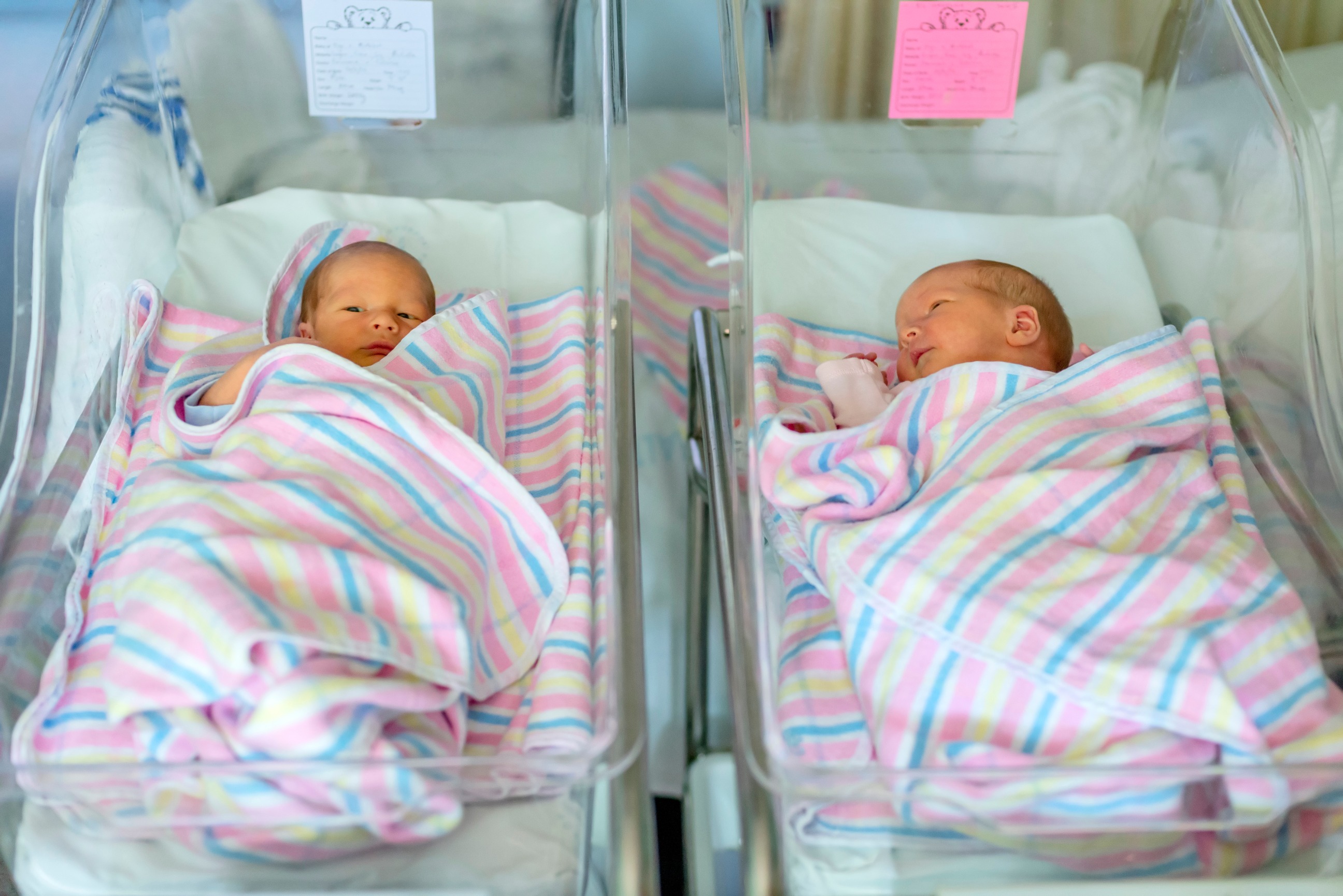
For most of his nearly 30-year career, Dr. Thomas Patterson rarely had a parent refuse the vitamin K shot for their newborn, which is recommended at birth to protect babies from severe bleeding in early life.
However, what Patterson says was once uncommon has become a regular occurrence when the Idaho pediatrician is working in a newborn nursery in the southwest region of the state.
"Prior to, say [20]22 or so, vitamin K refusals were very sporadic and rare, and they weren't all-consuming," Patterson told ABC News. "There has been a significant uptick for me ... One day [this year], I had 10 babies and five of them went out of the hospital without vitamin K."
What Patterson is seeing is reflected in new research published in JAMA on Thursday from the Children's Hospital of Philadelphia (CHOP).
Speaking first to ABC News, two of the study's authors said these findings built upon previous research the team had done. The new study included updated data from 2025, which showed an increasing number of babies who are not receiving vitamin K injections at birth.
"This is certainly evidence that more babies are not receiving vitamin K, and more babies are at risk of bleeding," Dr. Kristan Scott, lead author of the study, former research fellow at CHOP, and now an assistant professor of pediatrics at Children's Healthcare of Atlanta, told ABC News.
After analyzing more than 5.2 million health records from Epic Cosmos data, the team said they found that from 2017 to 2025, the percentage of babies who didn't receive a vitamin K shot at birth more than doubled from 3.1% in 2017 to 6.8% in 2025.
Between 2024 and 2025, the percentage of babies who did not receive the vitamin K shot rose by about 20%, from 5.6% to 6.8%, respectively, in the study.
"It's certainly not something that I wanted to see but I think, given the trend in what we had seen from years prior, it was not [surprising]," Scott said.
Why the vitamin K shot is given to newborns
Vitamin K is necessary to help the body form clots appropriately, but babies are born with very small amounts of this vitamin and don't receive adequate amounts through their diet in the first few months of life.
To help prevent this bleeding, a vitamin K injection has been recommended for newborns in the U.S. since the early 1960s. It's given as a single, intramuscular shot soon after birth.
"Vitamin K is absolutely critical for our livers to make the clotting factors that help our blood clot," Dr. David Hill, a hospitalist, pediatrician and spokesperson for the American Academy of Pediatrics (AAP), told ABC News. "What we're really worried about is serious life-threatening bleeding ... And often, by the time we figure out that bleeding is happening, it's really too late to stop the worst consequences of it."
Since this injection became standard of care, doctors say it is very rare for babies to experience VKDB in the U.S., but they worry more babies will suffer from bleeding complications as more parents refuse the shot.
In Hill's experience, Vitamin K refusal "has increased dramatically, and we're talking about an intervention that we have been using safely and effectively since 1961."
Possible lifelong complications
Newborns who do not receive the vitamin K shot at birth are at a higher risk of life-threatening bleeding.
Of the infants who have late VKDB -- between 2 weeks old and 6 months old --- about half have brain bleeds, which can lead to permanent brain damage, according to the CDC.
Other infants bleed into their stomachs or intestines, or other parts of the body. Many of these infants will require blood transfusions, and some may need surgeries, the CDC says.
There are often no warning signs of VKDB, according to the agency.
In the new study, researchers also analyzed bleeding events documented in medical records at certain timepoints after birth through the first six months of life, among babies born at 35 to 43 weeks' gestation.
They found that from 2017 to 2025, the rate of bleeding events increased among all babies, but more so among those who did not receive vitamin K at birth.
These babies had a 47% increased risk of any bleeding event in their first six months of life, compared to those who did receive a vitamin K shot at birth, according to the study's findings.
The risk of having any type of brain bleeding in the first six months of life more than doubled without the shot, and the risk of death during the birth hospitalization also more than doubled among babies who didn't receive a shot of vitamin K at birth, the study found.
"When you don't get vitamin K today, we see very similar rates to what bleeding rates were before the routine administration of vitamin K," Dr. Heather Burris, a study author, neonatologist at CHOP and professor of pediatrics at the Perelman School of Medicine at the University of Pennsylvania, told ABC News.
Dr. Scott Hadland, a pediatrician at Mass General Brigham for Children, said he cares for many older children, adolescents and young adults who have long-term complications from severe brain bleeding.
"I've cared for a few patients who had a severe bleed shortly after birth, and it was likely caused by lack of vitamin K," he said.
In general, Hadland said some patients with severe brain bleeds in infancy can develop long-term movement problems, including cerebral palsy, may develop behavioral challenges, or may require a shunt to manage high pressures around their brain.
"A lot of families are thinking about their baby in the moment but not realizing that the decision they make [not to get the vitamin K shot] actually has consequences that can last for decades," he added.
Death is also a risk. Twenty percent of babies with VKDB -- one out of every five -- die, according to the CDC.
Patterson, the pediatrician from Idaho, said he's heard from colleagues across the state who have treated babies in the neonatal intensive care unit with brain bleeds after not getting the vitamin K shot.
"We can't put a number on the exact number of deaths, but I know of at least two. I could easily say three with some confidence," Patterson said. "As someone who's done first responder resuscitations for babies for decades, I have videos in my head of every baby that's ever lost their life on my watch. I have been fortunate not to see that because ... of refusal of vitamin K."
Why is this happening?
Doctors told ABC News there are several reasons that some parents have refused the vitamin K shot for their newborns.
Patterson said many parents bring up that vitamin K has a black box warning. It's most stringent the FDA can require from a drug manufacturer, requiring that clinical data shows the drug can cause severe harm, hospitalization or death.
However, the warning is based on a risk that applies to adults who are receiving high, intravenous doses -- not the much smaller, intramuscular vitamin K dose babies receive.
Some parents have also refused the vitamin K shot as a larger rejection of examination because parents worry it "creates trauma," Patterson, from Idaho, said.
Doctors told ABC News some of the refusals have been fueled by misinformation, such as fears that the preservative in the shot could harm children, which there is no scientific evidence of, while others have confused the vitamin injection with a vaccine.
"I have families who think maybe this is a vaccine, but it's very important to emphasize this is a naturally occurring vitamin that we all have and that we all need," said Hill, the AAP spokesperson. "It has nothing to do with vaccines."
Doctors suggested that parents speak to a trusted healthcare provider or their pediatrician before refusing the vitamin K shot.
To explain its protective effects, Burris, from CHOP, likened receiving the shot to wearing a seatbelt in a car.
"The chances of having a serious bleed and having a consequence of that bleeding is going to go way down if you get the vitamin K shot, just like if you get in a car crash and you're wearing your seatbelt, you are less likely to sustain serious injuries," she said.
"So, I think it's really important for us to think about vitamin K as a preventative measure that we can do. It's a simple pinprick of a shot."
Jade A. Cobern, MD, MPH, is a practicing physician, board-certified in pediatrics and general preventive medicine, and is a fellow of the ABC News Medical Unit.
AUSTIN (AP) — Elon Musk spent at least $445 million in a gambit to help Republicans keep control of Congress, an amount roughly equivalent to someone on a $100,000 annual salary saving every penny for 4,400 years.
To the world’s first trillionaire, it’s a pittance, but the billions of dollars’ worth of business his companies do with the federal government is not. And on Tuesday night, a Republican Party that had embraced Musk lost again and again, ceding control of Congress to a Democratic Party leery of the world’s richest person and keen to put his companies and his work at the Department of Government Efficiency under a microscope.
Nobody may have suffered bigger losses Tuesday than President Donald Trump. But few others had more on the line than Musk, who gambled big and came up holding the midterm’s worst return on investment. Democrats in Congress were already queuing to get their shot at Musk, with possible subpoenas and investigations.
As the bloodiest election for Republicans in recent history wore on, Musk joked on X, the social media site he owns. “Guess my election-interfering space lasers didn’t work this time,” he wrote with a shrug emoji.
Musk now faces new threats to his bottom line in places including Texas, where he has based himself and several of his companies. Musk spent at least $5 million to try to reelect Republican Gov. Greg Abbott, who lost. Democrats also secured control of the Texas House and the U.S. Senate, partly by beating Texas Republican Attorney General Ken Paxton, who effectively benefited from $158 million of Musk’s spending but lost his Senate race against Democrat James Talarico.
It was the first statewide win for Democrats in Texas in more than 30 years, and the candidates won in part by hammering Musk, the tax breaks and grants his companies receive, and his relationships with elected Republicans.
“This era of open corruption is going to come to an end,” said Rep. Gene Wu, chairman of the state legislature’s newly empowered Democratic Caucus.
Musk did not respond to messages seeking comment.
Musk’s reputation did not help with many Texas voters
Slightly more than half of Texas voters said they had an unfavorable opinion of Musk, according to The AP Voter Poll of more than 5,000 voters in the state. While Musk is overwhelmingly viewed positively by MAGA Republicans, those numbers dip for non-MAGA GOP voters and plummet for independent and Democratic voters.
Those were the voters who Talarico and Democrat Gina Hinojosa, who beat Abbott in the governor’s race, were targeting. The two often framed politics not through partisanship but as billionaires versus everyday Texans, and Musk’s emergence as a major Republican benefactor played into that message.
“Paxton is funded by one dude. Elon Musk wants our land. He wants our water. He wants our tax dollars. He wants his very own personal United States senator,” Talarico told a crowd in his final rally of the election, just after Hinojosa gave a similar excoriation on the same Austin stage.
“We know that Elon Musk got a $1.7 billion property tax break here in Texas, property taxes that the rest of us have to pay full price on,” Hinojosa said.
Even as Musk’s money helped blanket Texas in negative ads largely against Talarico, the Democrats’ message was aimed at the heart of an electorate whose median household income of $85,000 a year is under a pressure test as the prices of gas, groceries, rents and mortgages keep climbing.
Outgoing Rep. Chip Roy, R-Texas, said there was a point where the sheer amount of Musk’s donations became unhelpful to the GOP’s effort.
“You’re reaching the upper bound of the benefit of any of these dollars,” he said in an interview. “People are so turned off by all of the ads, and all you’re doing is running the same ad every single time.”
Investor jitters after election drop Musk’s net worth by $45 billion
Musk’s two publicly traded companies, Tesla and SpaceX, both saw prices for their shares drop considerably on Wednesday even as the tech-heavy Nasdaq composite index climbed.
Tesla shares declined Wednesday afternoon and wiped out about $40 billion from the electric carmaker’s market capitalization, standing at $1.54 trillion. SpaceX also lost about $40 billion from its market value, now at $1.83 trillion.
Musk lost about $45 billion of his net worth on Wednesday, which stood at $865.6 billion, according to Forbes, though it could rebound.
Investors are signaling some jitters about the impact of the election on Musk’s businesses. Worries that he may face congressional investigations “contributed to the early plunge for his benchmark firms,” said Joe Mazzola, head trading and derivatives strategist at Charles Schwab.
Musk’s genius is also his danger, said Michael Morris, a professor of leadership at Columbia Business School.
“I can understand that the same strategic mind that makes him so good at some of the business ventures and the hedging, it makes him think that he can also take control of politics, but it’s a different animal,” he said.
“He obviously has way more money than he will ever need, and his companies are doing well,” Morris continued. “I do think it’s kind of a game to him.”
Musk now faces a leery Congress
Democrats have not forgotten Musk’s time in Washington last year heading DOGE, which blitzed through agencies culling federal workers, and a recent fiasco in which SpaceX internet service in Ukraine, Starlink, was throttled amid the war with Russia.
“Elon Musk waved a chain saw on stage and laughed while he fired public servants and gutted the services Americans rely on,” wrote Rep. James Walkinshaw, a Virginia Democrat, in an X post just before the election. “He must answer for it under oath.”
Back home in Texas, with an incoming Democratic governor, Musk’s dealings with the state, including tax breaks, could face similar scrutiny.
In August, Musk’s companies received a $30 million grant through a state program to build a semiconductor plant that is estimated to create 3,000 jobs, one of several cash infusions he’s received through state programs. And he’s successfully pushed the state legislature to pass laws favorable to his businesses.
Musk has also railed against what he’s called the “woke mind virus,” which appears to be a partisan motivation for him, and shot off a slew of posts on X leading up to the election against Talarico, almost entirely for past stances the Democrat has taken on transgender rights and other progressive causes. That was Paxton’s central attack against Talarico, too, though it fell far short.
“You know you couldn’t pull the wool over their eyes anymore with these culture wars, and they are frustrated with the costs,” said Rep. Christina Morales, a state Democrat from Houston now in the majority in the state’s House.
“We’re not saying you don’t belong here,” she said, but “Texans can’t be bought.”
How would you like to have all of your AI apps in one place? Go get David Rancken’s App Of The Day. It’s called AI Hub. You can download AI Hub in the Apple Store and Google Play below.
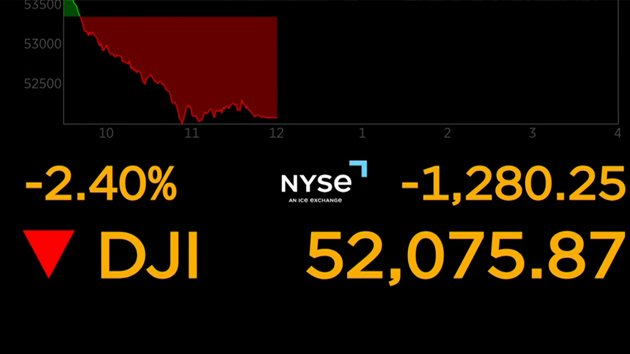
The Dow Jones Industrial Average closed down more than 1,800 points on Thursday, wiping out all of the rally from a day earlier when midterm election results propelled the index to its best trading session in more than a year.
The S&P 500 finished trading down 4.3%, while the tech-heavy Nasdaq fell 5.5%, putting the index into correction territory, meaning it has fallen more than 10% from a previous peak last month.
The Dow closed down 1,833 points, or about 3.4%.
The selloff hammered many artificial intelligence firms as investors appeared to digest risk for the sector posed by newly empowered Democrats, many of whom ran campaigns critical of artificial intelligence data centers.
Nvidia, the chipmaking giant behind many of the semiconductors used in AI products, closed down 9% on Thursday. Rival chipmaker Advanced Micro Devices saw shares fell 17%. SanDisk, another AI hardware firm, plummeted more than 22% in value by market close.
The slide also hit some other major tech firms behind AI development.
Microsoft, which holds a large stake in OpenAI, saw its stock price close down more than 3%. Amazon, which has spent hundreds of billions on its build-out of AI infrastructure, also dropped more than 2%.
The downturn in markets largely reversed blockbuster gains from the previous session.
On Wednesday, the Dow jumped 1,570 points, or 3%, recording its best one-day performance since April 9, 2025, when President Donald Trump announced the suspension of a far-reaching set of reciprocal tariffs.
Even as stocks climbed on Wednesday, Yorkville analyst Dan Ives warned ABC News of potential midterm fallout for the tech sector.
"The Democratic blue tidal wave across the Senate and House was a seismic shift that will have a negative impact on the pace of the AI Revolution buildout in the US over the next few years," Ives told ABC News in a statement.
Tuesday's midterm elections catapulted Democratic Senate and gubernatorial candidates to statewide victories in Republican strongholds like Ohio and Texas, both of which play host to a number of AI data centers.
A strong performance in House contests, meanwhile, appeared to set Democrats on a path toward a comfortable majority in the lower chamber.
OpenAI unveiled a new set of data center policies Thursday for that it called "responsible AI infrastructure" in the aftermath of the election.
The ChatGPT maker said it would abide by fresh commitments, including a vow to pay for all electricity and infrastructure used at its facilities. It also will create a "water plan" for each location as part of an effort to "protect local resources," and will "create opportunities for local workers and businesses" for employment, the AI company said in a blog post.
WASHINGTON (AP) — For a decade, the political map has been largely stagnant, locked into the same half-dozen or so political battlegrounds, reflecting a polarized, evenly divided country. On Tuesday, voters took a wrecking ball to that map, electing Democrats in states that were long considered reliably Republican.
Kansas, South Carolina, Texas, Ohio and Iowa — all states that President Donald Trump easily won two years ago — backed Democrats for the U.S. Senate and, in several of them, for governor, too.
Though it’s unclear whether the results represent a durable tectonic shift, they at least open the conversation about whether the country may move beyond its geographic deadlock, and whether Democrats can compete in nominally red states in the next presidential campaign, most notably in Republicans’ electoral stronghold of Texas.
“Even though Democrats haven’t won Texas in a presidential race since Jimmy Carter, last night’s historic results may entice them to make a real run at the state’s robust 40 electoral votes,” said Texas Republican strategist David Polyansky. Only California has more electoral votes.
“At a minimum, that would cost Republicans countless millions of dollars and untold manpower to defend against,” he added.
Such a shift would also signal a sea change in the way political parties function, said Joshua Huder, a Georgetown political scientist. For Democrats to hold onto their gains in the red center of the country, they would likely need to embrace causes like the farm bill that are vital to voters there but not on the mind of your typical liberal activist.
“Are they willing to compete in places like Kansas, Iowa and Texas?” Huder asked of Democrats. “That fundamentally changes politics if they do.”
The path to the presidency will not be redrawn overnight, Democratic strategists cautioned. Most of Tuesday’s results stemmed from Trump’s deep unpopularity and voters’ unhappiness with the cost of living.
But Democrats’ widespread, statewide and down-ballot victories in conservative states and onetime swing-states like Iowa and Ohio allow the party to start building an organizational structure they’ve not had for more than 10 years.
Democrats won their first Texas Senate race in 38 years, but they also knocked off three-term Republican Gov. Greg Abbott and won control of the state House. It was part of an electoral shock wave that swept across the entire country, knocking out incumbents in long-safe conservative strongholds, flipping reliably right-leaning statehouses in places like Arizona and Wisconsin and delivering the biggest shift in political power since the post-Watergate election of 1974.
“It clearly was some type of a breakthrough; the level of discontent with Trump and his policies was so strong,” said Alan Abramowitz, a political scientist at Emory University. He doesn’t expect it to last. “We remain very polarized, despite what happened in this election,” Abramowitz added. “Supporters of each party perceive the other side as a threat to their way of life.”
But Abramowitz and others noted that the dynamic that fueled the historic election will still be around in 2028. Democrats have for months hoped to repeat the successes of the 2006 and 2008 elections, when they won back Congress and then, two years later, expanded their margins in Barack Obama’s first presidential run.
Jim Messina, who worked on that 2008 campaign and managed Obama’s 2012 reelection team, said Democrats will now be able to build up their local apparatus in Texas while taking a careful look ahead of 2028.
“Texas is a hundreds-of-millions-of-dollars decision for a presidential campaign manager, and you’re going to wait as long as you can to decide,” Messina said.
That’s why the analysis begins now in states such as Ohio, Iowa and Texas, said Democratic pollster John Anzalone, President Joe Biden’s chief pollster and senior adviser in 2020 and pollster for Obama’s 2008 and 2012 campaigns.
“What we’ll do is research it. We’ll go into these states, do polling and focus groups and see what the rate of return might be,” said Anzalone, who polled for and advised former North Carolina Gov. Roy Cooper’s winning Senate campaign. “It’s all about the resources.”
Still, the Democratic wins were about more than resources. The party was outspent across much of the country, but still racked up wins, including gains among demographics that normally favor Republicans.
Democrats nationwide fared better this year, relative to 2024, among white voters without college degrees, according to The AP Voter Poll and AP VoteCast, although Republicans still won them overall. This group was critical to Trump’s success in onetime battlegrounds like Iowa and Ohio after Obama carried them twice.
The erosion of Republican support in rural areas was especially pronounced in Iowa, where Trump had dominated in his three presidential races. About 6 in 10 Iowa voters who say they live in a rural area or small town backed Republicans in 2022, but their vote was more closely split this year as tariffs and high fuel prices weighed on farmers’ profits. Republican candidate Ashley Hinson won just over half of rural or small-town voters this year, The AP Voter Poll found, while Democratic candidate Josh Turek won about 4 in 10 voters in this group.
Turek also triumphed in lightly populated, rural counties in eastern Iowa that no Democratic Senate candidate had carried since former five-term Sen. Tom Harkin won in 2008 before retiring.
“We’re in a very volatile political era,” said Florida Gov. Ron DeSantis, a Republican who is finishing his second term, during a news conference Wednesday.
DeSantis will be replaced by Rep. Byron Donalds, a fellow Republican who was only narrowly elected as his successor despite the state’s recent reputation as a conservative stronghold.
“Things shift quickly, and leaders just got to recognize that,” said DeSantis, “and don’t act like whatever worked even two years ago in a campaign is necessarily going to work today or would work going forward.”
Republican strategist Kristin Davison said her party shouldn’t panic, urging members to dig into the results, learn what happened and chart a path forward.
“I think anyone immediately presuming 2028 implications as the dust settles today will need to make revisions,” she said.
UPDATE: The mayor’s office of the City of Canton has been declared as vacant on Wednesday, following no withdrawal of Lou Ann Berry’s resignation letter last week. According to the city and our news partner KETK, Berry submitted her resignation letter on Oct. 26, which would become effective on Nov. 3 if there was no withdrawal.
On Wednesday, the city confirmed that the office is now vacant, but “the Mayor will continue to hold over until a successor has been duly qualified by appointment of Council or election.” The next city council meeting is set for Nov. 17 at 6 p.m.
CANTON, Texas (KETK) — The City of Canton announced on Friday afternoon that Mayor Lou Ann Berry is expected to resign. This comes days after two deadly incidents in the city.
During an interview with the media — following the news of a fatal house fire in which four kids and their mother died and a deputy was killed in a shooting — Berry can be seen wrapping up an interview and then saying, “Okay, you want some gossip.” Continue reading Mayor’s office declared vacant
CANTON – The City of Canton announced Wednesday that Lieutenant Steve Hall has been appointed the new police chief. Hall has spent the past 30 years with the Canton Police Department, including 20 years as a canine officer, before being promoted to corporal, sergeant and later lieutenant.
“I’m honored to be selected as the next Chief of Police, and I’m looking forward to serving the citizens of Canton,” Hall said. “Chief Allison and I have worked together for well over 30 years, and I’m going to miss working with him every day.”
Hall will officially take over as chief on Nov.6 following the retirement of Chief Brad Allison, who has served the City of Canton for over 30 years.
HUNTINGTON, Texas (KETK)– Huntington ISD is mourning the loss of seventh-grade student Ryker Bailey after announcing his passing in a letter to parents and students on Wednesday.
In the message sent to the school community, Huntington ISD officials paid tribute to Bailey while offering support to classmates and staff. The district described him as “fun-loving and spirited” and said, “he will be greatly missed.”
To help support the school community through the loss, counselors are being made available to students at Huntington Middle School.
Visitation for Bailey will be held Nov. 9 at the Denman Avenue Baptist Church in Lufkin from 5 p.m. to 8 p.m. The funeral service will be held at the same location on Tuesday, Nov. 10, starting at 3 p.m.
“The family and district are so grateful for your thoughts, prayers, words of encouragement and gestures of kindness during this difficult time,” Huntington ISD said.
SMITH COUNTY — Smith County Republican Party Chairman David Stein released a statement following Texas’ historic election, which saw several statewide races flip from red to blue. Texas voters elected Democrats to several statewide offices in a major political shift that ended decades of Republican dominance in statewide races. The results marked one of the most significant changes to the state’s political landscape in recent history.
Despite these setbacks in several statewide races, Smith County voters overwhelmingly backed Republican candidates. U.S. Rep. Nathaniel Moran received approximately 69% of the vote in Smith County, delivering one of the strongest Republican congressional performances in Texas, demonstrating the sharp contrast between East Texas voting patterns and the statewide results. Continue reading Republican chairman releases statement
KILGORE — A Kilgore resident claimed a $1 million prize from a scratch ticket purchased at a gas station, the Texas Lottery announced on Wednesday. The winner is choosing to stay anonymous after buying the ticket from a Murphy USA gas station located at 1209 Southport Road in Kilgore. According to our news partner KETK, the retailer may also be eligible for a $10k bonus under the Texas Lottery’s retailer bonus program for selling the ticket.
The ticket won in Kilgore is one of four top prizes worth $1 million that can be claimed from the millionaire game that offers over $9 million in prizes.
LUFKIN, Texas (KETK) — Two members of the Lufkin Police Department received the Lifesaving Award Monday during a city council meeting after saving a woman from a burning home.
According to the department, on the evening of Oct. 9, officers Laura Blackwell and Seth Johnson responded to the house fire to assist Lufkin firefighters and provide scene control.
Once on scene, an adult previously in the house told officers her grandmother was still inside, prompting Johnson and Blackwell to enter after they heard her calling for help. The officers were able to locate her near the back of the house and safely remove her from the burning building.
“Officers Blackwell and Johnson placed themselves in harm’s way to save the life of another,” Lufkin Police Chief Travis Brazil said. “This is one example of the dangers that first responders willingly place themselves in to protect the lives of others.”
LUFKIN – Gaslight Boulevard will be temporarily closed to through traffic at the Frank Street entrance on Thursday, while crews work to complete the roadway connection between Gaslight and Frank Street.
The roadway will reopen as soon as paving operations are complete, and the new asphalt has cooled and been properly rolled.
During the closure, access to the Gaslight area will be available via:
The south entrance from Pershing Street
Deans Way
Gaslight Medical Parkway
Motorists are encouraged to use alternate routes and expect minor delays in the area. We appreciate your patience as this roadway improvement project nears completion
UPDATE: Officials report as of 4:00 p.m. traffic has returned to normal on I-20 near Lindale.
LINDALE – A person has been left in critical condition following a major accident on Interstate 20 in Lindale.
The Lindale Fire Department said units were dispatched at around 7:04 a.m. to I-20 near mile marker 559 for a four-vehicle crash involving three 18-wheelers and a passenger vehicle. When they arrived, two people were trapped inside one of the 18-wheelers, with one of them unresponsive.
AMARILLO (KAMR/KCIT) — Democrat Clayton Tucker is the projected winner for Texas Agriculture Commissioner. Tucker ran against republican Nate Sheets, who defeated incumbent Sid Miller in the primaries.
Tucker’s win is the first time a democrat has been elected to the role since 1986. Tucker shared the past two years have been a journey, driving over 100,000 miles across the state of Texas, only taking two trips on airplanes to get from McAllen to Amarillo.
“We’ve been here multiple times, and we made a very clear distinction that when we were running, we ain’t going to spend all of our time in the Texas Triangle, not in just the cities, they got plenty of candidates, they’re fine,” said Tucker.
Tucker continued, “But we’re going to be in the flyover country, places where both political parties have just been ignoring and abusing and treating people as sacrificial lambs. That’s not how we campaign, and I won’t be that way as an ag commissioner as well. We’ll be with the people. Y’all will be seeing a lot of me.”
Throughout his campaign Tucker focused on the impact of data centers. Moving forward Tucker shared that data centers are a day one activity.
“We will be an immediate issue in agricultural impact studies so we can know exactly how much water and exactly how much power they use and how does the noise affect, how does the air pollution, the light pollution, explained Tucker. I want to know everything how this affects and not information from them. That’s like trusting Big Tobacco’s research on nicotine, not a great plan.”
Tucker went on to explain that they’ll collect their own information, and they’ll be able to focus on those issues during the legislative session and getting good bills passed.
“We will be fighting very hard for moratoriums,” said Tucker. “And to folks here in Amarillo that is against the data centers that has been fighting them, we will need you to help come down to Austin to lobby and the pressure. My office will be working with folks to make sure that happens, because organized people can be organized money, but we have to be organized.”
Another issue to address as Agriculture Commissioner is New World Screwworm. Tucker shared he has two main thoughts on the issue.
“One is that we are not testing and monitoring wildlife,” explained Tucker. “Not enough. So, the deers and the hogs will take it everywhere. Thankfully, we’re about to go in winter, and that will suppress them. So, we won’t see much activity, but come the spring, if we’re not ready, it’s going to be bad. So, we’ll be doing that. And look, I raised cattle. There is no length I won’t go to protect my own cattle.”
Tucker continued, “I love my cows. I love them. And I will be fighting for my cattle as hard as I’ll be fighting for yours. So we will be using every tool known to us from the sterile flies. We will be fighting to get swaths as well. Every tool should be on the table. We will not be holding back to fight this infestation.”
Tucker shared he is grateful for those who voted.
“For the folks who voted for me, God bless you,” said Tucker. “For the folks who didn’t vote for me but still voted, God bless you for voting. That’s what makes America great. I love the fact that you voted and I really will be working day and night to earn your vote when I run for re-election. And look, I have committed myself to only two terms. I do believe in term limits.”
UPDATE: The residential structure fire in Lindale is under control as of 2 p.m. Wednesday, officials confirm. The cause of the fire and reported explosion remain under investigation.
LINDALE – Fire crews are responding to a structure fire in Lindale after a shed reportedly exploded Wednesday morning.
According to our news partner KETK and the Lindale Fire Department, a shed on Mission Crest Drive in Lindale caught fire and exploded.
The department is asking residents to avoid the area and allow emergency personnel room to operate.
How would you like a iphone camera app that does two things at once? Then find David Rancken’s App Of The Day. It’s called Split Lens. You can get Split Lens in the Apple Store below.
WASHINGTON (AP) — At the urging of President Donald Trump, Republicans in eight states redrew the boundaries of dozens of congressional districts over the past year while angling for an edge that could help them hold onto a slim House majority in a tough midterm election.
Ultimately, it didn’t work.
Republicans lost most of the Democratic-held seats they had targeted to flip, lost others they had banked on retaining and got swept out of power by a Democratic surge fueled by voter dissatisfaction with Trump, the economy and the war with Iran.
The Republican redistricting plan fell flat in Alabama, Florida and Texas. It got scuttled by courts in Missouri and then firmly defeated by its voters Tuesday. And it got offset in California, where a retaliatory Democratic redistricting flipped previously Republican-held seats.
The Trump redistricting plan “was systematically dismantled,” former Attorney General Eric Holder, chair of the National Democratic Redistricting Committee, said in an election night statement. “And given the opportunity, voters instead chose to elect a new Democratic majority.”
New districts presumed continuing support for Trump
Congressional voting districts typically are redrawn after a census at the start of each decade to account for population changes. But Trump spurred an unusual mid-decade redistricting battle last year when he urged Texas Republicans to reshape U.S. House districts to give the GOP a shot at winning five additional seats in the midterm election.
A cascade of redistricting followed, spurred along in the South by a Supreme Court ruling that weakened federal Voting Rights Act protections for majority Black districts. Republicans hoped their redistricting could net as many as four more seats in Florida, two in Ohio and one each in Alabama, Louisiana, North Carolina and Tennessee.
In all but one of those revamped districts, Trump would have carried over 54% of the vote had they been in place for the 2024 election, according to Associated Press estimates.
“In normal times, that sort of district is relatively safe,” said Justin Levitt, a professor at the Loyola Law School in Los Angeles who runs the “All About Redistricting” website.
But the presumed Republican districts got undercut by shifting viewpoints of Trump. The AP Voter Poll found about 6 in 10 disapprove of how Trump is handling the presidency. Views of Trump’s priorities also were mostly negative.
“It’s foolish to presume that the electorate in one year is going to look like the electorate in another in a time of radical swings in public opinion,” Levitt said. “I think it is likely that some line-drawers got cocky.” Redistricting fell flat in the Rio Grande Valley
In Texas, Republicans reconfigured three heavily Latino districts in the Rio Grande Valley, which had shifted toward Trump in 2024, to try to boost their chances of unseating Democratic Reps. Henry Cuellar and Vicente Gonzalez. But both won reelection Tuesday. And Democrats instead unseated Republican Rep. Monica De La Cruz, whose district is sandwiched between theirs.
Though De La Cruz’s new district retained the same percentage of Trump-inclined voters as the 2024 version, about 3 in 5 voting-age residents were new — making it harder for her to compete against Democratic challenger Bobby Pulido, a well-known Latin Grammy award winner.
The AP Voter Poll indicates a substantial shift in Hispanics moving away from Republicans compared with Trump’s victory just two years ago. Nationally about one-third of Hispanics say they backed the Republican in their local U.S. House race, while roughly 4 in 10 voted for Trump two years ago.
Republicans had “unrealistic assumptions about a shift in Latino voting” remaining in their favor, said Mark Jones, a political science professor at Rice University in Houston. Democrats retained seats in Florida and Alabama
Republicans in Florida tried to tilt four more House seats to the GOP in Trump’s adopted home state. Democratic Rep. Jared Moskowitz was among their targets, but he decided to run anyway in one of the redrawn districts. He won reelection Tuesday.
“I’ve worked across the aisle. I’ve delivered results for my community, and they spent $26 million trying to beat me,” Moskowitz said after his victory in Florida’s 25th Congressional District. “They lit that money on fire tonight.”
He said voters in his new district, like those nationwide, were most concerned about the economy and their ability to afford a good quality of life. But he said that redistricting angered voters, too.
After redistricting, about two-thirds of voting-age residents were new to the district represented by Democratic Rep. Kathy Castor. But she also won reelection. Democrat Pia Dandiya won yet another district — an open seat in southern Florida — that Republicans had reshaped for an advantage.
In Alabama, a Supreme Court ruling allowed the Republican-led Legislature to revert to what the GOP considered to be a friendlier map. But Democratic Rep. Shomari Figures won reelection anyway, defying Republicans’ plans. North Carolina redistricting led to costly and close races
Republicans redrew two congressional districts in eastern North Carolina with a goal of unseating Democratic Rep. Don Davis in the 1st Congressional District, which has sent a Black member to Congress for more than 30 years. They made Davis’ district a bit more Republican by bringing in thousands of voters from the 3rd Congressional District, held by Republican Rep. Greg Murphy. In exchange, they reassigned thousands of Democratic-leaning areas to Murphy’s district.
The ensuing advertising battle for Davis’ seat cost well over $50 million, according to the ad-tracking firm AdImpact, ranking among the most expensive House races nationally.
Davis held a slight lead Tuesday night, and the race between Murphy and Democratic challenger Raymond Smith was particularly close. More redistricting is likely ahead of the 2028 elections
What started as a Republican redistricting effort could become a Democratic redistricting movement ahead of the presidential election.
Maryland voters on Tuesday approved a constitutional amendment that will make it easier for the state’s Democratic-led General Assembly to redraw districts to the party’s advantage. Democratic proponents, backed by former President Barack Obama, have touted it as a way to “stop Trump.”
Democrats who made gains in numerous state legislatures Tuesday also could use that power for redistricting. And Democratic lawmakers in New York already have taken an initial step toward congressional redistricting before the 2028 elections.
But the recent midterm redistricting revealed it can be difficult to anticipate voter behavior when trying to gerrymander districts for partisan advantage. That could particularly be the case for the next presidential election, which would be the first in a dozen years without Trump’s name atop the ballot, making it hard to know how his supporters would realign behind new candidates.
“It’s really tough to pick a political model that accurately shows you who’s likely to show up in 2028,” Levitt said.
TYLER — The Smith County Sheriff’s Office received a grant to implement a new mental wellness Checkpoints Program for its deputies. According to a press release, Chief Deputy Jimmy Jackson said he has served as chairman of the TCOLE Wellness Advisory Committee for first responders.
There is often a stigma attached to law enforcement asking for help. TCOLE (Texas Commission on Law Enforcement) has been looking for resources to change that culture, Chief Jackson said. The comprehensive wellness program has the No. 1 goal of keeping first responders from needing help; keeping them out of crisis, he said.
SMITH COUNTY – The Smith County Sheriff’s Office received a grant to implement a new mental wellness Checkpoints Program for its deputies.
Chief Deputy Jimmy Jackson said he has served as chairman of the TCOLE Wellness Advisory Committee for first responders.
There is often a stigma attached to law enforcement asking for help. TCOLE (Texas Commission on Law Enforcement) has been looking for resources to change that culture, Chief Jackson said.
The Smith County Sheriff’s Office will be one of only six agencies in Texas to implement the new Checkpoints Program this year.

 WOOD COUNTY – An East Texas man was arrested in Wood County on Wednesday suspected of being involved in a murder. According to the Wood County Sheriff’s Office and our news partner KETK, deputies responded on Wednesday to a welfare concern at a home off County Road 1226 near Quitman. Once at the home, deputies found a dead woman inside, later identified as Brittany May Powell, according to officials.




 KILGORE – During a celebration for Veterans Day on Wednesday, Kilgore College named one of its students as this year’s Veteran Hero for his remarkable military career.

 TYLER – For the 45th year, Brookshire Grocery Co. is inviting customers to participate in the Spirit of Christmas Food Drive to help out families facing food insecurity this holiday season.


 Tyler – Chapel Hill ISD will honor military veterans with programs, a breakfast and





 UPDATE: The mayor’s office of the City of Canton has been declared as vacant on Wednesday, following no withdrawal of Lou Ann Berry’s resignation letter last week. According to the city and our news partner KETK, Berry submitted her resignation letter on Oct. 26, which would become effective on Nov. 3 if there was no withdrawal.

 CANTON – The City of Canton announced Wednesday that Lieutenant Steve Hall has been appointed the new police chief. Hall has spent the past 30 years with the Canton Police Department, including 20 years as a canine officer, before being promoted to corporal, sergeant and later lieutenant.

 SMITH COUNTY — Smith County Republican Party Chairman David Stein released a statement following Texas’ historic election, which saw several statewide races flip from red to blue. Texas voters elected Democrats to several statewide offices in a major political shift that ended decades of Republican dominance in statewide races. The results marked one of the most significant changes to the state’s political landscape in recent history.


 UPDATE: Officials report as of 4:00 p.m. traffic has returned to normal on I-20 near Lindale.

 UPDATE: The residential structure fire in Lindale is under control as of 2 p.m. Wednesday, officials confirm. The cause of the fire and reported explosion remain under investigation.

 TYLER — The Smith County Sheriff’s Office received a grant to implement a new mental wellness Checkpoints Program for its deputies. According to a press release, Chief Deputy Jimmy Jackson said he has served as chairman of the TCOLE Wellness Advisory Committee for first responders.

 SMITH COUNTY – The Smith County Sheriff’s Office received a grant to implement a new mental wellness Checkpoints Program for its deputies.